Digitization vs. Digitalization: Why Infrastructure Projects Need More Than Just Data
When Sensors Aren't Enough: A Story from the Field Infrastructure is built on promises. Promises of speed, efficiency, and progress. In today's world, technology vendors promise transformation through IoT sensors, cloud dashboards, and real-time data. But after the equipment is installed and the initial excitement fades, many project managers face the same frustrating reality: the data is flowing, but nothing is changing. At Aether, we see this gap every day. There's a critical difference between digitizing operations and truly digitalizing them-between collecting information and creating impact. This series is about that difference. We'll show you why success doesn't come from installing sensors, but from reshaping behaviors, preventing losses, and optimizing operations in ways that stick. Let's start with what's actually happening on the ground.
Need Site-Level Fleet Control?
If your team is seeing fuel loss, idle-time waste, refuel variance, or utilization gaps, we can help map the right setup for your sites.
Chapter 1: The Baseline-Digitization in Practice
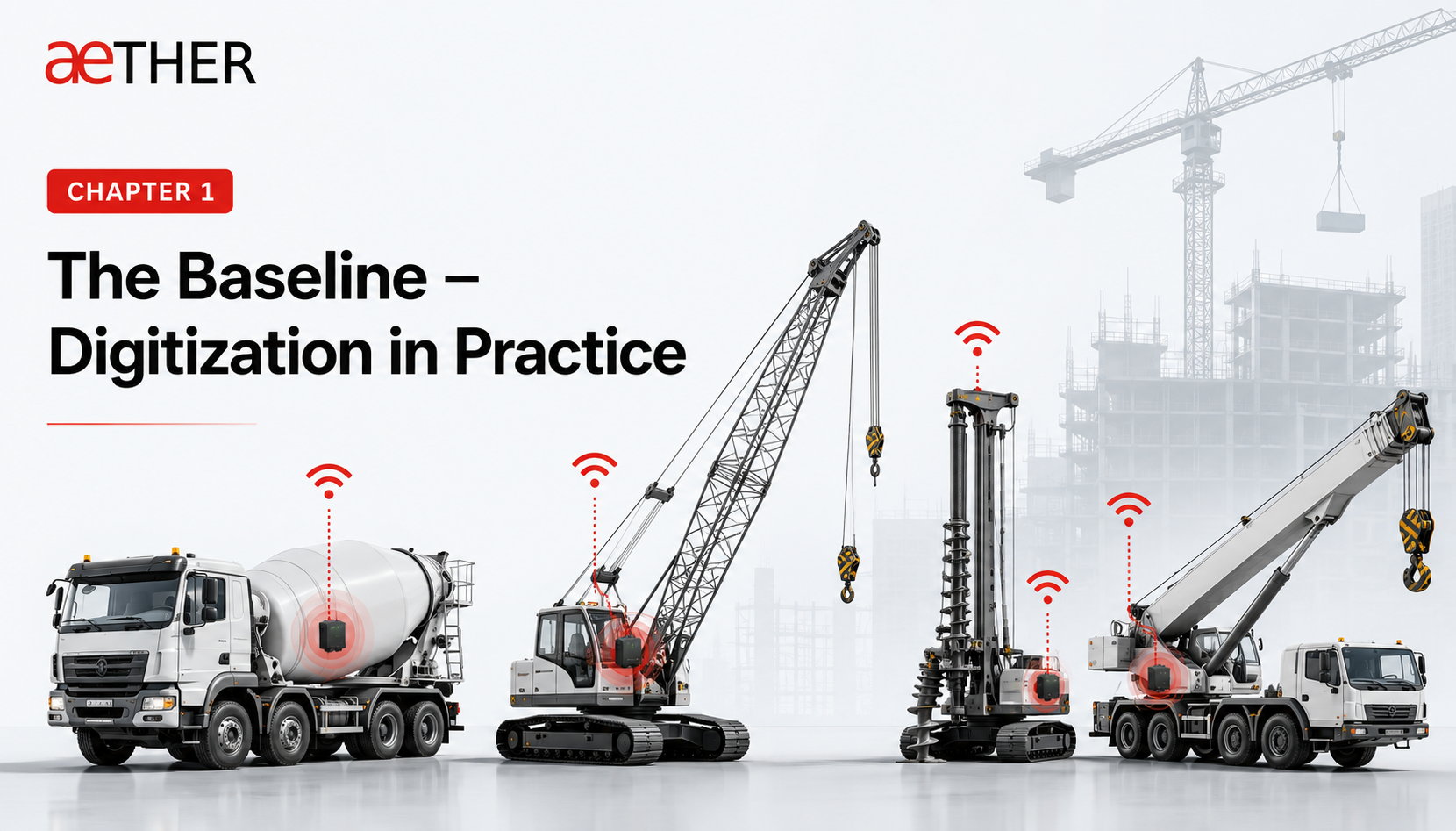
Picture this: a major infrastructure company managing hundreds of construction assets across multiple sites-transit mixers churning concrete, cranes lifting steel, piling rigs drilling foundations. Leadership decides it's time to "go digital," so they bring in two vendors, including us, to install IoT gateways and fuel sensors. On paper, both proposals look similar:
- ? Hardware installed on assets
- ? Data flowing to cloud platforms
- ? Monthly reports delivered to management
But what happens after installation reveals everything. The other vendor focuses purely on digitization. Their job ends at 100% data coverage-ensuring every asset reports something, then exporting that raw data to the client. They've successfully converted analog inputs (fuel levels, engine hours, locations) into digital form. Mission accomplished, right?
Wrong.
Within months, operators discover workarounds. Fuel sensors are tampered with. Data gaps appear and are explained away as "connectivity issues." Pilferage continues-just more quietly. Reports become a checkbox exercise, and the system exists in name only. The technology is there, but the impact evaporates.
This is the trap of digitization: it captures reality but doesn't change it.
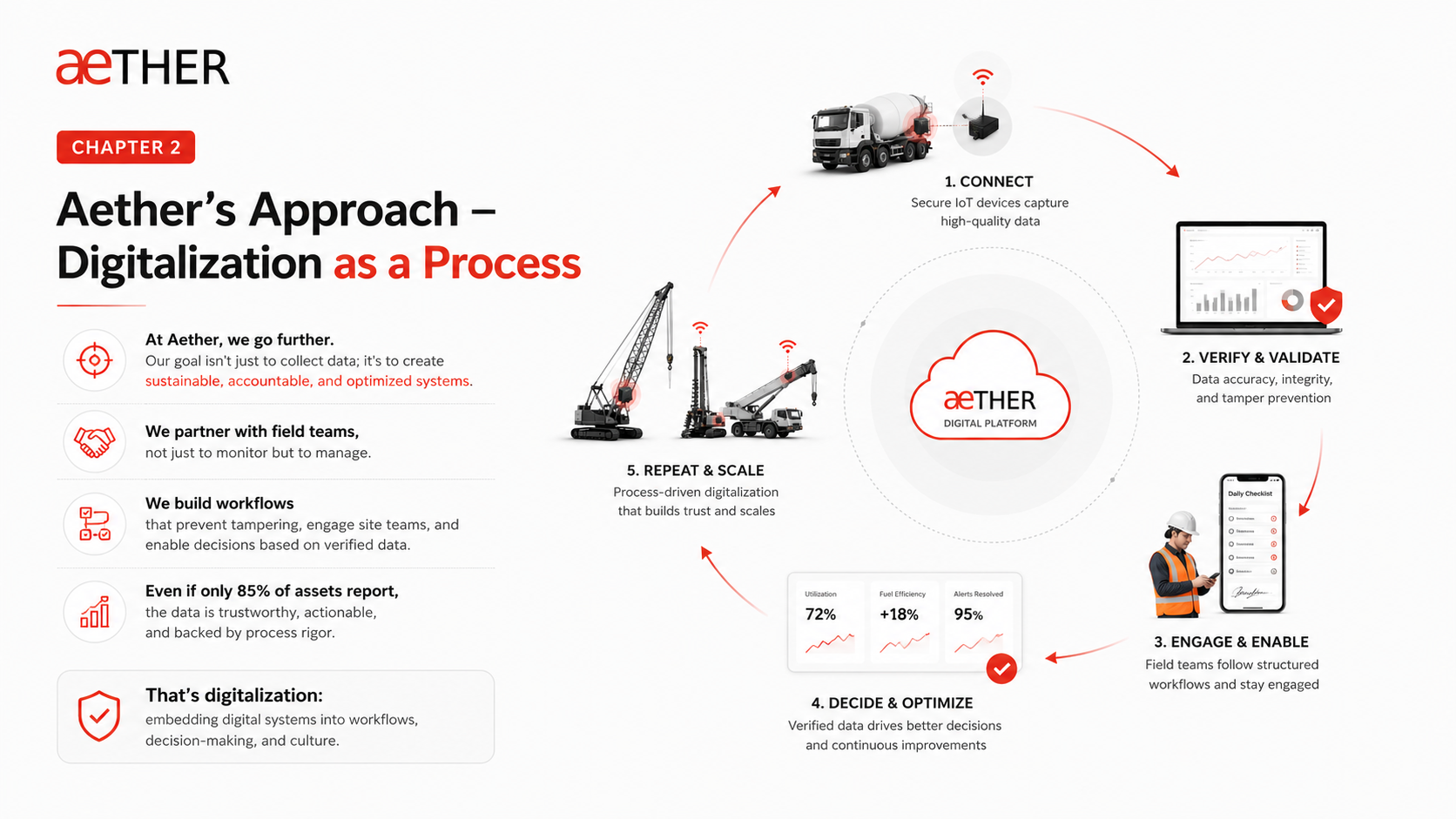
The Hard Truth: Data without action is just noise. In Chapter 2, we'll show you what digitalization looks like when it's done right-how Aether's approach goes beyond sensors to change the behaviors that drive real, measurable results.
Stay tuned. The real transformation is just getting started.
The next step is turning that visibility into action with live vehicle tracking workflows that site teams can use every day.
Continue with Chapter 2: The Aether's Approach- Digitalization as a process and then see how resistance shows up on the ground in Fuel Theft in Construction.
If you want to apply the same playbook to your own fleet, request a demo.
FAQs - Digitization vs. Digitalization
What's the difference between digitization and digitalization?
Digitization converts analog data (fuel levels, engine hours, location) into digital form. Digitalization uses that data to change behavior, workflows, and outcomes. One gives visibility; the other gives results.
Why isn't anything improving even after installing sensors?
Because sensors only provide data. Without enforcement, process redesign, operator engagement, and action loops, data becomes noise instead of impact.
How do we prevent operators from tampering with sensors?
Combine technology (tamper alerts, secondary validation, anomaly detection) with behavioral controls (training, audits, incentives). Change management matters as much as hardware.
What does true digitalization look like on a project site?
You see consistent, measurable improvements: reduced pilferage, higher utilization, faster reporting cycles, fewer manual errors, and gains that persist because behaviors change.
What KPIs should we track to measure impact?
Start with fuel loss (L/month), asset utilization (%), idle hours, unauthorized movement events, and maintenance compliance. These KPIs tie digital efforts to real cost savings.
Need Site-Level Fleet Control?
If your team is seeing fuel loss, idle-time waste, refuel variance, or utilization gaps, we can help map the right setup for your sites.
Related Reading