The Hidden Drain on EPC Profits: 3 Critical Refueling Fraud Schemes and How Aether Stops Them
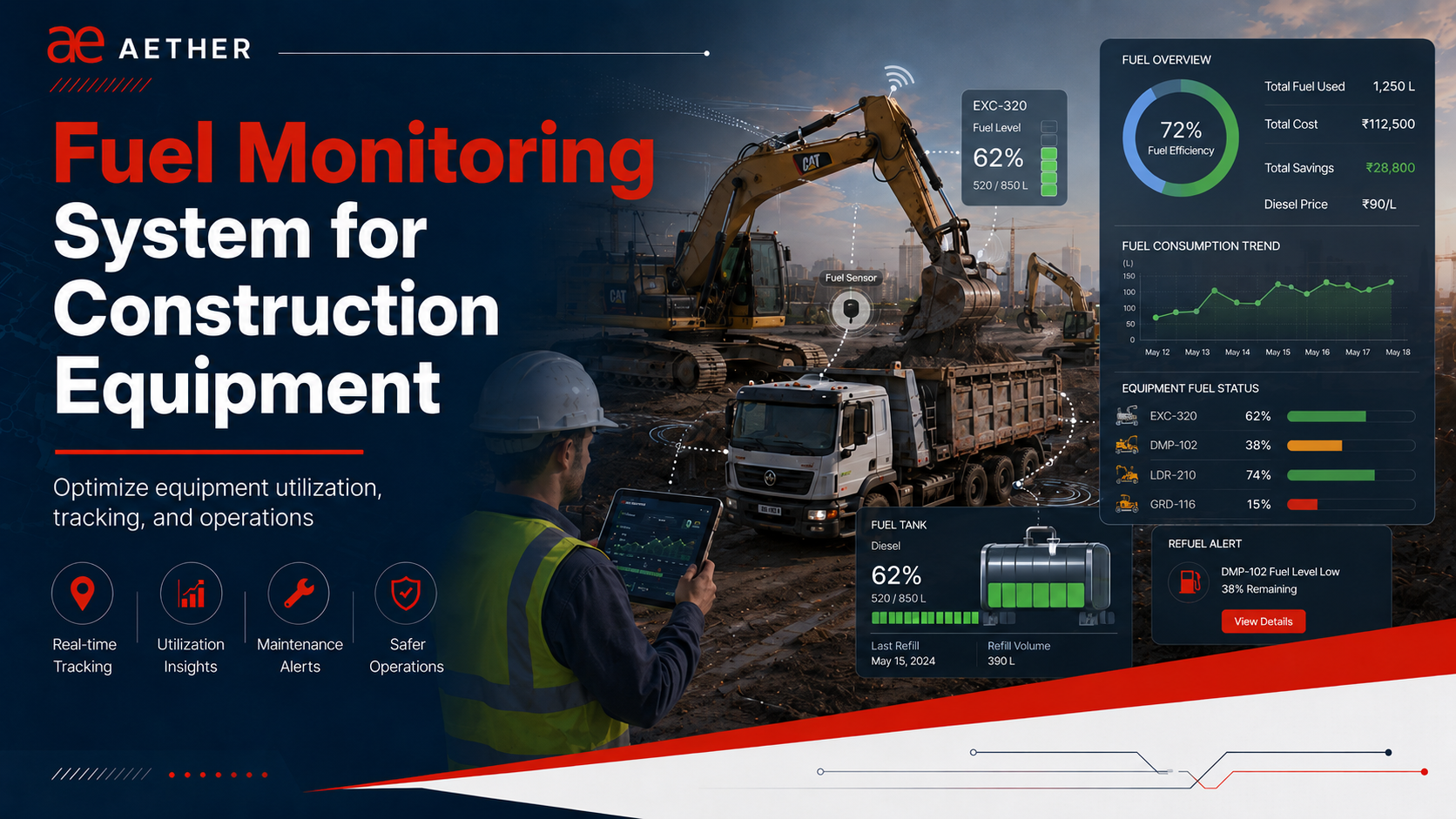
In large EPC infrastructure projects, diesel is one of the biggest controllable operating costs. Small gaps between issued fuel, recorded logs, and actual tank increase can silently drain project margins.
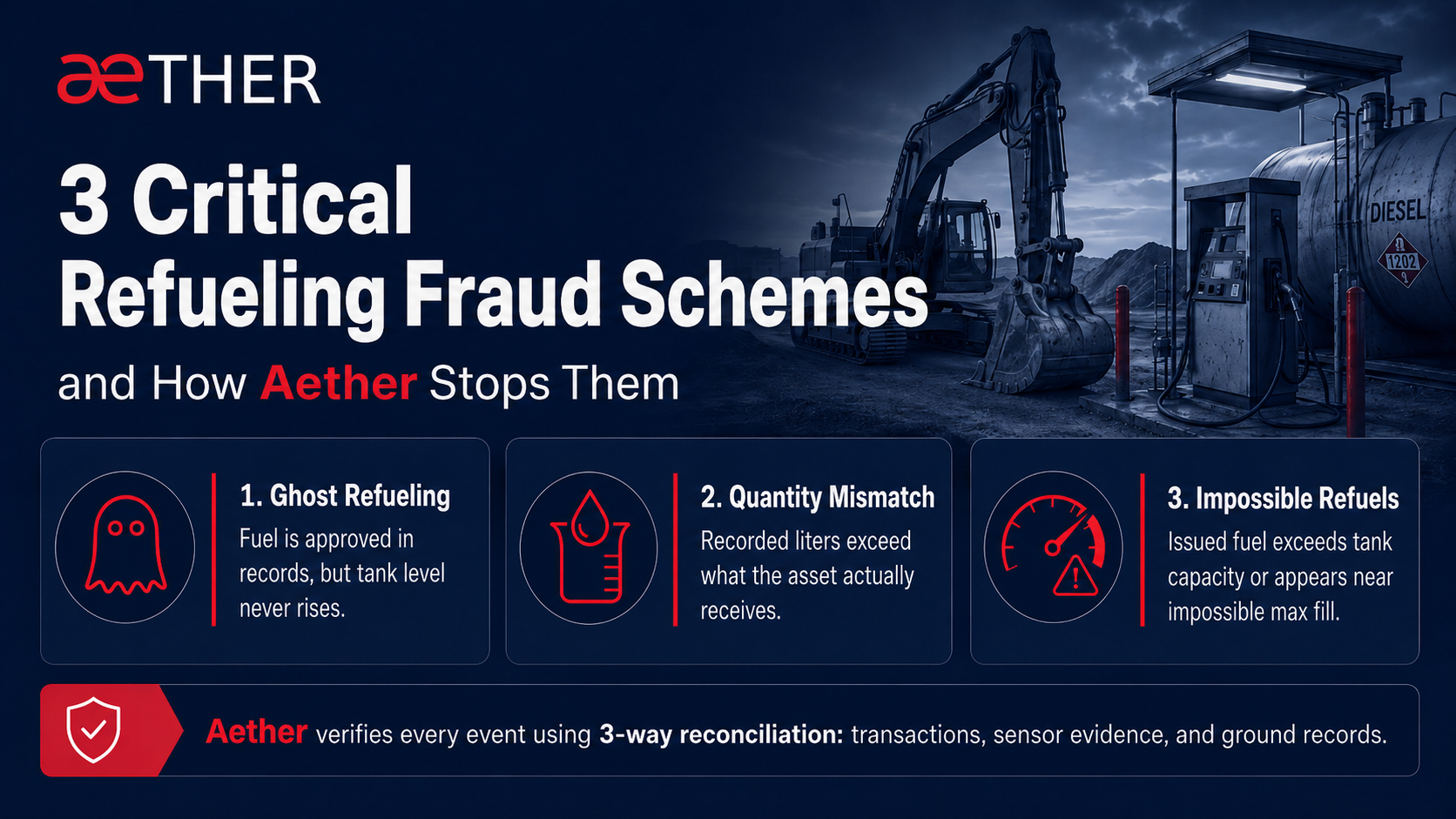
Aether uses manually verified refueling reconciliation to cross-check three sources for each event:
A dedicated fuel monitoring solution makes these mismatches visible by pairing transaction records with sensor evidence.
- Fuel transaction records (issued or billed quantity)
- Sensor-based portal logs (actual tank-level delta)
- Manual site and store entries (ground record)
When these do not match, it is not just a paperwork issue. It is a control failure that needs action.
Fraud #1: Ghost Refueling
What happens: Refueling is approved in records, but tank level does not rise.
- Refuel logged while the asset is parked or off-shift
- Duplicate or fabricated slip entries
- Fuel diversion while event is marked completed
How Aether stops it: If tank level did not rise, refuel did not happen. Event-level sensor evidence creates traceable proof.
Anonymized impact: One Tier-1 EPC DG fleet audit found 17,722 liters discrepancy in one month, with approximately Rs 15.95 lakh impact.
Fraud #2: Quantity Mismatch and Split Transactions
What happens: Fuel enters the tank, but less than what billing or transaction systems claim.
- Recorded liters exceed measured tank delta
- Multiple transaction IDs map to one physical refuel
- Recurring small differences compound into monthly losses
How Aether stops it: Events are matched by time, date, and quantity across sources. Threshold breaches are auto-flagged with evidence logs and level graphs.
Anonymized impact: In one multi-asset EPC package, 1,522.5 liters discrepancy across four assets mapped to roughly Rs 1.37 lakh loss in the audit window.
Fraud #3: Impossible Refuels
What happens: Issued fuel exceeds physical tank capacity, or repeatedly appears implausibly near max fill.
How Aether stops it: Digital tank capacity is enforced as a rule and billed quantity is validated against actual received delta.
Those rules only hold up when every asset starts with dependable fuel tank calibration and known usable capacity.
Critical Edge Cases to Handle
- Sensor failure or tampering: detect missing telemetry and trigger alternate validation
- Installation blind zones: account for true tank max vs sensor measurable max
- Threshold tuning: ensure small-volume refuels are still captured
Measured ROI from Reconciliation Controls
Across DGs, dumpers, transit mixers, and heavy equipment, reconciliation programs typically show:
- Pilferage detected: 3% to 12% of monthly fuel
- Typical monitored site consumption: 20,000 to 60,000 liters per month
- Savings potential at Rs 90/L: Rs 54,000 to Rs 6,48,000 per month
- Manual mismatch rate: 18% to 25%
- Accuracy uplift: 60% to 75% manual tracking to 95%+ verified controls
- ROI: Rs 10 to Rs 25 saved per Rs 1 invested
Need a quick estimate for your own sites?
Use Aether's ROI Calculator to project annual savings from leakage control, idling reduction, and avoidable downtime.
Open ROI CalculatorFinal Takeaway
Fuel loss in EPC projects is pattern-based, not random. When transaction records, sensor deltas, and site logs are reconciled together, teams move from assumptions to enforceable control.
To understand the operator side of the same problem, read Fuel Theft in Construction.
For a field implementation example, review this underground metro fuel management case study.
If you want to audit these patterns on your own sites, request a demo.
Related Reading