Our Blog
Chapter 2: From Data to Action - The Aether Approach to True Digitalization
If digitization is collecting the dots, digitalization is connecting them-and then doing something about the picture they form.
In our last chapter, we saw how pure digitization falls short: sensors get tampered with, data becomes unreliable, and the promised transformation never materializes. But what happens when you stop treating technology as a surveillance tool and start using it as a change management platform?
That's where Aether's approach begins.
The Aether Difference: Building Systems, Not Just Dashboards
When we install IoT gateways and fuel sensors, we're not checking a box-we're starting a partnership. Our goal isn't 100% data coverage for its own sake; it's creating sustainable, accountable, and optimized systems that stick.
We embed our teams with yours. We sit with site managers, speak with operators, and understand the daily frictions that spreadsheets can't capture. This isn't about monitoring from afar; it's about managing from within.
While a typical vendor might celebrate when 85% of assets report data, we celebrate when 85% of that data drives a decision, prevents a loss, or changes a behavior. Even with lower coverage, our data is trustworthy because it's verified, contextualized, and backed by process rigor.
That's digitalization: integrating digital systems into workflows, decision-making, and culture until technology becomes invisible and impact becomes inevitable.
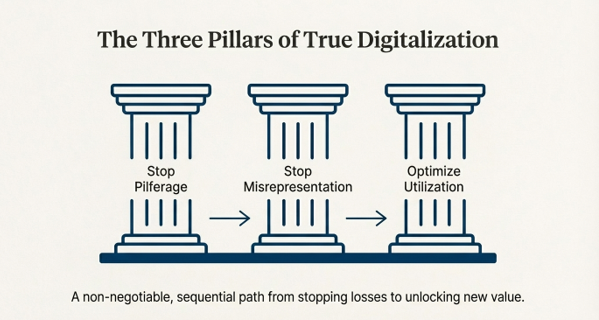
The Three Pillars of Digitalization
We break this transformation into three non-negotiable objectives:
1. Stop Pilferage
Fuel theft rarely happens in dramatic heists-it happens in 50-liter increments during refueling, in siphoning at remote sites, in manipulated receipts. Our sensors catch the anomalies in real-time: a sudden 5% drop in fuel level, a refueling event that exceeds tank capacity, consumption without engine movement.
But here's the critical part: we don't just send alerts-we help you act on them. We work with site teams to create local verification processes: cross-checking fuel bills against sensor data, implementing physical seals, introducing spot checks, and building a penalty system with teeth. When a driver knows that data drives consequences, behavior changes. Fast.
2. Stop Misrepresentation
Manual logs are where truth goes to die. Operators inflate engine hours to claim more fuel. Vehicles log mileage while parked. Assets mysteriously consume fuel without moving an inch.
Our system catches these fabrications automatically-cross-referencing engine diagnostics with fuel burn, GPS movement with claimed hours, purchase records with actual consumption. But technology alone isn't enough. Our field teams manually verify anomalies, escalate patterns, and hold weekly reviews with site leadership. We turn data into evidence, and evidence into accountability.
3. Optimize Utilization
Once you've plugged the leaks of pilferage and fraud, something magical happens: you can finally see what's real. And when you see what's real, you can optimize it.
We worked with a client who believed they needed every single transit mixer to meet their concrete targets. Our data told a different story: by eliminating unauthorized idle time, optimizing dispatch routes, and scheduling refueling during off-peak hours, they could produce the same volume with 15% fewer assets-while cutting fuel costs by 22%.
That's the power of optimization through verified insights, not assumptions.
This operating model becomes practical when trusted telemetry feeds a vehicle tracking workflow instead of a passive dashboard.
The same controls also shape the operator behaviors discussed in Fuel Theft in Construction.
FAQs - The Aether Approach to True Digitalization
1. How is Aether's approach different from traditional IoT vendors?
Aether doesn't stop at installing sensors or generating dashboards. We embed teams on-site, validate data manually, and build workflows that turn insights into action. The goal isn't data coverage - it's behavioural change, loss prevention, and measurable impact.
2. Why does data coverage matter less than data trustworthiness?
You don't need 100% reporting from assets - you need 100% confidence in the data that does report. Aether focuses on verified, contextualized, tamper-proof data that teams can make decisions from, rather than chasing perfect but unreliable coverage.
3. How does Aether actually help stop pilferage?
We detect anomalies in real-time (siphoning, fake refueling, sudden drops), but more importantly, we help sites act: cross-checking fuel bills, implementing seals, running spot checks, and enforcing consequences. Technology flags the issue; the process fixes it.
4. How do you prevent misrepresentation of hours, mileage, and consumption?
We correlate fuel burn with engine diagnostics, movement with claimed running hours, and physical bills with sensor data. When discrepancies appear, our field teams verify, escalate patterns, and provide weekly reviews to leadership. This turns data into accountability.
5. What does optimization look like once pilferage and fraud are under control?
With clean, trusted data, clients see the real picture-allowing route optimization, fuel planning, reducing idle time, right-sizing fleets, and cutting operational costs. Many discover they can do the same output with fewer assets.
The Bottom Line: Digitalization isn't about perfect data. It's about trusted data that drives better decisions. It's about moving from "we think this is happening" to "we know this is happening, and here's what we're doing about it."
Missed Chapter 1? Read Digitization vs. Digitalization. For a quantified example of these same controls, read The Hidden Drain on EPC Profits.