What Is a Backhoe Loader?
A backhoe loader is a wheeled construction machine with a loader bucket at the front and a digging arm with a bucket at the rear. This combination allows one machine to perform both loading and digging work.
The front bucket is used to scoop, carry, load, spread and backfill materials such as soil, sand and aggregate. The rear digging arm is used for trenches, pits, foundation work, drainage channels and utility excavation.
Because it can perform different jobs, a backhoe loader is useful on sites where the work changes during the day. For example, the same machine can dig a trench, load the excavated soil and later use that soil for backfilling.
Backhoe loaders run on wheels, which also makes it easier to move the machine between different work areas on a site.
Explore: Main Parts of a Backhoe Loader →
Main Parts of a Backhoe Loader
- Front Loader Bucket
- Scoops, carries and loads loose material, and supports spreading and backfilling.
- Rear Digging Arm and Bucket
- Handles trenching, pits, foundation work and other excavation tasks.
- Stabiliser Legs
- Help keep the machine steady while the rear backhoe is digging.
- Wheeled Undercarriage
- Allows the machine to move between working areas on a site.
What Does a Backhoe Loader Do on Site?
A backhoe loader can handle several site jobs using its front loader, rear backhoe and compatible attachments. This allows one machine to perform different types of work during the same shift.
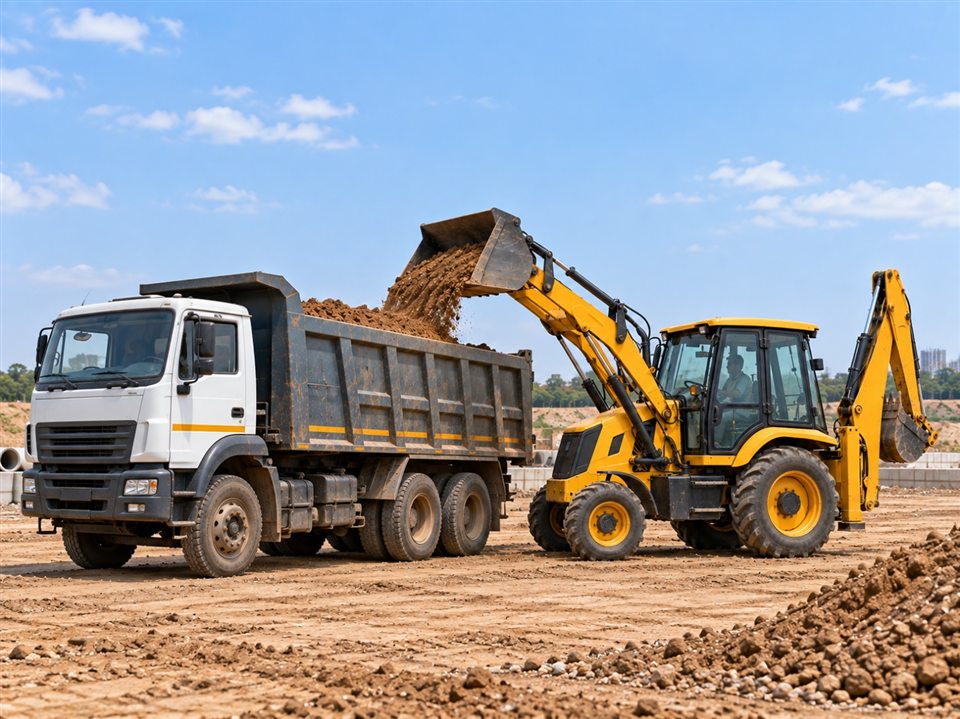
Loading
The front bucket loads soil, sand, aggregate or debris into trucks and handles material from stockpiles. It also supports site cleanup.
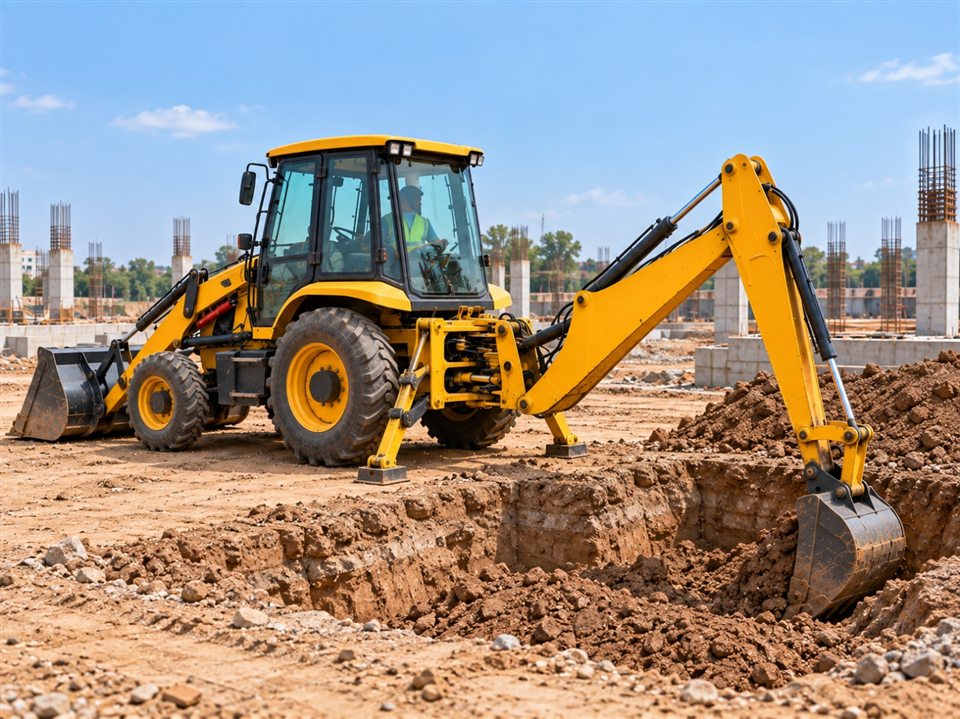
Excavation
The rear backhoe digs foundation excavations, pits and drainage channels. Stabiliser legs help keep the machine steady while digging.
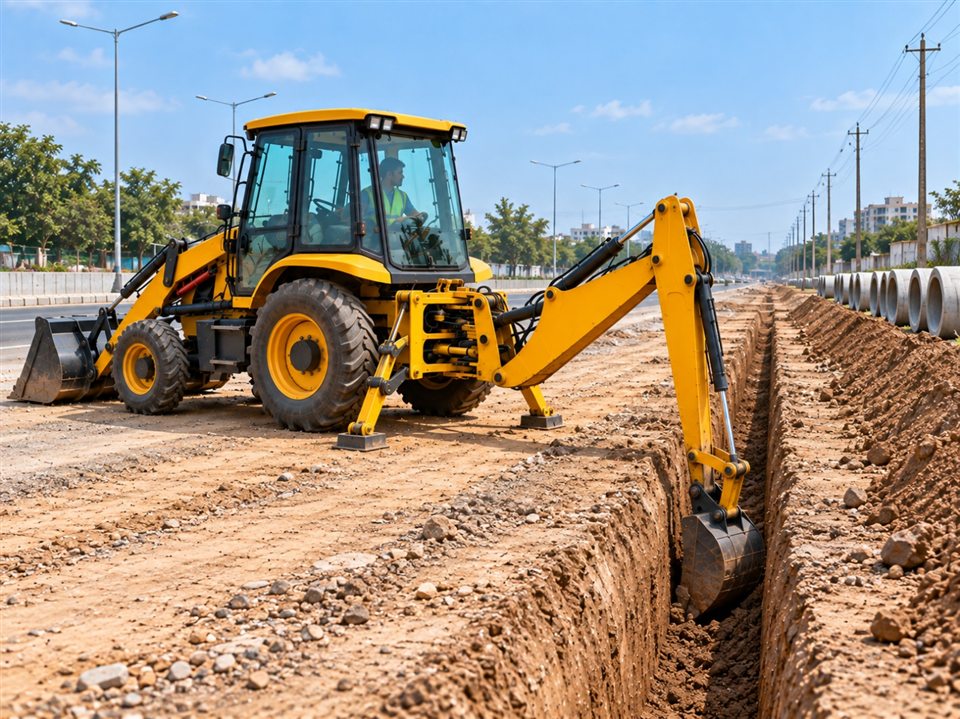
Trenching
The rear backhoe digs narrow, continuous trenches for pipelines, cables, utilities and drainage lines. Using a suitable bucket width can help reduce unnecessary excavation and backfilling.
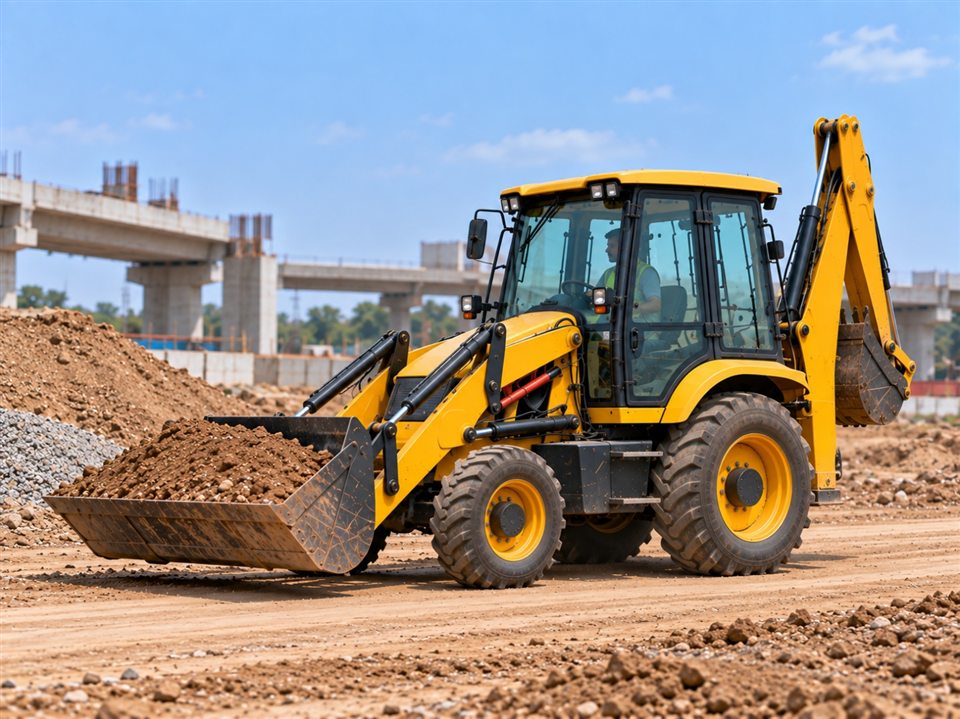
Moving Material Around the Site
The front bucket carries loose material such as soil, sand or aggregate between work areas.
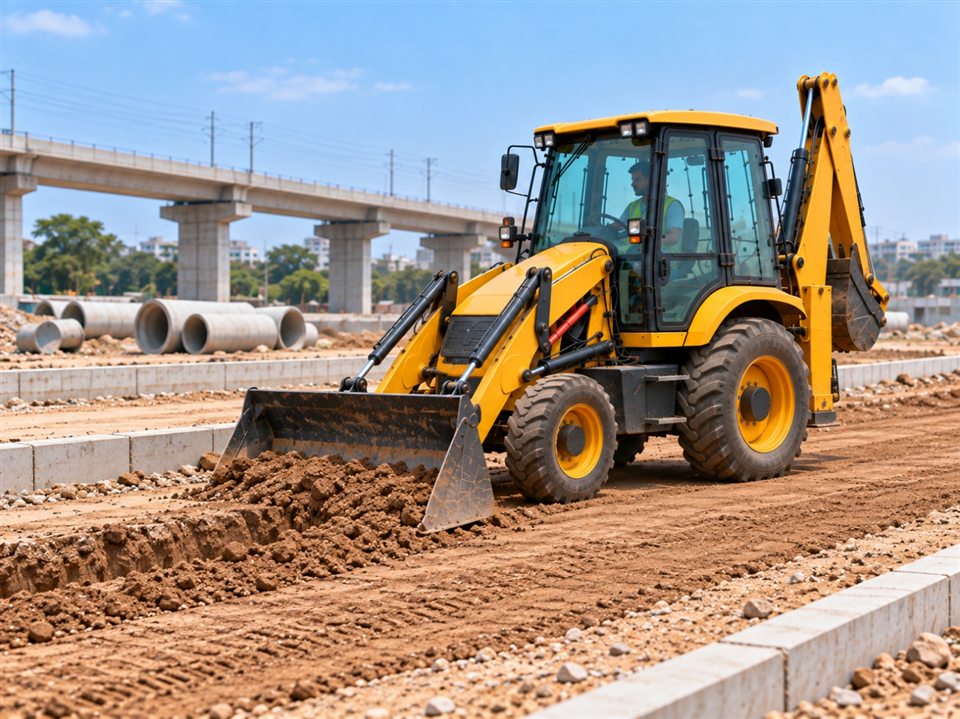
Backfilling and Ground Levelling
The front bucket returns soil to trenches, spreads loose material and levels working areas. A float function, where fitted, can help with light surface finishing.
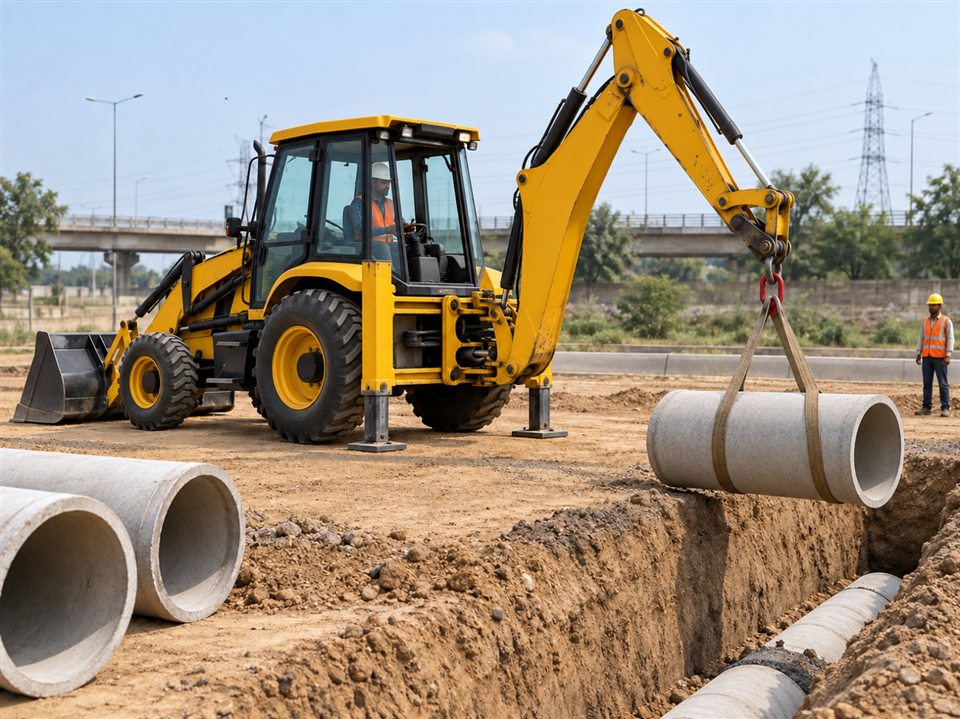
Lifting and Placement
Where approved by the manufacturer, the rear backhoe can lift and position items such as pipes or concrete components using an approved lifting point or attachment, while remaining within the machine's rated lifting capacity.
Images are illustrative, not operating instructions. Follow the manufacturer's guidance, approved lifting arrangements and site safety procedures.
Why Is a Backhoe Loader Useful?
A backhoe loader is useful on sites where the same machine needs to perform different types of work during the day. It can dig, load, move material, backfill, level working areas and support other site activities without being limited to only one task.
This makes it especially useful on projects where the work changes from one activity to another. For example, the machine can dig a trench, load the excavated soil into a truck, move material around the site and later help with backfilling after the work is completed. Its ability to handle multiple jobs with one machine makes it a practical choice for construction, infrastructure, utility and maintenance work.
Where Are Backhoe Loaders Used?
Backhoe loaders are used on projects where digging, loading, trenching, backfilling and material movement are required at different stages of the work. Their versatility makes them useful across construction, infrastructure, utility and maintenance projects.
- EPC and Infrastructure Projects
- Used across road, power, pipeline and industrial projects for utility trenching, excavation, backfilling, material handling and other civil works. They often work alongside larger excavators, loaders and other construction equipment.
- Roads and Highways
- Used for roadside excavation, drainage work, utility trenches, material loading, backfilling, site cleanup and supporting earthwork during road construction and maintenance.
- Building Construction
- Used for foundation trenches, small excavations, loading excavated soil, backfilling around completed foundations and moving loose material around the site.
- Utility Work — Water, Sewer and Drainage
- Used to excavate trenches for water mains, sewer lines, drainage systems, electrical cables, telecom ducts and other underground services. After installation, the front loader can assist with backfilling and surface restoration.
- Pipeline and Irrigation
- Used for trench excavation along pipeline routes and irrigation channels. The machine can work section by section along the route, with bucket size and digging depth selected according to the project requirement.
- Municipal and Rural Infrastructure
- Used for village and urban road repairs, drainage maintenance, canal cleaning, utility work, farm access roads and other general civil works where several smaller tasks may need to be handled by one machine.
- Demolition and Rehabilitation
- With a compatible and manufacturer-approved hydraulic breaker, a backhoe loader can support concrete or asphalt breaking, small demolition work and road rehabilitation. The front loader can then help clear and move the broken material.
Backhoe Loader Types and Configurations
Backhoe loaders can look similar, but their configuration and specifications vary by model. Before comparing machines, it helps to understand the main configurations and the key specifications that affect how a backhoe loader performs on site.
2WD (Two-Wheel Drive)
Drive is normally sent to the rear axle. This configuration can be suitable for firm, prepared and relatively level ground where additional front-wheel traction is not required.
4WD (Four-Wheel Drive)
Drive can be sent to both the front and rear axles, providing additional traction on loose, wet, muddy, uneven or sloped ground.
Difference Between the Two
The main difference is traction. 4WD provides additional grip where ground conditions are difficult, while 2WD can work well on firm and stable surfaces where extra traction is not required.
Additional traction does not replace checks on machine stability, permitted slopes or manufacturer operating limits.
Centre-Pivot / Centre-Mount vs Side-Shift Backhoe
In a centre-pivot or centre-mount design, the backhoe is mounted centrally at the rear of the machine and swings from side to side. In a side-shift design, the backhoe assembly can also move laterally across the rear frame, which can help when digging close to walls, boundaries or other obstructions.
Transmission
A synchro shuttle transmission is designed to support frequent forward-reverse changes during loading and site manoeuvring. A powershift transmission allows gear changes with less interruption of drive, helping provide smoother operation during repetitive work. Transmission design and operation can vary by model; follow the manufacturer's shifting instructions.
Key Specifications to Understand
- Engine HP
- Shows the engine's rated power, but horsepower alone does not determine machine performance. Actual capability also depends on factors such as torque, hydraulic performance, operating weight and drivetrain.
- Operating Weight
- The machine's approximate working weight. It influences stability, traction, transport requirements and how the machine behaves on different ground conditions. The figure can vary with tyres, buckets, attachments and other fitted equipment.
- Maximum Digging Depth
- The maximum depth the rear backhoe can reach below ground level. It is especially important for trench, foundation, drainage and utility excavation work. Check the backhoe configuration and dipper option used for the quoted figure.
- Bucket Capacity
- The backhoe bucket at the rear determines how much material can be excavated per digging cycle, while the loader bucket at the front determines how much material can be handled per load. Bucket capacity varies with bucket type and size.
Compare the complete specification together, rather than selecting a machine on horsepower or bucket size alone.
How to Choose the Right Backhoe Loader
Selecting a backhoe loader is not about picking the highest-horsepower machine on the market. It is about matching the machine to the work plan, ground conditions and site requirements.
- Identify the Primary Work Look at which of the tasks described earlier the machine will spend most of its time on. A machine used mainly for trenching has different requirements from one used mainly for loading.
- Match Dig Depth to the Job Check the project drawings for the deepest trench or excavation required and compare this with the machine's maximum digging depth. Allow a practical margin instead of selecting a machine that only just meets the required depth.
- Assess Ground Conditions Soft, muddy, uneven or sloped ground may require the additional traction of 4WD. On firm, prepared and relatively level ground, 2WD may be adequate depending on the work and site conditions. Also check tyres, access and manufacturer operating limits.
- Check Attachment Requirements If the work includes a hydraulic breaker, auger or other attachment, confirm that the machine's hydraulic flow, pressure, mounting arrangement and manufacturer-approved compatibility meet the attachment requirements.
- Consider Total Cost of Ownership Purchase price is only the starting point. Also factor in fuel consumption, service intervals, tyre replacement and resale value over the machine's working life.
Engine Power and Work Intensity
Engine horsepower is useful for comparing machines, but it should not be used on its own to judge digging or loading capability. Machine performance also depends on torque, hydraulic performance, operating weight, bucket size, digging geometry, traction and the type of work being carried out.
For heavier or more continuous work, compare the complete machine specification and duty requirements rather than selecting a model based only on horsepower.
Matching Configuration to Your Work
| Work or site condition | What to check |
|---|---|
| Trenching and utilities on firm ground | Digging depth, bucket width, access and whether side-shift helps near obstructions. |
| Rural, muddy or sloped sites | 4WD may provide better traction; also check tyre type, ground clearance and manufacturer operating limits. |
| Road and highway maintenance | Ground conditions, loader use, manoeuvrability and traction. |
| Pipeline and irrigation trenches | Depth, reach, bucket width, stability and ability to reposition along the route. |
| Building foundations | Excavation depth, working space, manoeuvrability and ground conditions. |
| Demolition and breaking work | Hydraulic flow and pressure, approved attachments, stability and duty cycle. |
This is general selection guidance. Check actual site conditions, project drawings and the manufacturer's specifications before finalising a machine.
Frequently Asked Questions
What is the difference between a backhoe loader and an excavator?
A backhoe loader combines a front loader bucket and a rear digging arm on one wheeled machine. An excavator is mainly designed for excavation using a boom, arm and bucket. Most conventional excavators use tracks, although wheeled excavators are also available.
How deep can a backhoe loader dig?
Commonly used backhoe loaders can offer maximum digging depths around 4 to 5 metres, with some configurations reaching deeper. Exact depth depends on the model, backhoe configuration and dipper option. For example, JCB lists 4.77 m for the 3DX and 5.05 m for the 3DX Super. Always check the individual machine's specification against the required excavation depth.
Manufacturer references: JCB 3DX specification and JCB 3DX Super specification.
What attachments can a backhoe loader use?
Depending on the model and manufacturer approval, attachments can include hydraulic breakers, augers, specialised digging buckets, multi-purpose loader buckets and pallet forks. Compatibility depends on hydraulics, mounting and manufacturer specifications.
What affects the price of a backhoe loader?
Price varies with brand, model, drivetrain, configuration, attachments, optional equipment, taxes and dealer location. Confirm current pricing for the required configuration with the manufacturer or authorised dealer.
Ready to Compare Backhoe Loader Models?
Use the model listing to compare specifications, then open individual machine pages for configuration details.
Browse Backhoe Loader Models