Monitoring That Protects ROI From Digitization
Digitizing P&M assets is only the first step. ROI comes when the data is continuously monitored, verified, reconciled, and acted upon.
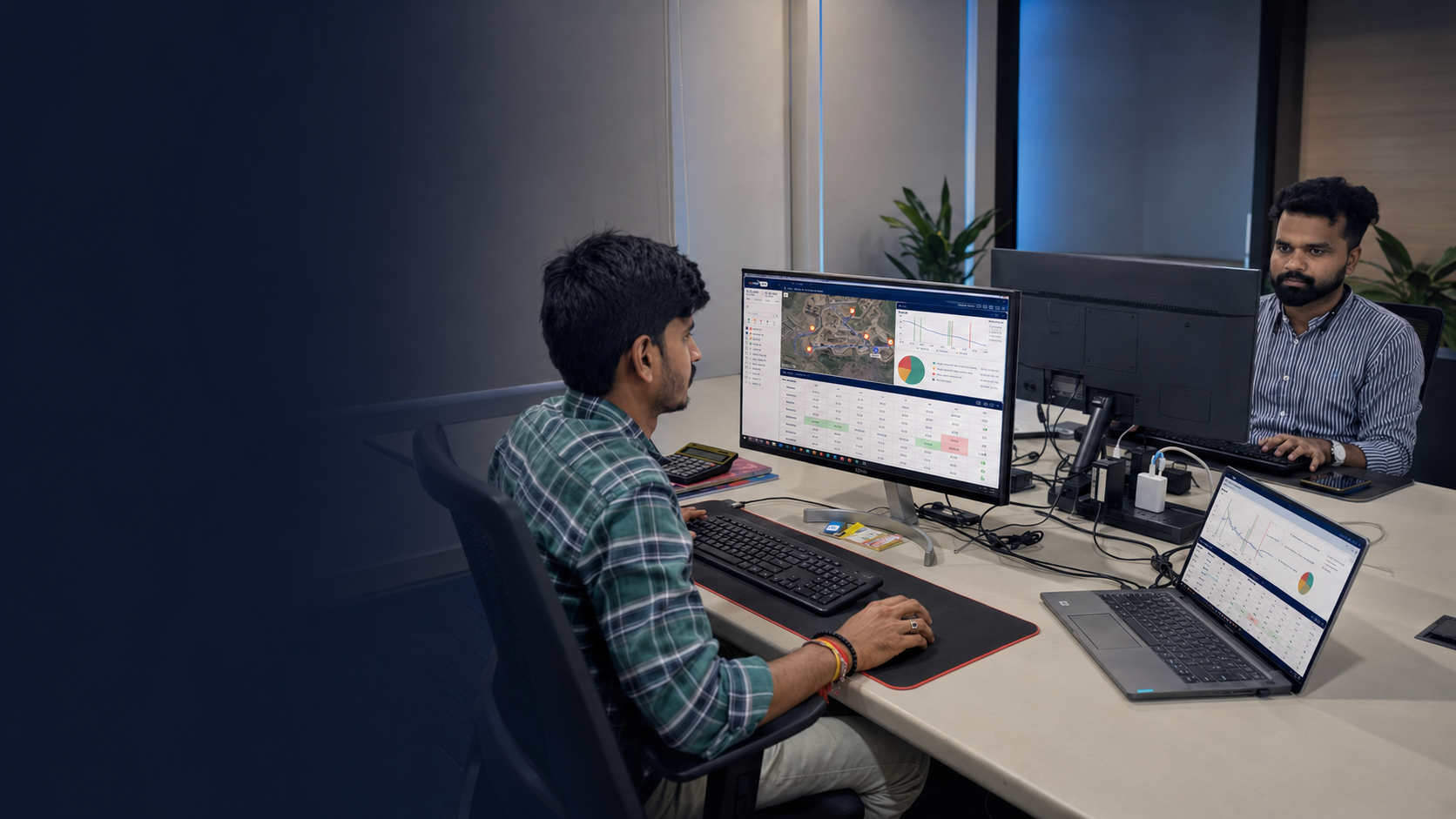
Aether's Business Intelligence team reviews every critical data stream — GPS, fuel level, refuelling, draining, KM, engine hours, idle hours, asset health, and site log sheets. The team validates events, identifies mismatches, handles conflicts, and submits verified outputs that help management prevent pilferage, stop misrepresentation, improve operational efficiency, and enforce site discipline.
What you control
What Monitoring & Reconciliation Helps You Control
Verification only matters when it changes decisions. Here is what the service puts back in your management's control.
Prevent Fuel Pilferage
Every refuelling and draining event is checked against sensor data, GPS location, engine status, time, and site records to identify theft, leakage, false entries, or suspicious consumption.
Eliminate Misrepresentation of KM & Hours
Aether validates machine KM, engine hours, idle hours, and operating data so vendors, operators, and site teams cannot inflate or manipulate usage records.
Maintain 100% Digital Health
Aether's BI team tracks whether every GPS tracker, fuel sensor, energy meter, and connected asset is reporting correctly, so offline devices, tampering, wiring issues, or sensor failures are not ignored.
Improve Operational Efficiency
Verified run hours, idle hours, fuel consumption, asset utilization, and productivity data help management identify underused assets, excess idling, abnormal fuel consumption, and process gaps.
Handle Data Conflicts
When site records, operator claims, vendor bills, and portal data do not match, Aether provides verified evidence to support resolution.
Enable Policy Enforcement
The service gives management the evidence needed to apply fuel recovery, tampering penalties, vendor accountability, log-sheet discipline, and site-level process control.
The three components
Inside Monitoring & Reconciliation
Monitoring & Reconciliation is delivered through three verified workflows. Together they close both sides of the fuel gap — what leaves the tank, what is billed as going in — and consolidate every check into one authoritative record.
Manually Verified Draining Events
Confirm whether a fuel-level drop is genuine draining or theft — not just normal consumption from heavy load, rough terrain or idling. Each drop is verified before it is reported as a loss.
- Verified against portal graphs, engine status & log sheets
- Six draining classifications with litre-level formulas
- False positives from terrain, load & sensor noise removed
Manually Verified Refuelling Reconciliation
Confirm the litres you were billed for actually reached the tank. Every refuelling event is reconciled across records and sensor data — so mismatches, missing entries and misuse are caught before they are paid.
- Fuel Dispenser, store records & log sheets cross-checked
- Quantity mismatches & missing entries flagged
- 3-way comparison against IoT sensor evidence
Manually Verified Digital Logsheet
The final verified record. Site paper log sheets are examined against all telemetry and consolidated into one clean digital logsheet — the authoritative operational record per asset and period, instead of trusting paper entries alone.
- Manual log sheets digitized & cross-checked with sensor data
- Gaps between paper entries and telemetry resolved
- One consolidated, audit-ready record per asset
How the data comes together
Independent inputs — one reconciled record
Aether's BI team never relies on a single source. Machine telemetry, operational records and manual log sheets are cross-checked before any event is confirmed or any logsheet is finalised.
Aether Portal & LLS Data
Fuel-level graphs, raw sensor volumes, GPS tracks, and engine ON/OFF logs for every monitored asset.
- Fuel graph rise & drop with time-based readings
- Engine hours, idle/running status & GPS mileage
Fuel Dispenser & Store Records
Approved refuelling entries, transaction IDs and store issue records consolidated per asset and period.
- Transaction ID, date & quantity per event
- Maintenance, tank-cleaning & planned-draining notes
Site Log Sheets
Handwritten operator log sheets — asset code, quantity, KM, engine hours and issue date — authenticated before inclusion.
- Daily usage, KM & engine-hour entries
- Signature / swiping status validated by Aether's BI team
Reconciled events & the digital logsheet
Every source is triangulated into confirmed draining and refuelling events plus one clean digital logsheet — the record your P&M and finance teams can act on.
How it works
From flagged event to verified record
One consistent workflow sits behind all three components, so every reported event and every logsheet carries the same audit-grade evidence.
Detect
Fuel-level sensors, GPS and engine data flag an abnormal fuel-level change — a sudden drop or a refuel — on any monitored asset.
Verify
Aether's BI team cross-checks each event against location, ignition, engine hours, fuel graphs and site log sheets — removing false positives from terrain, load or sensor noise.
Reconcile
Recorded fuel is matched against the actual tank-level change. Draining events are classified and quantified; refuelling entries are confirmed against what the tank received.
Consolidate & report
Confirmed events — with exact litres, time and location — are consolidated into the digital logsheet and reported to your P&M and finance teams.
FAQ
Monitoring & Reconciliation FAQs
What is monitoring and reconciliation?
Monitoring detects fuel events — drains and refuels — from fuel-level sensors, GPS and engine data. Reconciliation checks the recorded fuel against what actually reached or left the tank. Every event is manually verified by Aether's BI team before it is reported.
What are the three components of the service?
Draining verification confirms whether a fuel-level drop is genuine theft or draining versus normal use. Refuelling reconciliation confirms the litres billed actually entered the tank. The digital logsheet consolidates site log sheets and all telemetry into one verified operational record. Together they close both sides of the fuel gap and document it.
What is the digital logsheet?
The digital logsheet is the final verified record we produce by examining manual site log sheets against portal telemetry, GPS, engine hours and refuelling data. Instead of trusting paper entries alone, every value is cross-checked and consolidated into one clean, audit-ready logsheet per asset and period.
Why manual verification instead of automatic alerts alone?
Automatic alerts alone produce false alarms — a fuel drop can come from rough terrain, heavy load or a sensor glitch, not theft. Aether's BI team reviews each flagged event against GPS, engine hours, fuel graphs and log sheets — so what you receive is a confirmed event with evidence, not a guess.
How is this service delivered?
It runs as a managed layer on top of your Aether fuel monitoring — there is no extra dashboard for your team to operate. Verified drain and refuel events, and reconciliation exceptions, are reported to your P&M and finance teams.
Move from alerts to verified action.
Turn IoT data into verified evidence your management can act on.