Fleet Management System for EPC & Infrastructure
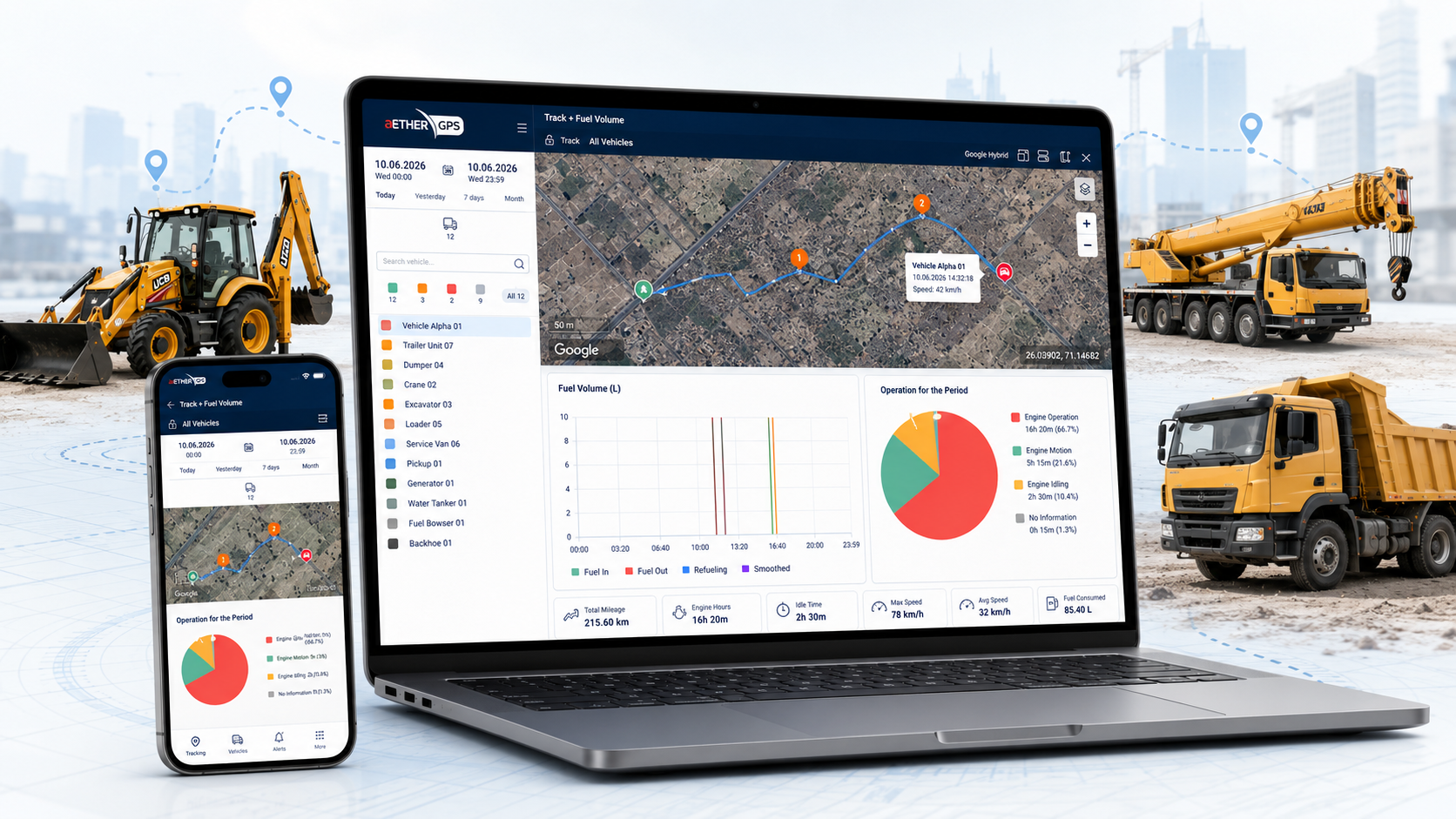
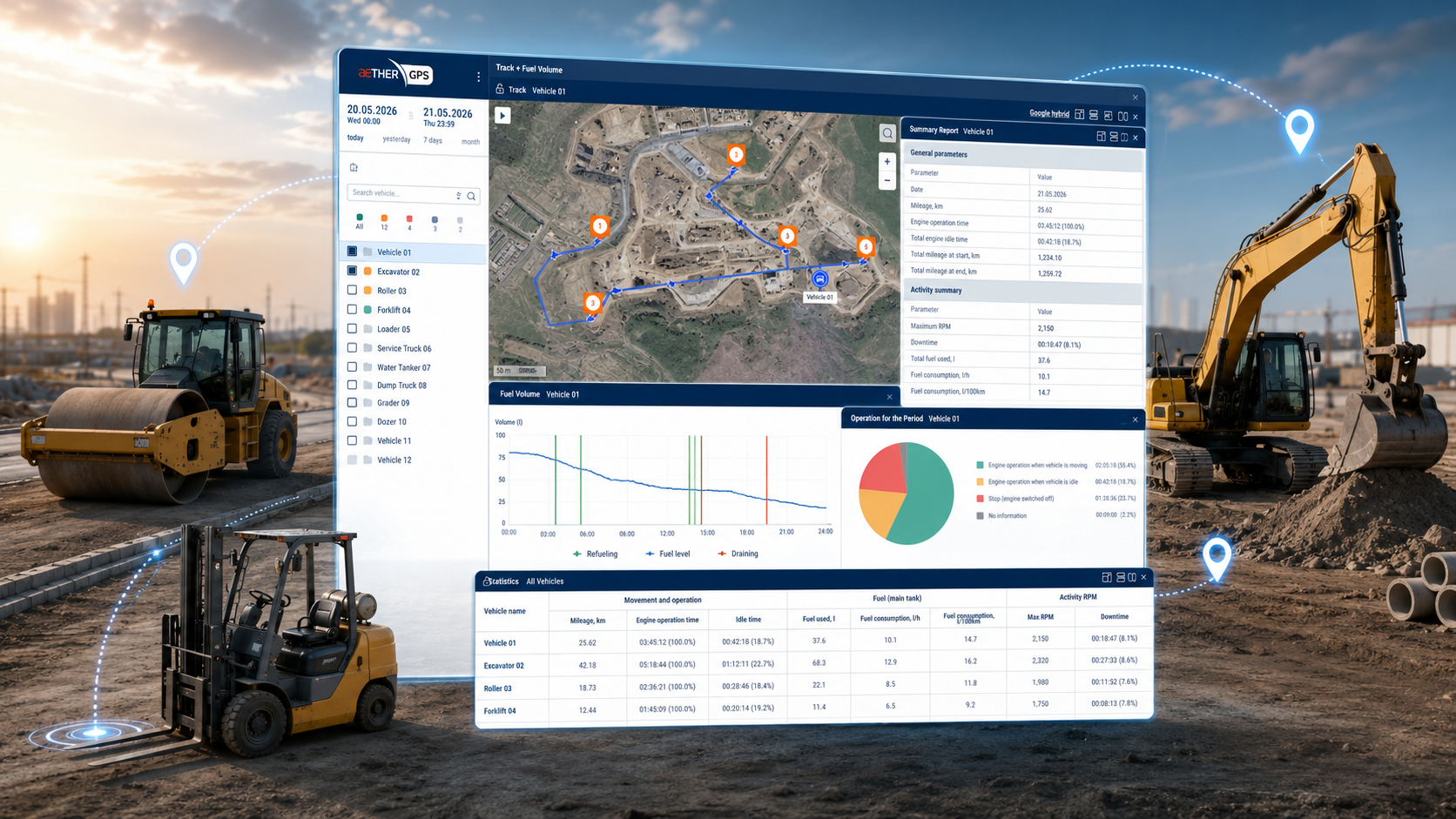
Track live location, KM, HMR, idle time, geofencing, driver behaviour and maintenance alerts in one platform. Aether IoT helps EPC, P&M and site teams verify vehicle movement, utilisation, billing claims and daily operational accountability.
The site visibility problem Aether solves
Construction and infrastructure teams lose time and money when vehicle movement is managed through phone calls, manual logs and vendor claims instead of verified GPS and engine-hour data.
What Aether tracks across your fleet
Construction-ready telematics for site teams that need verified location, KM, HMR, idle time, zone movement, driver behaviour, maintenance alerts and billing-ready reports.
Live Vehicle Tracking
See all vehicles and machines on one live map, filtered by category, site, vehicle type or status.
Engine Hours & Ignition
Record ON/OFF events, working hours, idle hours, KM travelled and operation time for every shift.
Route & Movement History
Review any day’s route, distance, stoppages, motion stages and trip movement from the map.
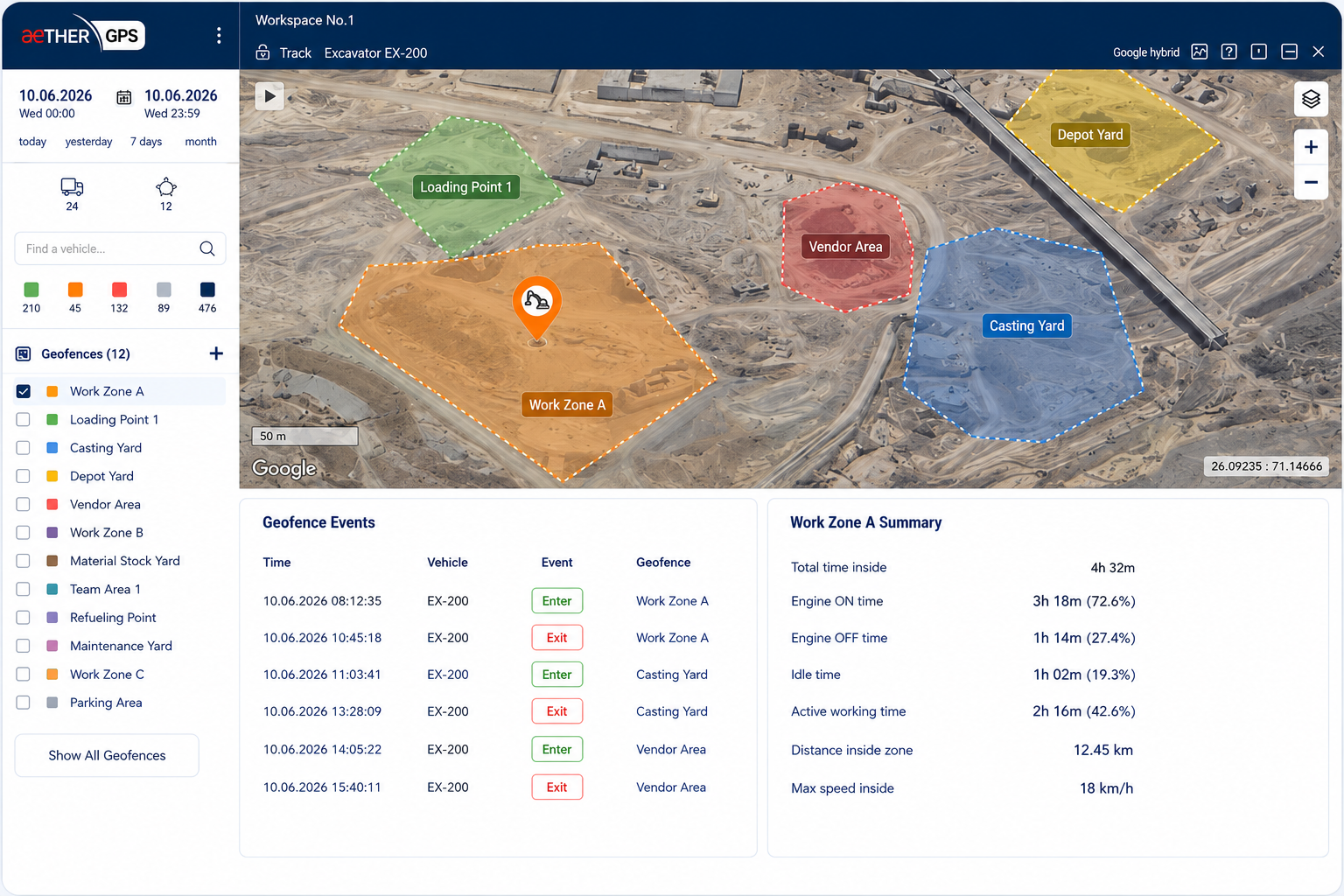
Geofencing Zone Activity
Track zone entry/exit, duration inside site areas, engine status inside zones and unauthorized movement.
Digital Logsheet Verification
Compare manual HMR/KMR, trip sheets and vendor bills against actual system-recorded data.
Daily Digest Reports
Start each day with active, idle, not-reporting and zone-alert summaries for faster site reviews.
Multi-Site Visibility
Give management one view across all project sites, depots and zones instead of scattered reports.
BI Monitoring & Support
Aether analysts review reporting status, idle anomalies, geofence movement and logsheet mismatches.
Driver Behaviour & Safety
Track overspeed events, harsh braking, rapid acceleration and driver safety scores for coaching and compliance reviews.
Geofencing turns location into accountability
A geofence is not just a boundary alert. For construction teams, each zone can represent a work location, a team responsibility, a loading point, a casting yard, a depot or a vendor-controlled area.
- Know when a vehicle enters or exits a zone.
- Measure how long the vehicle stayed in that zone.
- Check whether the engine was running inside the zone.
- Identify machines that were present but not working.
- Cross-check whether a vendor vehicle was actually in the claimed zone.
Daily Digest — Start Every Day With Data
Before your first site meeting, Aether’s automated shift summary answers the key operational questions: who reported, who didn’t, which zones were active, and where your fleet moved.
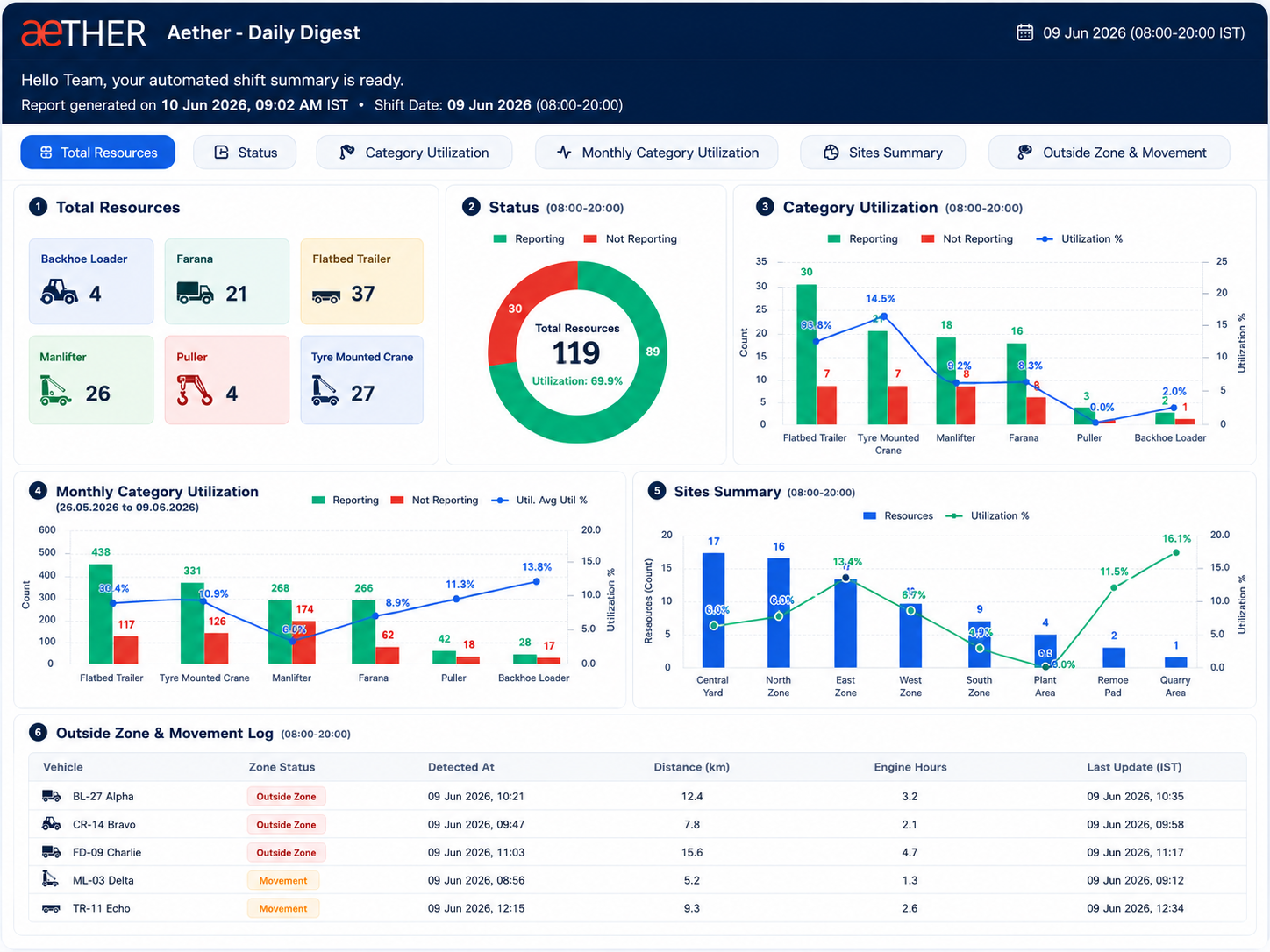
What the Digest tells you every morning
Digital Logsheet Verification for HMR, KMR and Billing
Aether helps teams compare what a manual logsheet says with what the system records.
- Compare actual kilometres travelled against KMR or trip-ticket claims.
- Verify actual engine running hours against HMR or shift entries.
- Find idle hours where the engine was on but the vehicle was stationary.
- Use ignition timestamps and location history as an audit trail.
- Flag mismatches before vendor billing approval or productivity reviews.
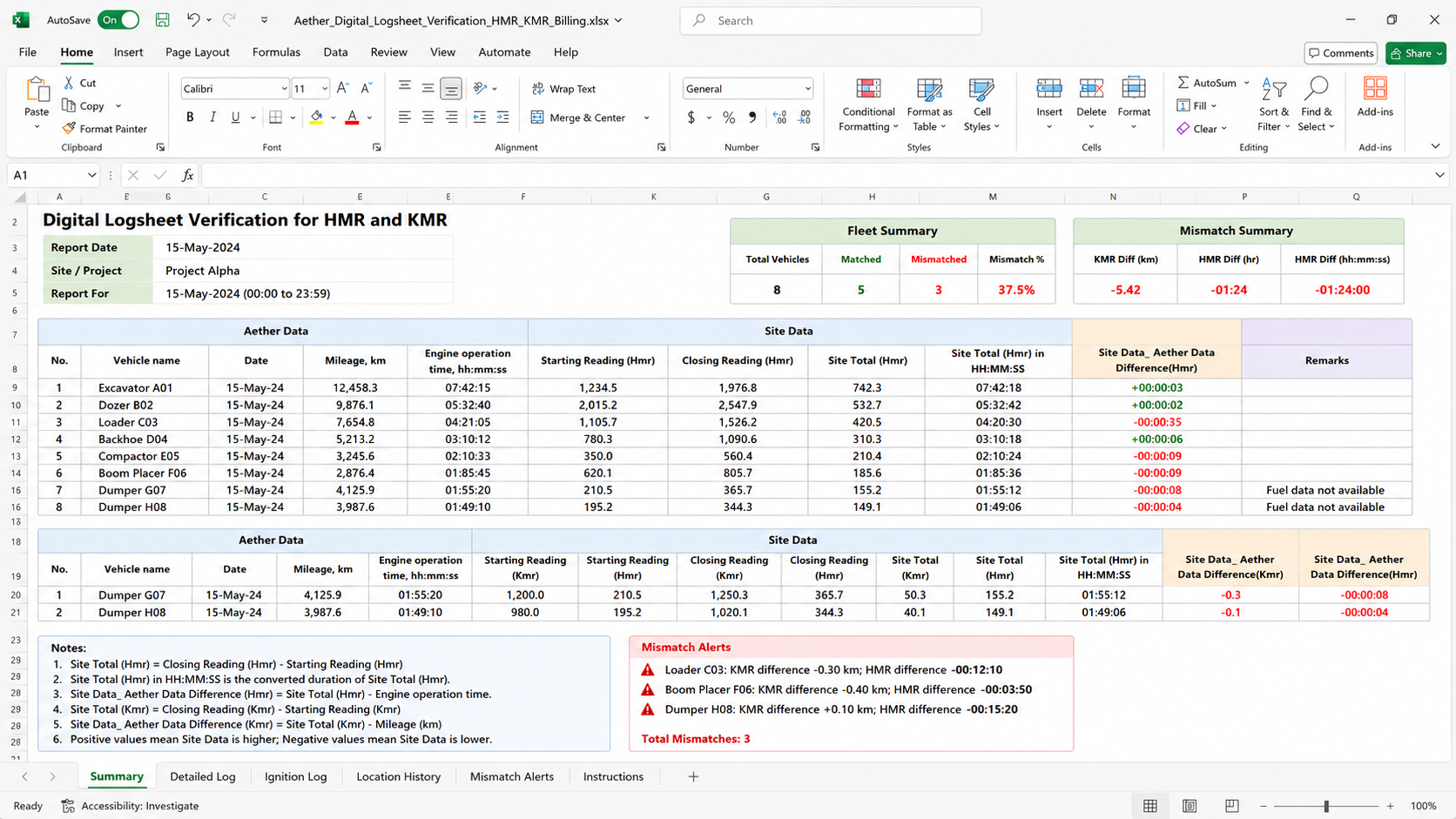
Reports Generated by Aether GPS Fleet Tracking
Turn raw GPS data into clear, actionable reports for operations, safety, finance and vendor discussions. Click any report to preview it.
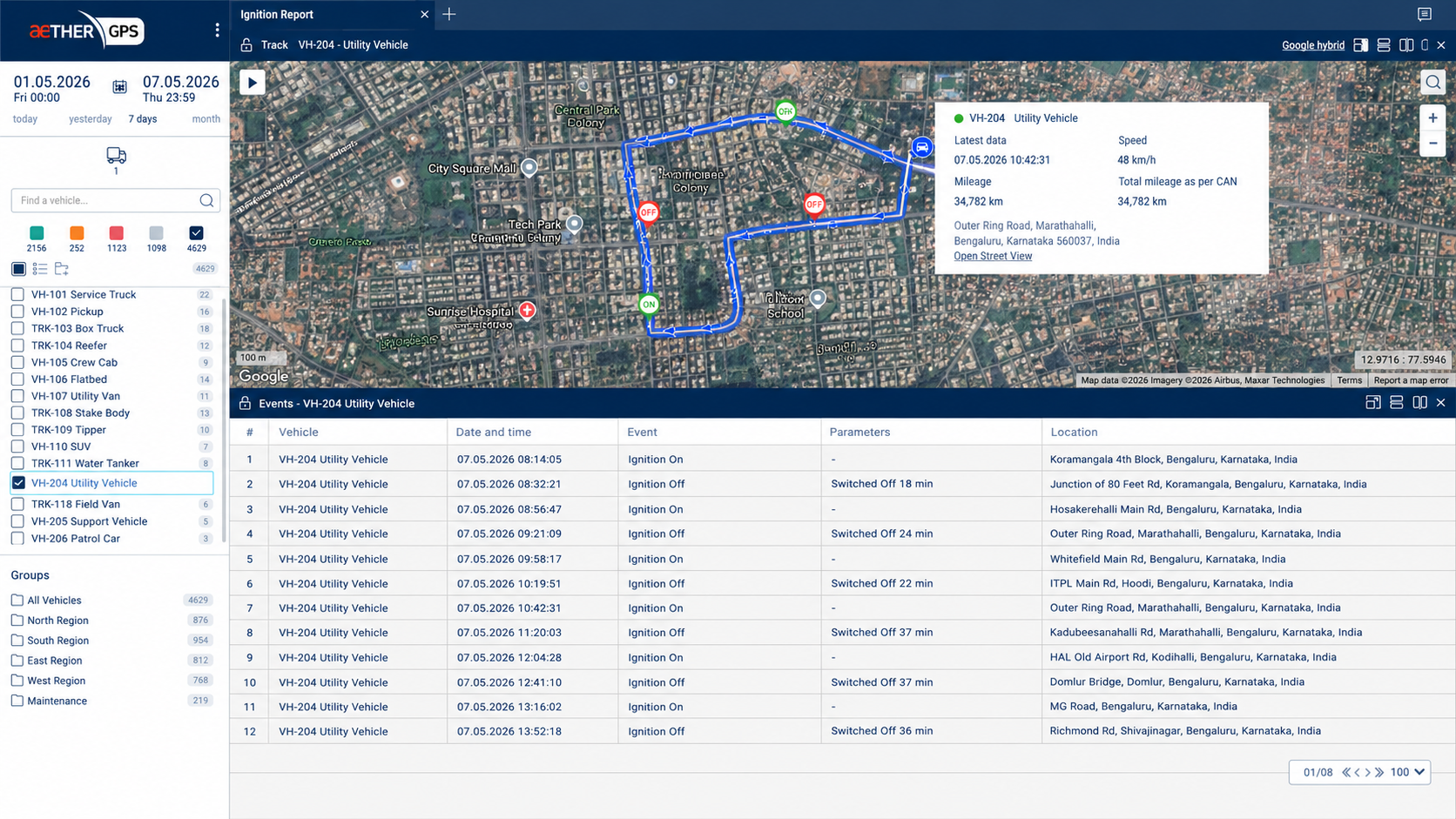
Preventive / Predictive Maintenance Scheduling
Stop relying on breakdowns to know when a machine needs service. Aether triggers maintenance alerts automatically based on the parameters your team actually tracks — kilometres travelled or engine hours logged.
KM-Based Service Reminders
Set a service threshold in kilometres. When any vehicle crosses that distance, the system flags it for maintenance — before the next long deployment begins.
Engine Hours Threshold Alerts
Define a running-hours limit for cranes, excavators, transit mixers or any heavy machine. Aether tracks cumulative engine-on hours and alerts when the service window is due.
Multi-Parameter Alert Rules
Combine triggers: alert when 500 engine hours are logged OR 30 days have passed since the last service — whichever comes first. Reduce unplanned downtime before it hits the project schedule.
BI Monitoring and Post-Installation Support
Aether does not just collect GPS data. It monitors reporting health, reviews patterns and follows up so site teams receive verified findings instead of raw alerts.
- Monitor reporting status of every GPS device.
- Identify vehicles that stop sending data and check last known location.
- Flag unusual engine-hour patterns and long idle-time anomalies.
- Analyze zone movement irregularities and logsheet mismatches.
- Coordinate with field engineers so GPS reporting resumes quickly.
Verified Findings, Not Raw Noise
The result is cleaner data for site reviews, vendor discussions, billing checks and daily operational decisions.
- Cleaner data for billing checks
- Verified findings for vendor discussions
- Actionable insights for daily site reviews
Proven in the Field, Across Real Projects
Outcomes from a large-scale infrastructure deployment where Aether was used exclusively for GPS fleet management across multiple departments and hundreds of vehicles.
Read the Case Study →Which GPS Device Fits Your Fleet?
Aether recommends hardware based on vehicle type, network availability, wiring needs and machine data requirements.
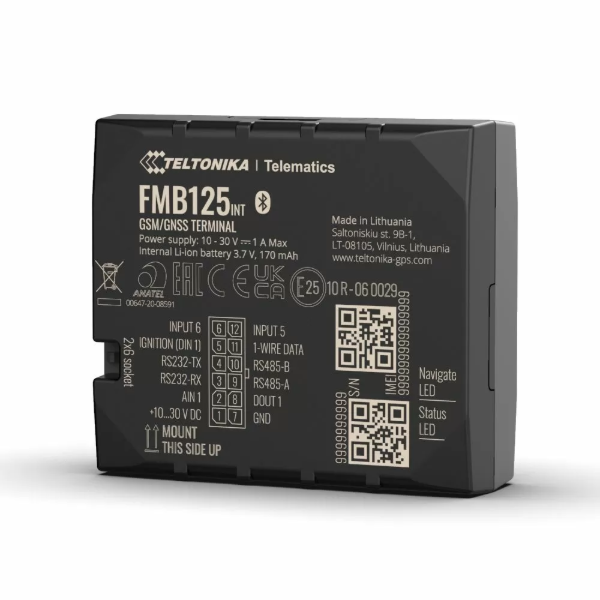
Dual SIM, RS232 + RS485 interfaces, CAN adapter support. Ideal for construction fleets, fuel-monitored equipment and temperature-sensitive vehicles.
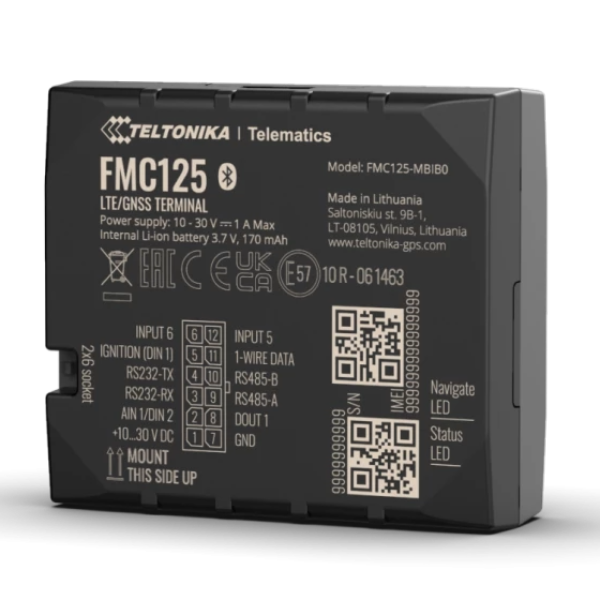
4G LTE Cat 1 with RS232 + RS485 for fuel sensors and RFID. Best for connected fleets needing peripheral integration and fast data upload.
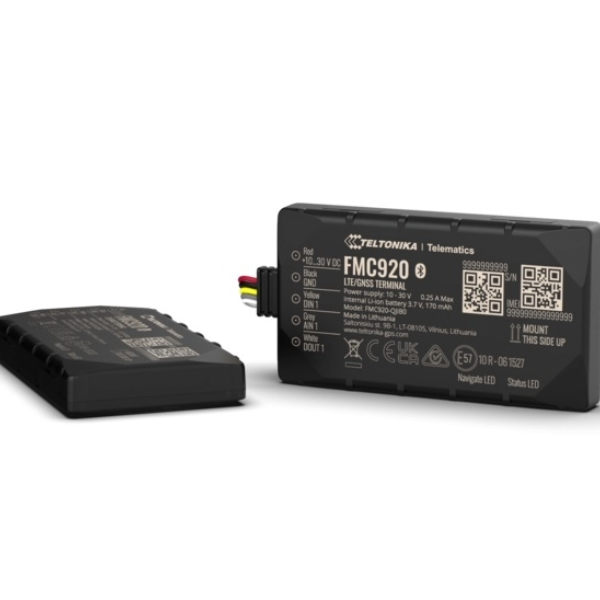
Compact 4G LTE, IP54 rated, Bluetooth 4.0. Suited for standard fleet tracking, vehicle security and driver behaviour monitoring without complex wiring.
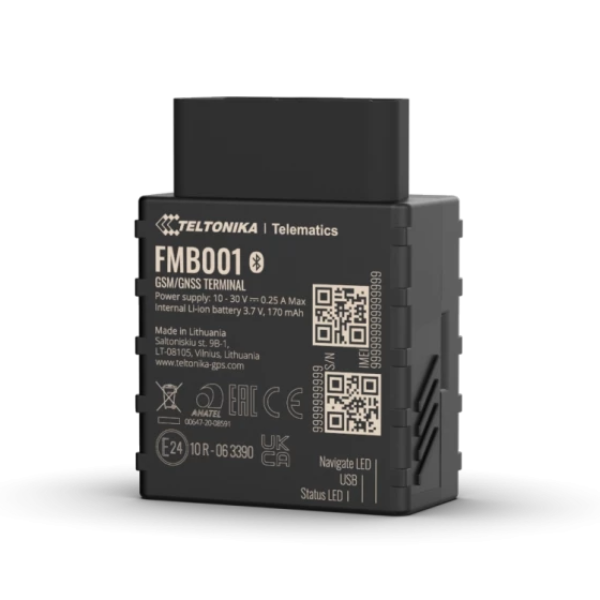
Plugs directly into the OBD-II port — no wiring needed. Reads 32 live vehicle parameters. Ideal for cars, vans and project office vehicles.
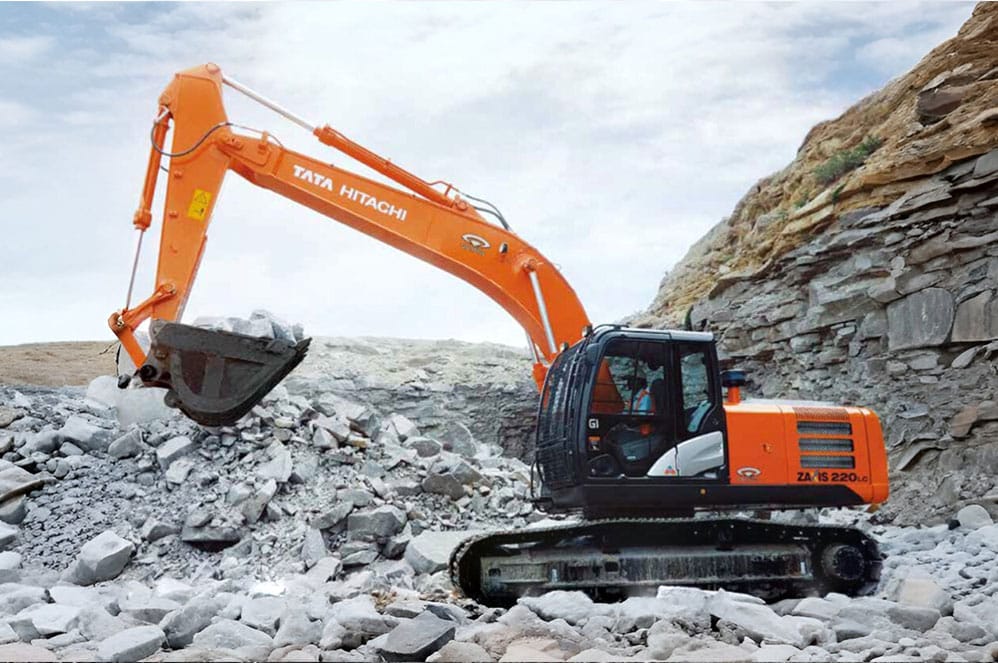
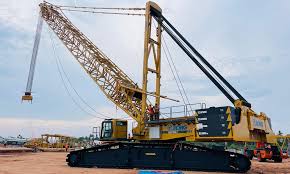
Built for heavy-duty vehicles, not just cars on a map.
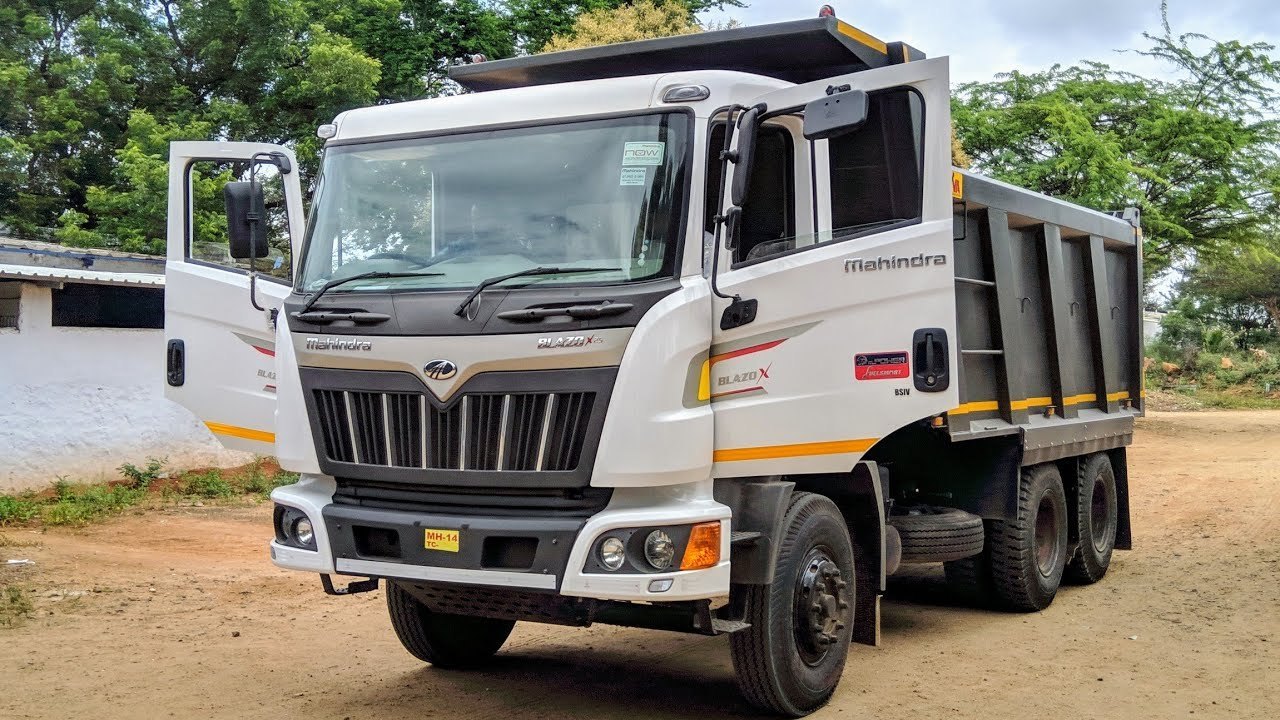
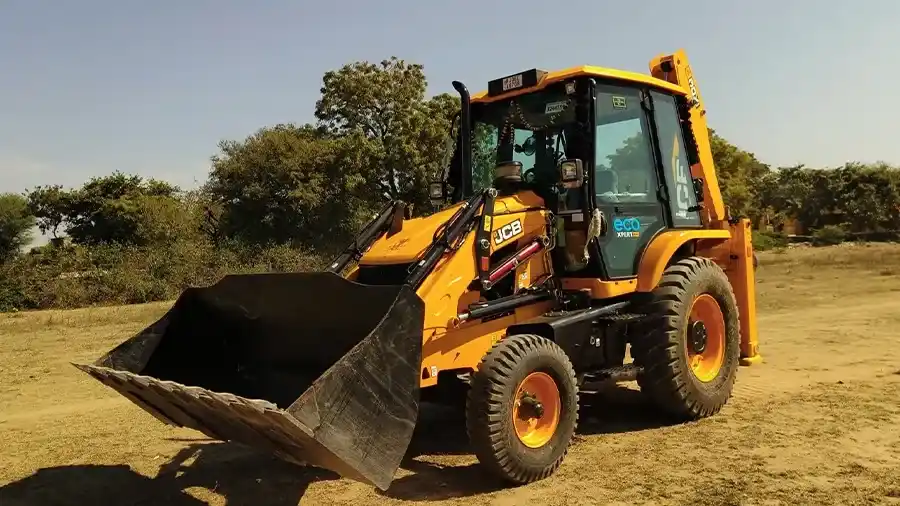
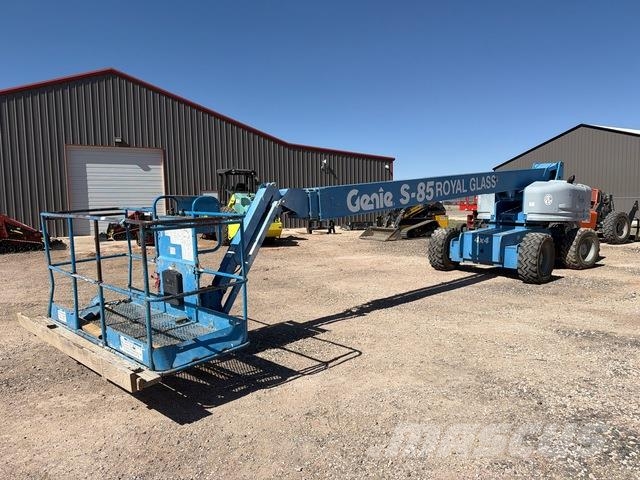
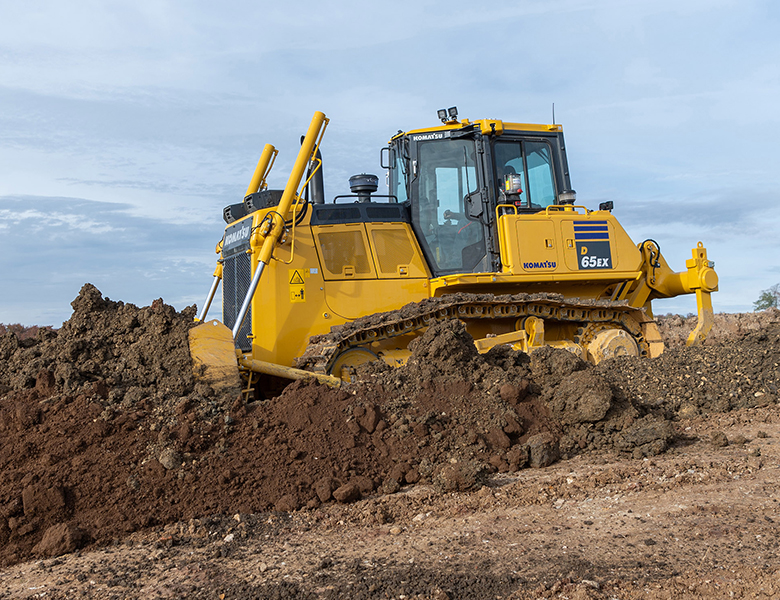
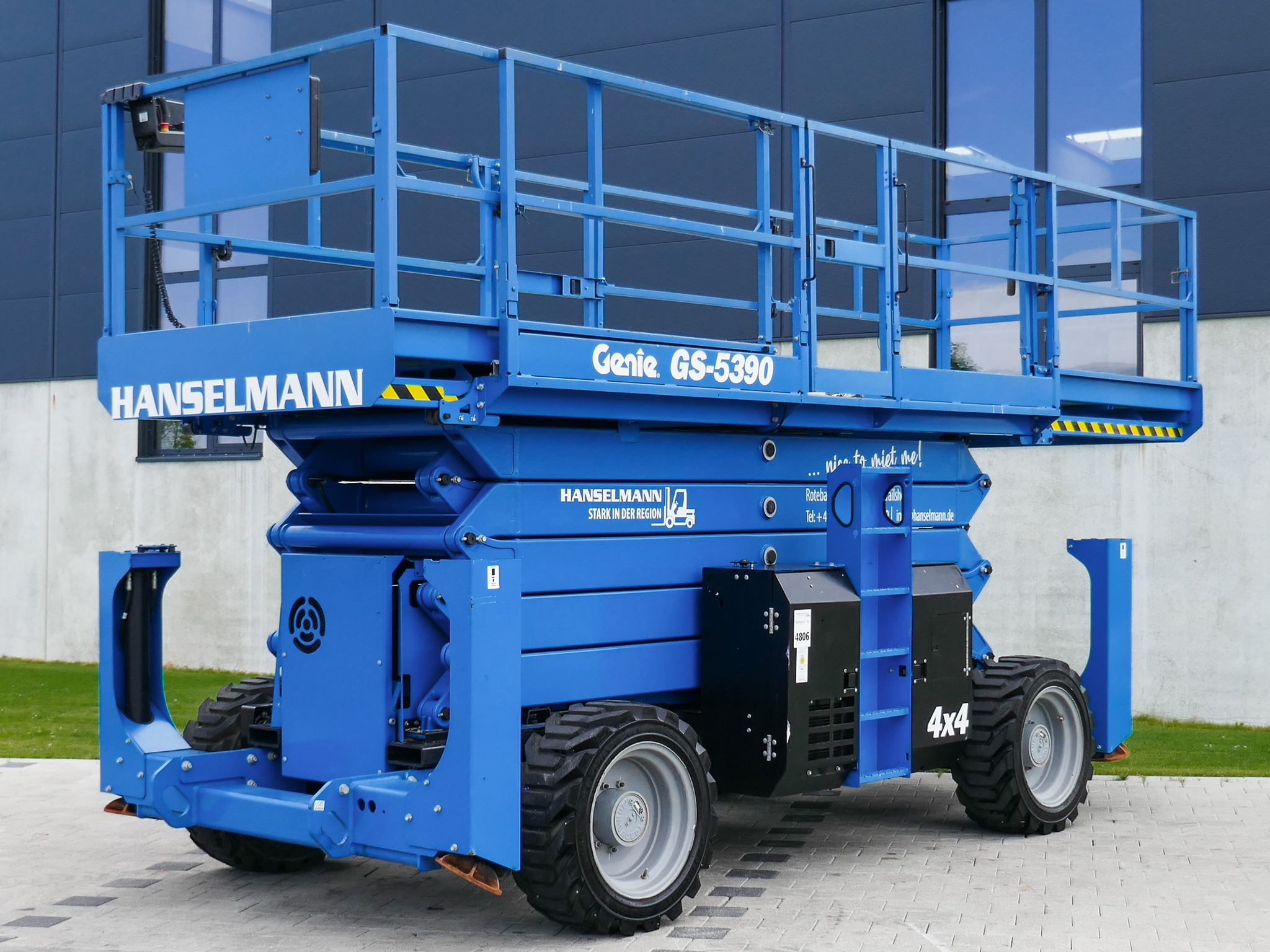
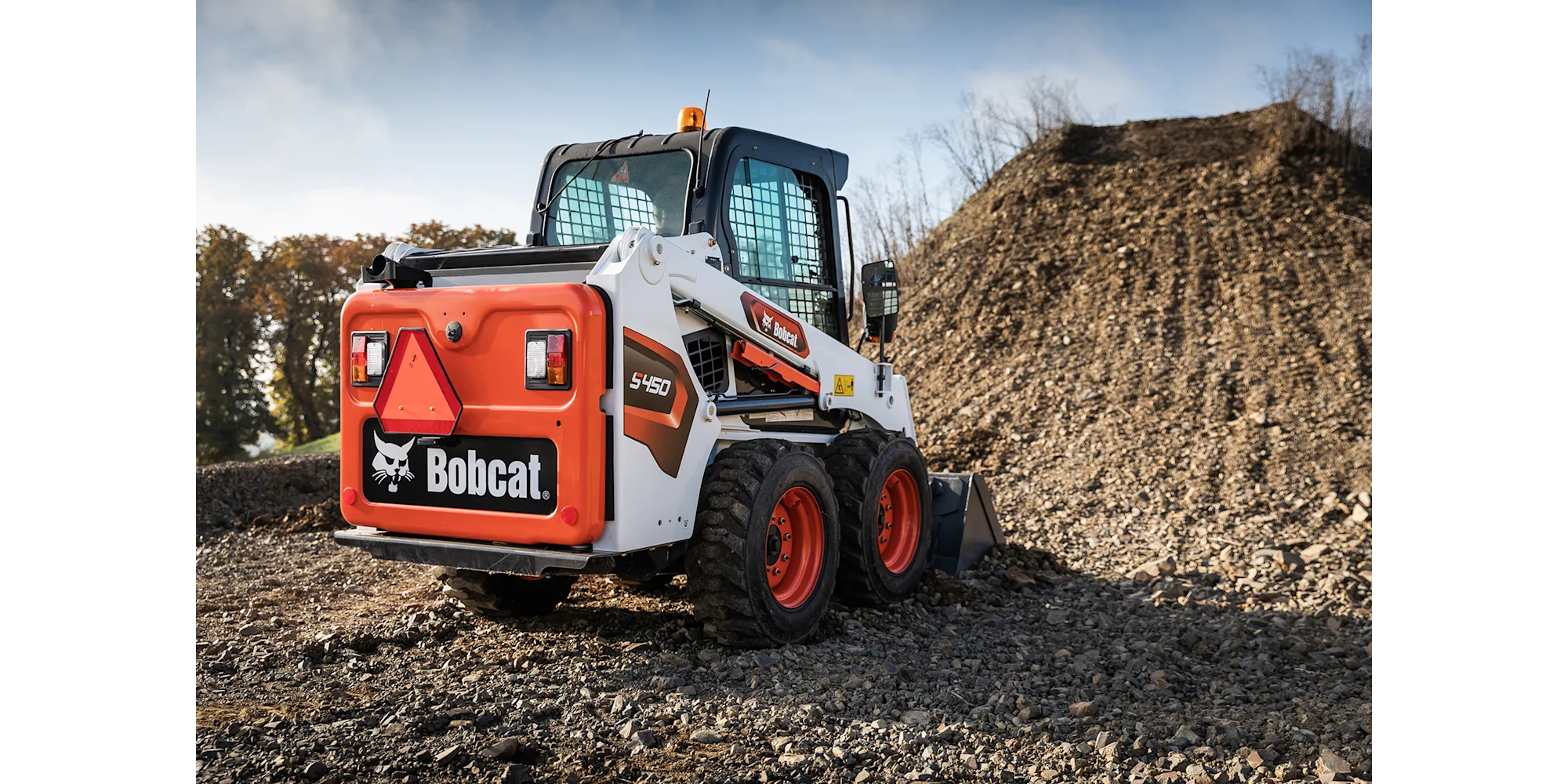
Aether has worked across construction equipment, cranes, tippers, loaders, gensets, service vehicles and multiple site vehicle categories.
How Fleet Management Reduces Operating Costs
Every rupee saved in fleet operations comes from better visibility. Here is where Aether's GPS fleet management system delivers measurable cost reduction for Indian EPC and infrastructure teams.
Eliminate Billing Disputes
Compare vendor invoices against actual GPS-recorded kilometres and engine hours. Disputed claims are resolved with data — no guesswork, no back-and-forth.
Cut Idle Time Costs
Idle vehicles burn fuel and rack up hire charges without doing any work. Aether's idle-time reports identify which machines are consistently underutilised so you can redeploy or challenge the billing.
Reduce Unplanned Downtime
Maintenance alerts triggered by engine hours and KM thresholds mean machines are serviced on schedule — before a breakdown stalls a project and inflates emergency repair costs.
Recover Unnecessary Travel Costs
Route history and trip data expose empty return runs, route deviations and unauthorised movement. Teams using Aether have eliminated thousands of unnecessary kilometres per month.
More than tracking. Better visibility. Clearer accountability.
Book a demo to see live location, route history, KM travelled, engine hours, idle time, geofencing, speed alerts, daily digest and logsheet verification in the Aether dashboard.
Go deeper on fleet management
Practical reading on GPS tracking, fleet visibility, and how construction operations gain control over their vehicles.
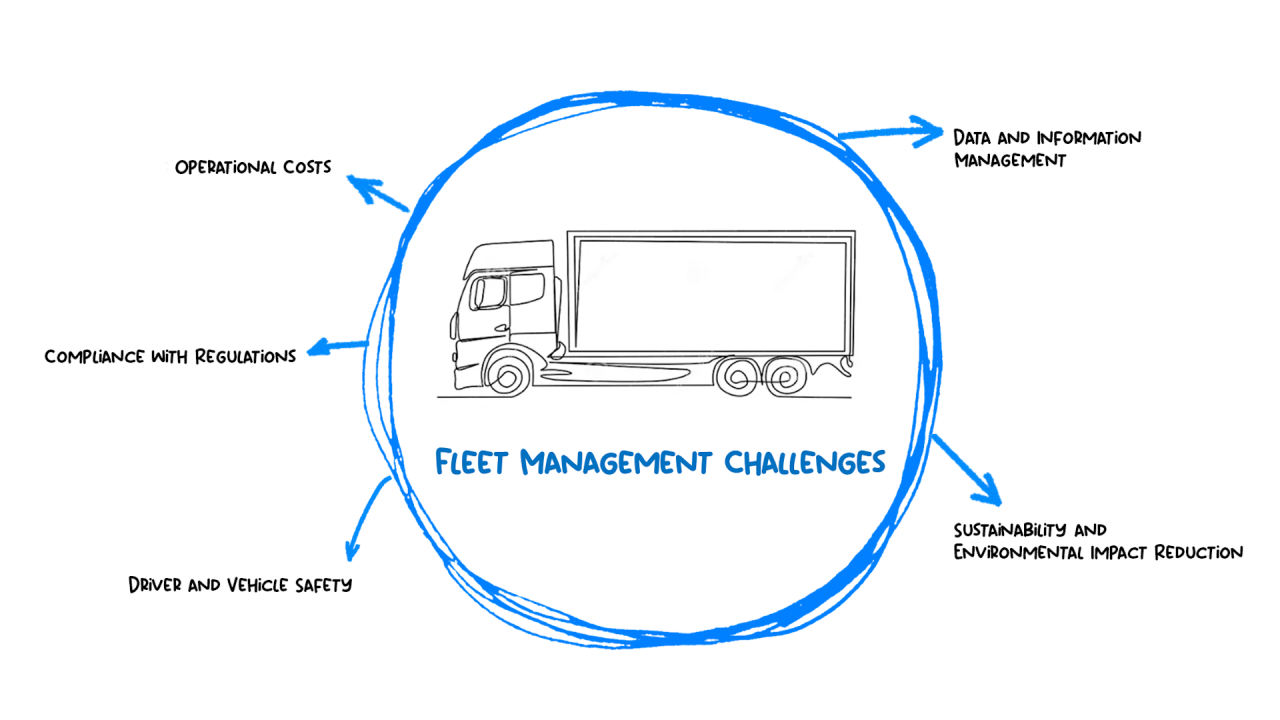
Fleet Management Challenges: Fuel Theft, Logsheets & GPS Gaps
The real problems fleet managers face on construction sites — and why data alone doesn't fix them.
Read article →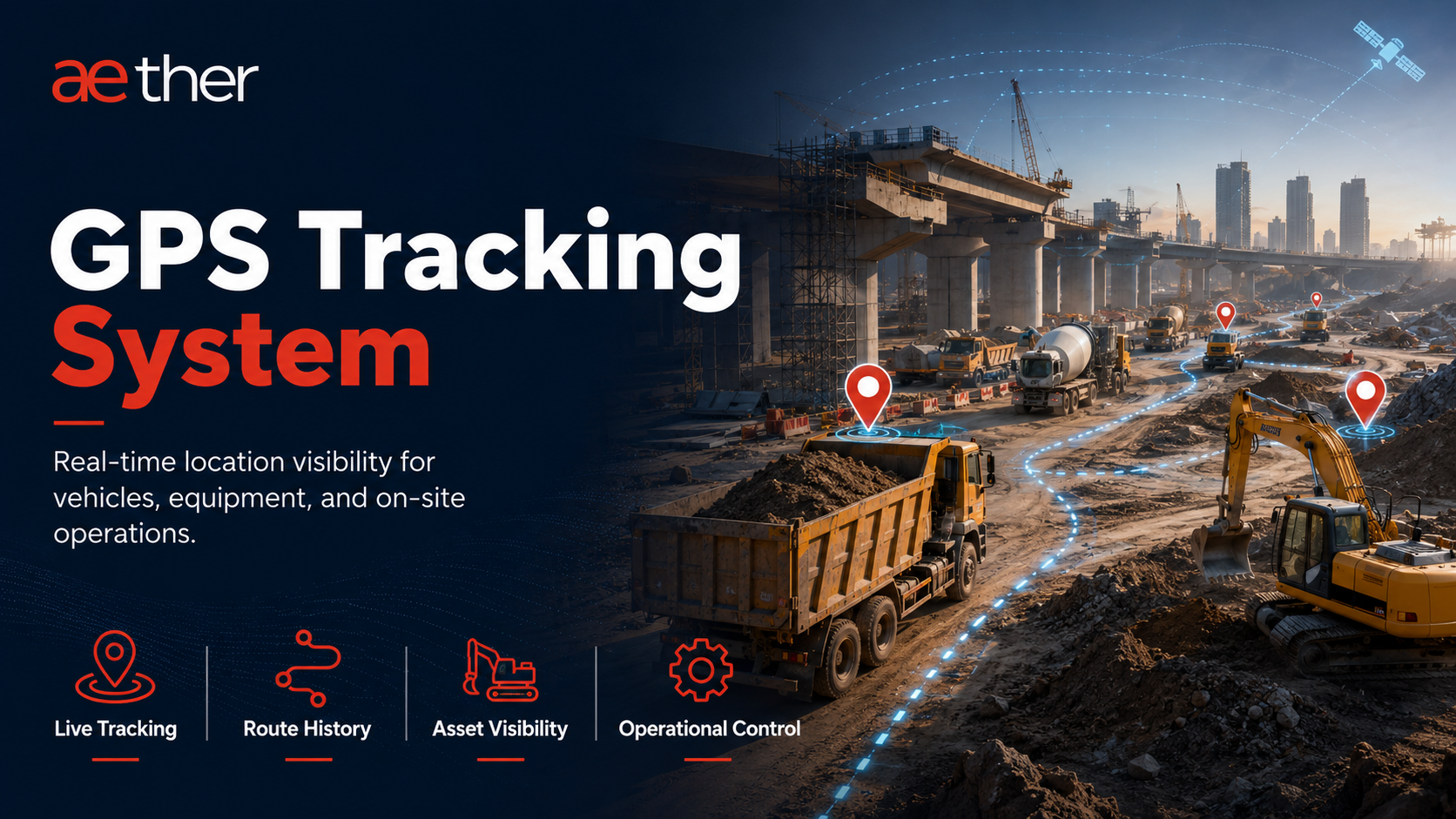
GPS Tracking System for Vehicles & Fleets
How live GPS tracking turns vehicle location into operational intelligence for fleet teams.
Read article →
Fleet Management System for Construction Companies
Live tracking, fuel visibility, engine-hour intelligence, and utilization control built for construction sites.
Read article →Frequently Asked Questions
We have answers
Fleet management is the process of overseeing a company's vehicles, machines and mobile vehicles to control costs, improve utilisation and ensure operational accountability. It covers live location tracking, engine hours, route history, maintenance scheduling, driver behaviour monitoring, geofencing and reporting — giving operations teams verified data to manage vehicles across sites, depots and project locations.
Telematics is the technology that collects and transmits vehicle data — location, speed, engine status, ignition events, hours of operation and movement patterns — over a cellular or satellite network to a central platform. A GPS tracking system is one component of telematics. A full telematics platform combines location data with engine diagnostics, driver behaviour analytics and operational reports to give fleet managers a complete picture of every vehicle.
GPS fleet tracking reduces costs in several ways: it eliminates billing disputes by showing actual kilometres and engine hours against vendor claims; it cuts idle time by identifying vehicles sitting unused across sites; it prevents unnecessary fuel burn by flagging long idling and route deviations; and it supports maintenance scheduling so machines are serviced before a breakdown causes costly downtime on-site.
GPS tracking shows where a vehicle is and where it has been — location, speed and route history. Telematics goes further: it also captures engine hours, ignition events, idle time, fuel usage patterns, driver behaviour data (harsh braking, acceleration, overspeed), maintenance alerts and vehicle health indicators. Think of GPS tracking as the foundation and telematics as the full operational intelligence layer built on top of it.
Aether triggers maintenance alerts based on the parameters your team tracks. You set a threshold — for example, service every 500 engine hours or every 10,000 km — and the system monitors each vehicle's actual usage automatically. When a vehicle crosses that limit, it appears in a maintenance-due list so your mechanical team can act before a breakdown occurs in the field. Multiple parameters can be combined: alert when engine hours OR kilometres reach the limit, whichever comes first.
Aether provides verified GPS data — actual KM travelled, engine hours, zone activity and trip records — that your accounts and billing teams can use to validate vendor invoices and internal cost centres. For ERP integration requirements, contact the Aether team to discuss data export formats and API options suitable for your billing workflow.
Reducing idle time starts with visibility. Aether records idle duration for every vehicle every day and surfaces it in the Daily Digest and operation-time reports. Managers can identify which machines are consistently sitting idle at a site, cross-reference with zone activity data, and take action — redeploying the vehicle, challenging the vendor, or adjusting the shift schedule. Over time, this data builds a clear picture of utilisation patterns across the entire fleet.
A strong construction GPS tracking system should include live location, KM travelled, engine hours, idle time, geofencing, speed alerts, route history, daily digest reports and digital logsheet verification. Aether IoT combines these features with BI monitoring and field support.
Yes. Aether records actual kilometres travelled, ignition ON/OFF events, engine running hours and idle hours so teams can compare system data with manual KMR, HMR, trip sheets and vendor billing claims.
Geofencing shows when a vehicle entered or exited a work zone, how long it stayed there, whether the engine was running inside the zone and whether the vehicle was present but idle. This helps with zone-level accountability and vendor verification.
Aether provides ignition reports, operation time and engine-hour reports, vehicle tracking reports, route and movement reports, geofence zone reports, driver behaviour and safety reports, and daily digest summaries.
Device selection depends on the vehicle and use case. Aether can recommend options such as FMB125 for construction tracking, FMC650 for CAN Bus heavy machinery, FMB920 for light or service vehicles and FMB001 for OBD-II cars.