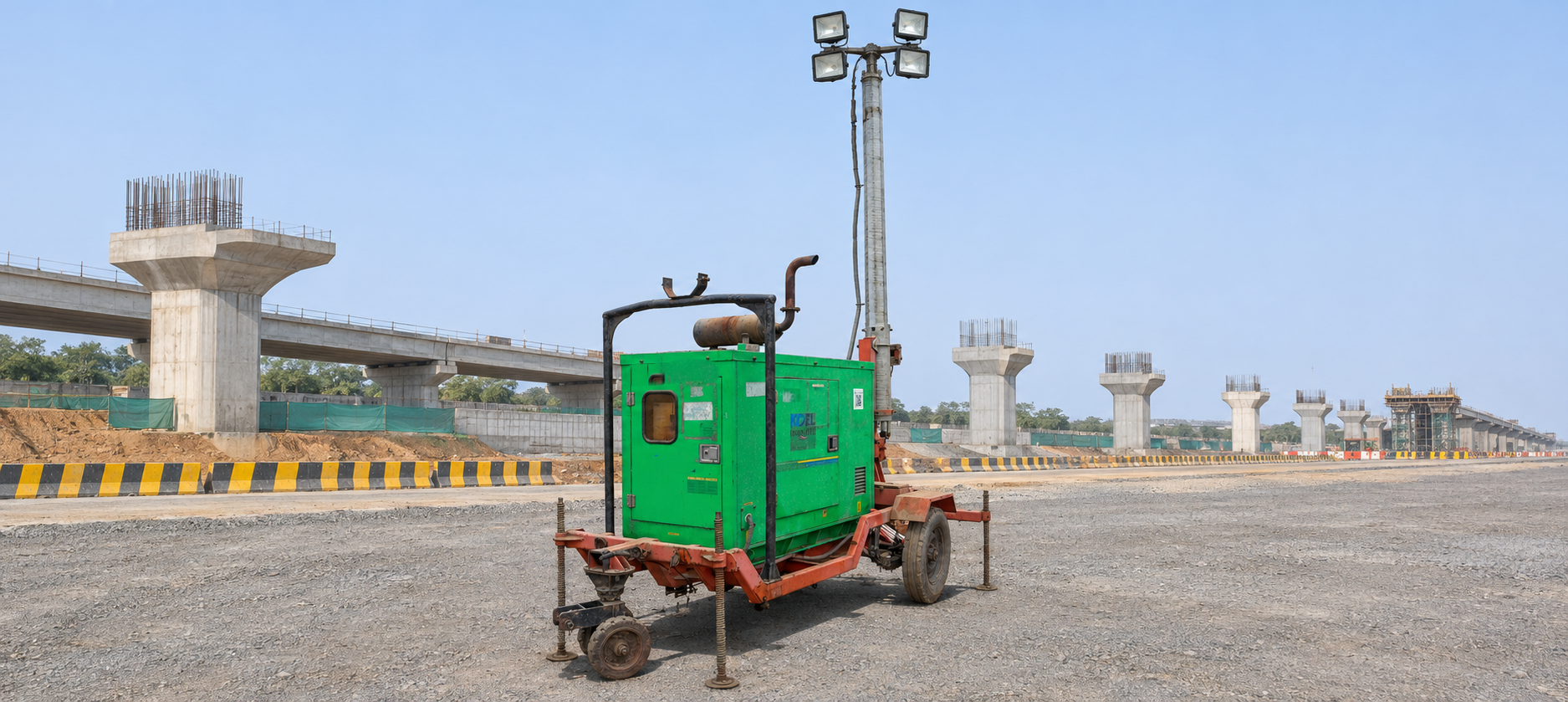
The Kirloskar mobile lighting tower pairs a 7.5 kVA genset with a 9 m rotating mast and four adjustable 300 W LED floodlights for temporary illumination at outdoor worksites.
Generator7.5 kVA
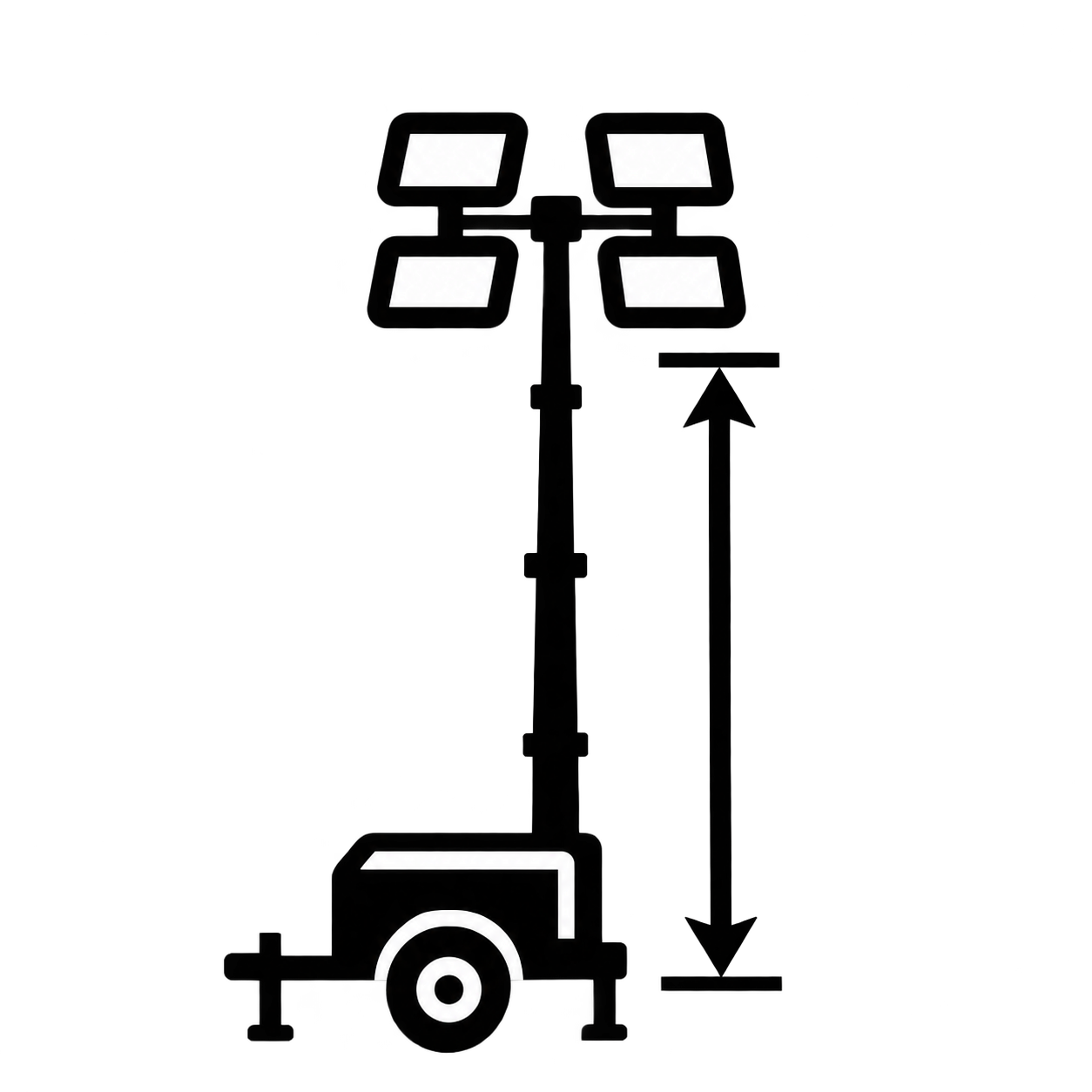
Mast Height9 m
LED Floodlights4 × 300 W
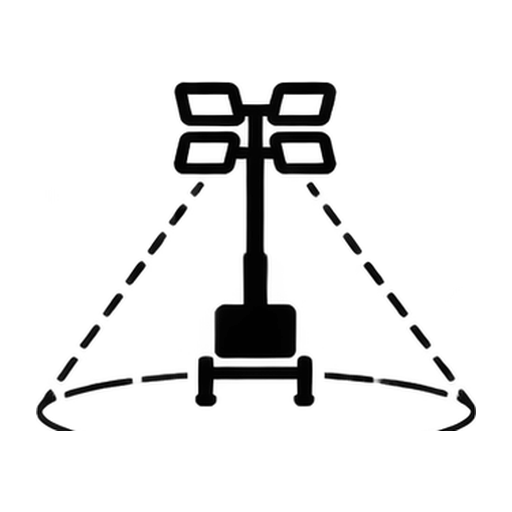
CoverageUp to 5,000 m²
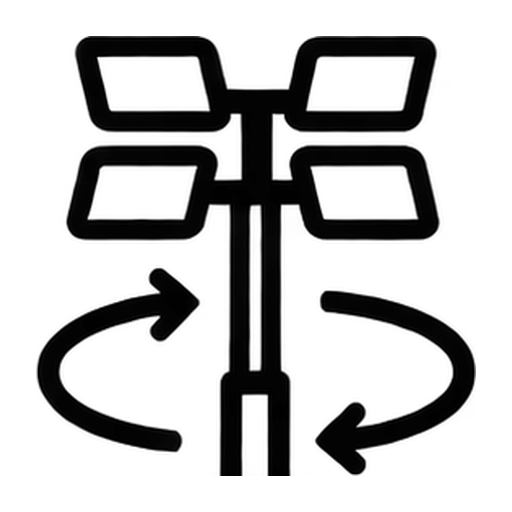
Mast Rotation360°
Fuel Tank26 L
Key Highlights
Generator Capacity
7.5 kVA
Mast Height
9 m
LED Floodlights
4 × 300 W
Lighting Coverage
Up to 5,000 m²
Fuel Tank
26 L
Mast Rotation
360°
Fuel Use at 50% Load
1.1 L/h
Engine Speed
3,000 rpm
Rated Voltage
230 V
LED Efficiency
158 lm/W
LED Protection
IP66
LED Lifespan
50,000 hours
Mast Construction
Hot-dipped galvanized
Trailer Suspension
Leaf-spring
Stabilizers
4 mechanical stay jacks
Specifications
Technical specifications for the Kirloskar 7.5 kVA mobile lighting tower variant
Lighting arrangement4 adjustable LED floodlights × 300 W
Stated lighting coverageUp to 5,000 m²
LED protectionIP66
LED efficacy158 lm/W
LED rated life50,000 hours
Runtime at 50% load12 hours
GENSET & FUEL
Engine seriesAir-cooled Kirloskar Sentinel Series
Cylinders1
Voltage230 V
Engine speed3,000 rpm
Fuel consumption at 25% load0.95 L/h
Fuel consumption at 50% load1.1 L/h
Fuel tank26 L
Sound level≤75 dB
ControllerMicroprocessor-based genset controller
MAST & TRAILER
Mast height9 m
Mast constructionHot-dipped galvanized
Mast elevationGear winch
Mast rotation360°
TrailerTwo-wheel heavy-duty trailer with leaf-spring suspension
StabilizationFour mechanical stay jacks
TowingTow bar with hook
FEATURES & APPLICATIONS
DeploymentMobile, self-sustained operation
Typical usesRoadworks, construction, mining, oil and gas, events, emergency response, military and defense, and rental fleets
Lighting adjustmentAdjustable LED floodlights
Emissions and noiseLow-emission, low-noise genset; confirm site-specific compliance separately
Variant note: The 7.5 kVA configuration is listed as a variant rather than a separate model code. Confirm the exact installed unit and its electrical, lighting and service requirements from the nameplate and supplied documents.
Kirloskar 7.5 kVA Maintenance & Inspection Checklist
Daily pre-start checks · hour-based service schedule · warning actions · fluids and care.
Daily Pre-Start Inspection
About 10–15 minutes. Engine stopped and cool, lights off, mast fully lowered, unit on firm, level ground. Do the trailer and mast checks before raising the mast.
Every shift
Trailer & stability two-wheel trailer, leaf springs, four stay jacks
1
Parking & overhead clearance
Firm, level ground, away from trench edges. Look up: the raised 9 m mast must be clear of power lines.
Act if: ground is soft or sloping, move the unit. Power line within reach, do not raise; electrocution risk.
2
Stay jacks (4)
Lower all four on firm ground (base plate or timber on soft soil) and lock. Push the trailer: it must not rock.
Act if: a jack is bent or will not lock, or the trailer rocks. Do not raise; the tower can tip.
3
Tow bar & hook
Look for cracks, bends and loose bolts. Keep the wheels chocked when parked.
Act if: there is a crack or loose bolt. Do not tow.
4
Tyres & wheel nuts
No cuts, bulges or low pressure. All nuts present; a rust trail around a nut means it is loose.
Act if: a tyre is damaged or a nut is missing or loose. Do not tow.
5
Leaf springs & U-bolts
Look under both sides for broken or shifted leaves and loose U-bolts.
Act if: a leaf is broken or a U-bolt is loose. Do not tow; the axle can shift.
With the mast lowered, look along each section for dents, bends and cracked welds.
Act if: a section is bent or cracked. Do not raise; it can jam or fold.
7
Winch wire rope
Check the rope on the drum and at end fittings for broken wires, kinks, crushing and rust.
Act if: any of these are found. Do not raise; rope failure drops the mast.
8
Gear winch
Turn the handle a little. It must run smoothly and hold position when released.
Act if: it slips back. Do not use; the mast can come down.
9
Mast locks & rotation
Upright lock and rotation lock engage fully. Turn the mast by hand: smooth, no grinding.
Act if: a lock will not engage, do not raise. Grinding: report it.
10
Mast power cable
No cuts, crushing or pinch points. The cable must pay out freely as the mast rises.
Act if: insulation is cut. Do not switch on the lights; shock risk.
LED floodlights 4 × 300 W, IP66
11
Floodlights (all four)
Wipe lenses. Check for cracks, water inside, missing cable glands, loose bolts and correct aim.
Act if: a lens is cracked or has water inside, report it. Loose bolt: tighten; a light can fall from 9 m.
Engine CC 519, air-cooled diesel
12
Engine oil (1.7 L sump)
Unit level, engine stopped a few minutes. Dipstick at the “H” mark. Top up with K-Oil Super SAE 15W-40 only.
Act if: oil is milky (water) or the level rises with a diesel smell (fuel in oil). Do not start; report it.
13
Fuel (26 L tank)
Read the fuel gauge. Fill with clean diesel to IS 1460, engine stopped only. Keep the filler area clean.
Act if: the tank is near empty. Refuel first; running dry lets air into the fuel line.
14
Cooling air path
Canopy grilles, fan and cooling fins free of dust, leaves and plastic. Nothing stacked against the canopy.
Act if: the path is blocked. Clean before starting; an air-cooled engine overheats fast.
15
Air cleaner
Housing closed and clamped. On dusty sites, check the element.
Act if: the housing is open or the element is missing. Do not run; dust wears the engine.
16
Fuel & oil leaks
Look inside the canopy and under the trailer for fuel or oil drips.
Act if: fuel is leaking. Do not start; fire risk near the hot exhaust.
17
Exhaust & canopy
No cracks or soot marks at exhaust joints; outlet pointing away from people. Canopy doors latch.
Act if: exhaust leaks inside the canopy. Do not run; fumes and fire risk.
Electrical & controls microprocessor controller, 12 V charger, AC breaker
18
Battery
Terminals tight and clean, correct polarity, clamp firm, case not cracked.
Act if: the battery is weak. Charge it first; do not keep cranking.
19
Controller & log book
Switch on: display on, no alarm. Record hours, fuel added, oil added, voltage and frequency.
Act if: an alarm is showing. Find the cause first (see Warning Actions).
20
Breaker, socket & cables
Breaker OFF before starting. No burn marks on the socket; cables not under jacks or wheels.
Act if: the socket is burnt or melted. Do not use; fire risk.
21
Earth connection
Earth lead (8 SWG copper) connected and clamp tight before starting.
Act if: it is not connected. Do not switch on the lights; the frame can become live.
22
Low oil-pressure trip
Fitted as standard. It is a backup; the daily dipstick check is still needed.
Act if: the engine stopped on a trip. Check oil and find the cause before restarting.
23
Electrical load
The four lights use 1,200 W. Add up any extra equipment; keep the total within 6 kW / 7.5 kVA.
Act if: the overload warning shows. Switch off extra load.
Service Schedule by Hours
Use the genset hour meter. Select an interval and complete earlier recurring tasks where due.
Engine-oil change every 100 operating hours at normal temperature and pressure. This is the only fixed hour-based interval; other items are serviced by condition. Engine: CC 519, 519 cc, single cylinder, air-cooled, 7.2 kWm / 9.8 HP at 3,000 rpm.
Matches the Daily Pre-Start Checks tab. Record every check in the log book.
Engine
Engine oil
Check level; top up to the “H” mark.
CHECK
Air cleaner
Housing closed; check the element on dusty sites.
CHECK
Fuel tank (26 L)
Check level; refuel only with the engine stopped.
CHECK
Fuel and oil leaks
Inside the canopy and under the trailer.
CHECK
Cooling fins, cylinder head, fan, air ducts
Free of dust and debris.
CHECK
Exhaust and silencer
No leaks or cracks.
CHECK
Engine and genset mounting bolts
Check by sight.
CHECK
Electrical & controls
Starting battery
Terminals, polarity, clamp.
CHECK
Controller and log book
Hours, fuel, oil, V, A, Hz.
RECORD
AC breaker, socket, cables
No burn marks; cables clear of wheels and jacks.
CHECK
Earth connection (8 SWG copper)
Connected and tight.
CHECK
Lighting
Lenses and housings
Clean lenses; check for cracks and water.
CLEAN
Mast power cable and connectors
No cuts or crushing.
CHECK
Mast & winch
Winch wire rope
Broken wires, kinks, crushing, rust.
CHECK
Gear winch
Holds position when released.
CHECK
Mast sections, locks, rotation
No dents or cracked welds; locks engage.
CHECK
Trailer
Tyres and wheel nuts
Cuts, bulges, pressure; nuts present and tight.
CHECK
Leaf springs and U-bolts
No broken leaves or loose U-bolts.
CHECK
Stay jacks, tow bar and hook
No bends, cracks or loose bolts.
CHECK
Includes all every-shift checks. At 12 h a night, 100 h is roughly 8 nights of running.
Engine lubrication
Engine oil (1.7 L sump)
Change the full fill with K-Oil Super SAE 15W-40; refill to the dipstick “H” mark.
CHANGE
Log book
Record the hour-meter reading and the oil change.
RECORD
Harsh duty
Hot, dusty or long night-duty sites
The 100 h interval is for normal conditions. Shorten it on hot, dusty or long night-duty sites.
SHORTEN
The 100-hour interval applies to engine oil only. Filters, the air-cleaner element, winch lubrication and trailer parts have no fixed hour interval; service these by condition.
No fixed hours. Act when the daily checks show the condition below.
Engine
Cooling fins and cylinder head
Clean when dust builds up; method in the Fluids & Care tab.
CLEAN
Air cleaner on heavy-dust sites
Fit a heavy-duty air cleaner; ask the dealer.
UPGRADE
Lights, mast & electrical
LED fixtures
Replace on failure. Rated life 50,000 h is a rating, not a replacement interval.
REPLACE
Winch wire rope
Replace if broken wires, kinks or crushing are found.
REPLACE
Starting battery
Disconnect before any maintenance work.
ISOLATE
Applies when the unit will stand idle for more than 6 months.
Preservation
Whole genset
Protect from moisture, internal corrosion and rodents.
PRESERVE
Engine and fuel system
Preservative oil, e.g. Servo Preserve 30 or Bharat Preserve Oil 30.
PRESERVE
Starting battery
Keep charged during storage.
CHECK
Return to service
Re-commissioning
Have the set checked by the dealer before running it again.
INSPECT
Before maintenance: lower the mast fully, switch off the AC breaker, stop the engine and let it cool, and disconnect the battery. Routine maintenance should go through an authorised dealer.
Warning Alerts & Immediate Actions
Stop immediately for red alerts; resolve amber alerts before continuing. The genset has two built-in protections: low lube-oil pressure trip and overload warning. The other alerts are conditions the crew must watch for.
Red — StopAmber — Act
RED
Engine stopped on low lube-oil pressure trip
Action: do not keep restarting. Check the dipstick and look for leaks. Top up and restart once; if it trips again, call the dealer.
If ignored: bearings and crankshaft run without an oil film; the engine can seize.
RED
Winch slips or mast lowers on its own
Action: clear everyone from under the mast and around the trailer. Lower slowly only if the winch still controls it. Tag the unit out.
If ignored: mast sections drop suddenly; lights destroyed, serious injury.
RED
Strong wind or storm with mast raised
Action: lower the mast as per site rule; always lower it before a storm.
If ignored: the tower tips or the mast bends; injury and total loss of the unit.
RED
Shock felt on frame or mast, or damaged cable
Action: switch off the AC breaker and stop the engine without touching the frame. Call an electrician.
If ignored: electrocution.
RED
Fuel leak, burning smell or smoke
Action: stop the engine, switch off the breaker and keep a fire extinguisher ready. Do not restart until fixed.
If ignored: fire on site.
RED
Heavy knocking, black or blue smoke, sudden power loss
Action: stop the engine. Check oil level, air cleaner and cooling path. Call the dealer if there is no simple cause.
If ignored: piston, cylinder or bearing damage spreads.
AMBER
Overload warning
Action: switch off extra equipment and keep the total within 7.5 kVA / 6 kW (26.09 A at unity PF). Reset the breaker only after the load is reduced.
If ignored: inverter and alternator overheat; the breaker trips and site lights go off.
AMBER
Engine running hot or power dropping
Action: stop, let it cool, clean grilles and fins, and check that nothing blocks the canopy. Do not rely on an engine-temperature alarm.
If ignored: piston scuffing and cylinder damage.
AMBER
Engine does not start
Action: crank no more than 5 seconds at a time and wait one minute between tries. Check fuel, battery and air cleaner.
If ignored: long cranking drains the battery and overheats the starter.
AMBER
Low fuel on the gauge
Action: plan refuelling before the shift runs out. Refuel only with the engine stopped.
If ignored: the engine runs dry, air enters the fuel system and the lights go out.
AMBER
Slow cranking or battery not charging
Action: check terminals and report a suspected 12 V charger fault.
If ignored: the unit cannot restart after a stop.
AMBER
LED floodlight off or flickering
Action: switch off power and lower the mast before any work on the lights, cables or connectors.
If ignored: dark patches on site; a safety risk for night work.
AMBER
100-hour oil change due
Action: plan the oil change at the next stop and record it in the log book.
If ignored: oil breaks down and engine wear speeds up.
AMBER
Controller alarm the crew cannot identify
Action: note the alarm text, stop safely and call the dealer.
If ignored: a real fault is left unchecked.
Fluids, Electrical & Care
Use the correct fuel and oil, and keep the air-cooled engine’s cooling path clean.
Fuel & engine oil
Fuel tank
High Speed Diesel to IS 1460:1995 (also DIN 51601, ASTM D975 1D / 2D). Fill only with the engine stopped; keep the filler clean.
26 L
Engine oil
K-Oil Super, SAE 15W-40. Check on the dipstick to the “H” mark.
1.7 L
Oil change interval
At normal temperature and pressure.
100 HR
Electrical
Battery charger
Built-in SMPS charger, 8 A.
12 V
Battery condition (flooded lead-acid)
Specific gravity 1.24–1.27 full; 1.20–1.24 about 70%; below 1.20 recharge. Never start on a weak battery.
SG
Earthing
Earth before operation as per local regulations.
8 SWG CU
Cooling-fin cleaning
Blow out dust
Open the air duct; use compressed air from the side opposite the normal airflow.
CLEAN
No diesel or kerosene
Dust sticks again to a fuel-washed surface.
AVOID
Hard deposits
Scrape, then water jet, then run the engine until dry.
CLEAN
Keep electricals dry
Never wash the alternator, starter, controller or wiring with water.
AVOID
Start & stop routine
Cranking
No more than 5 seconds per try; wait 1 minute between tries.
5 S
Warm-up
Idle 3 minutes, then switch the load on in steps.
3 MIN
Shut-down
Run 3 minutes off-load before stopping.
3 MIN
Long-term storage
Preservative oil
Servo Preserve 30 or Bharat Preserve Oil 30 for engine and fuel system; have the set checked before re-commissioning.
6+ MONTHS
Engine-oil note: the 100-hour interval applies at normal temperature and pressure. Hot, dusty and long-running night duty, common on Indian construction, mining and road sites, may need shorter intervals.
Frequently Asked Questions
Key details about the Kirloskar 7.5 kVA Mobile Lighting Tower
The tower uses a 7.5 kVA genset.
The 7.5 kVA variant has a 9 m mast with 360° rotation.
It has four adjustable 300 W LED floodlights.
The 7.5 kVA genset has a 26 L fuel tank.
The 7.5 kVA variant is listed with a runtime of 12 hours at 50% load.