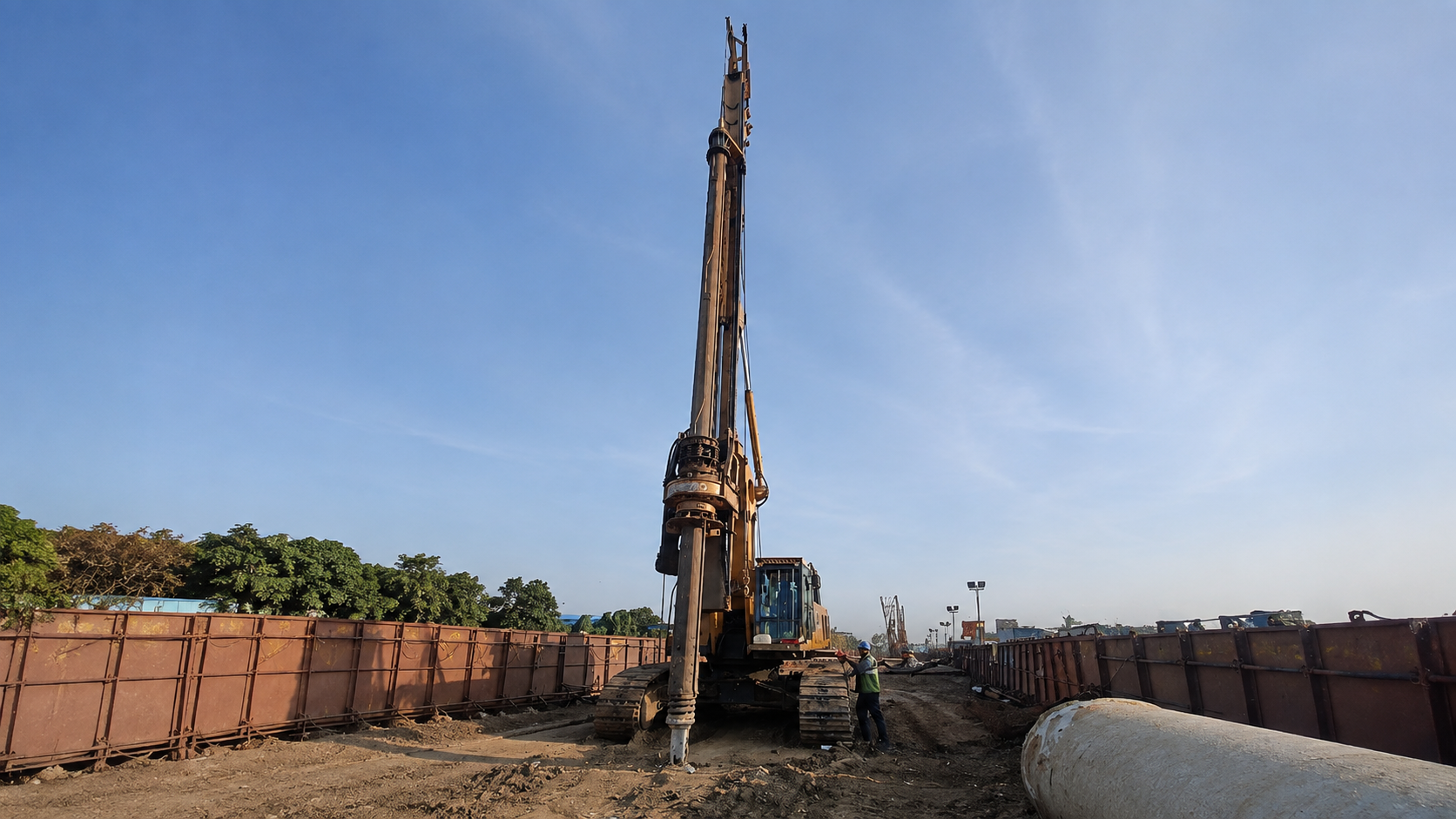
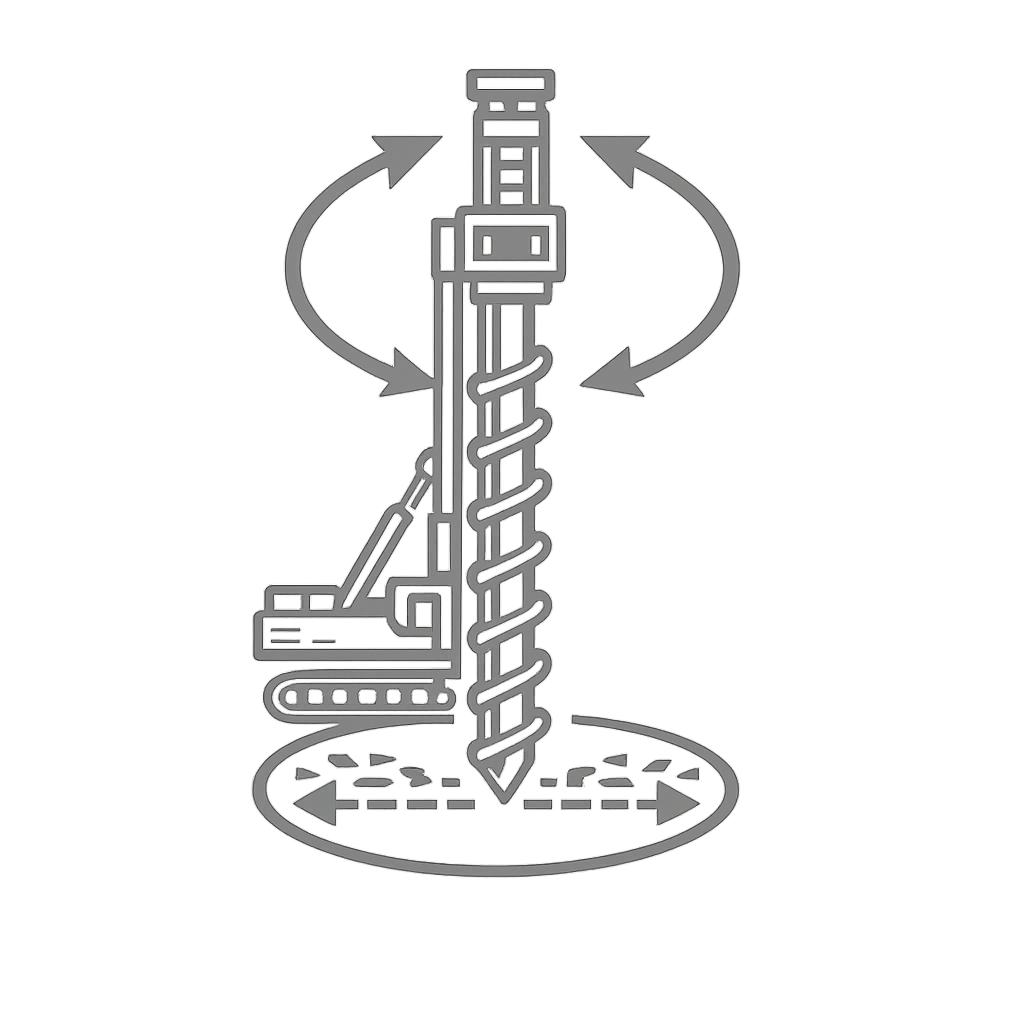
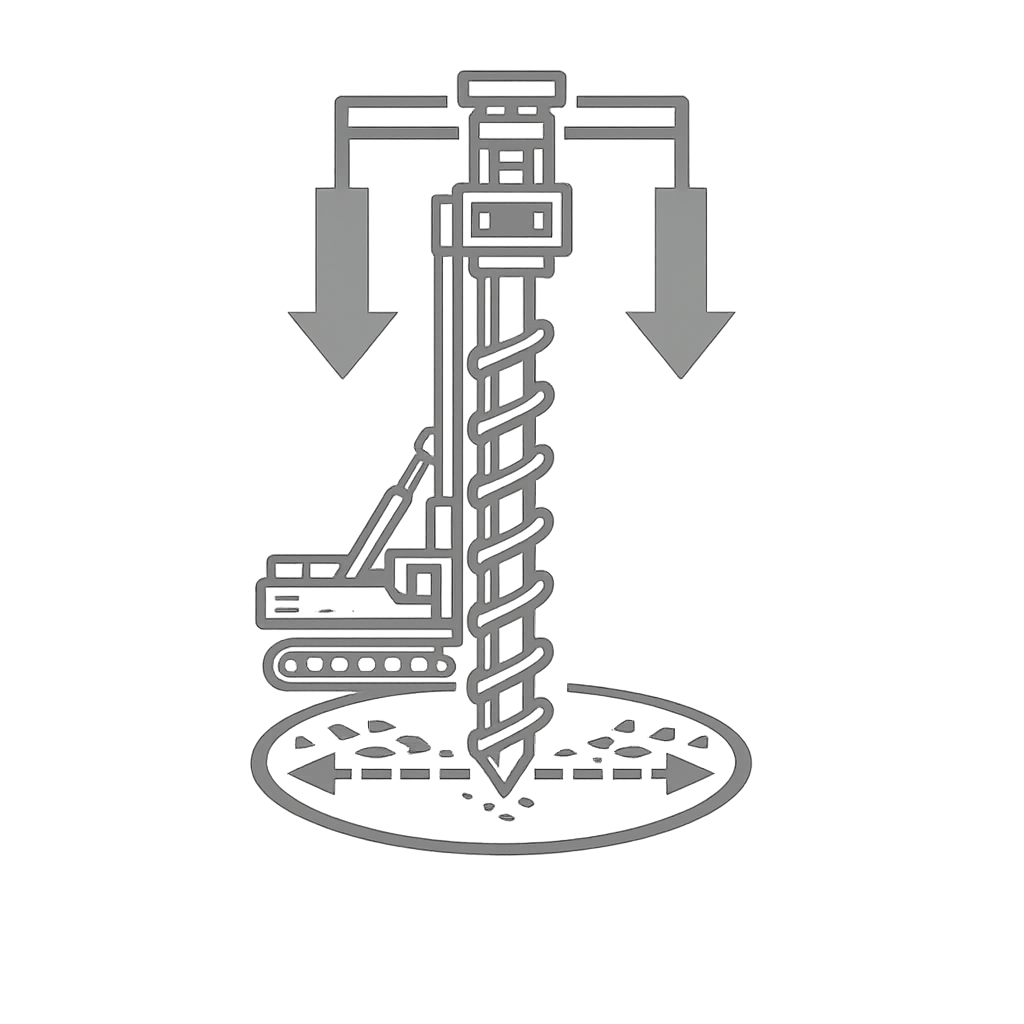
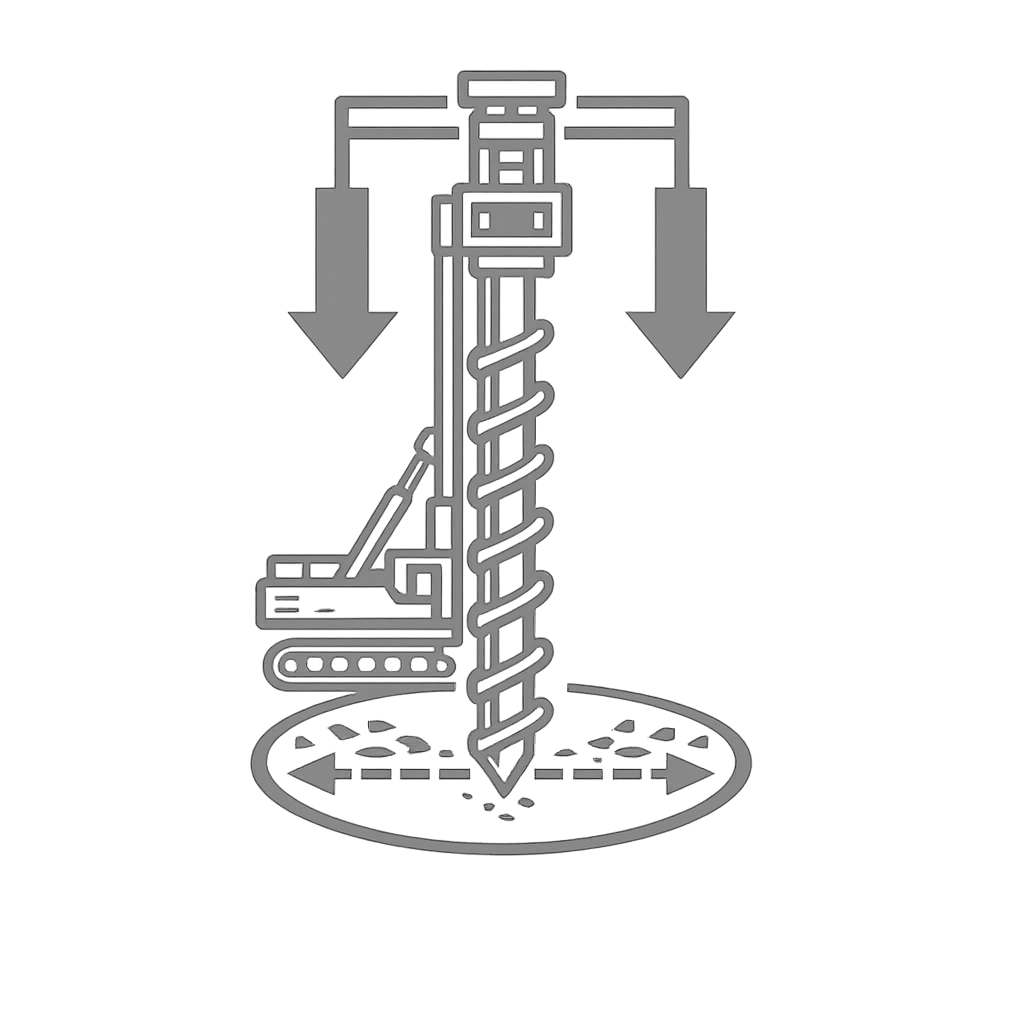
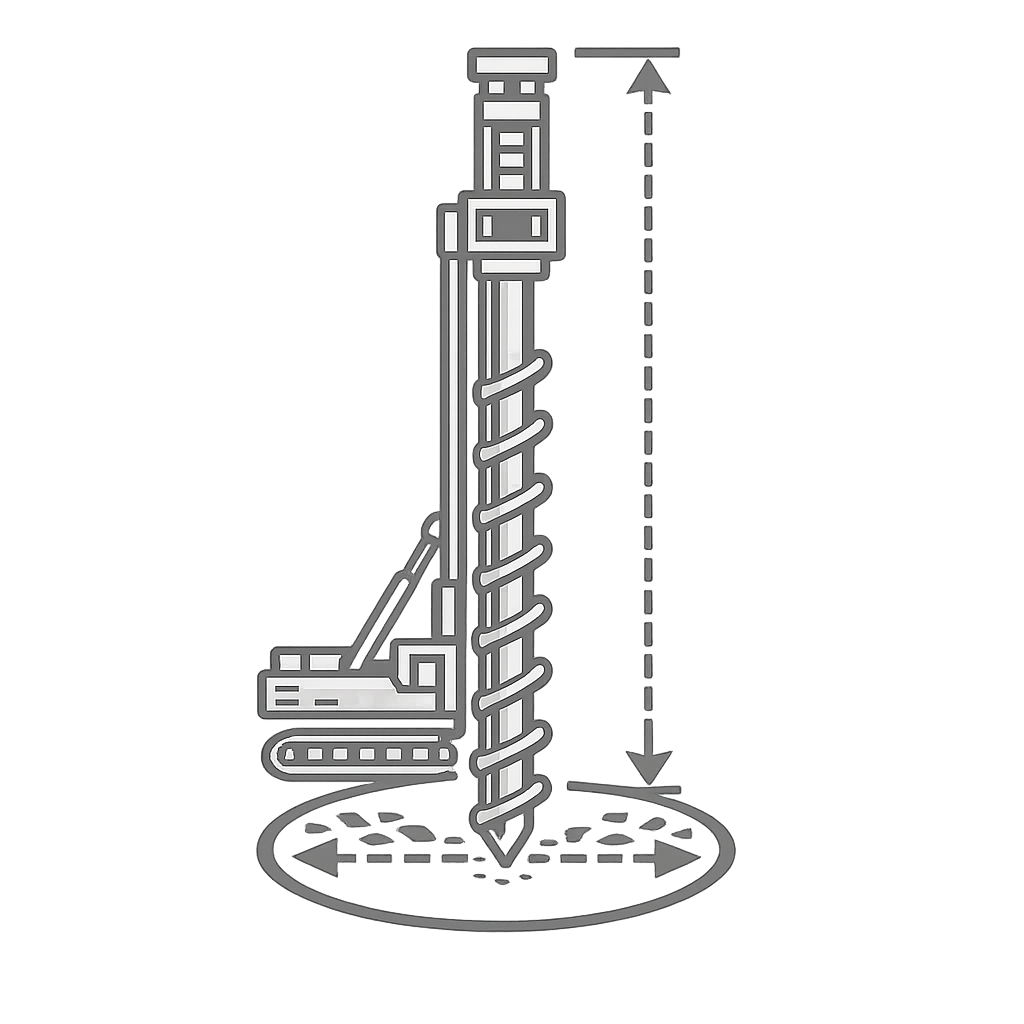
The XCMG XR240I is a rotary drilling rig designed for civil engineering,
municipal engineering, power grid piles, and work in both soil and rock layers.
It uses a Cummins QSL_325 engine rated at 242 kW and provides 240 kN·m rated
rotary output torque, with maximum drilling diameter of 2,000 mm and maximum
drilling depth of 72 m / 56 m (F/I).
Engine Power242 kW
Rotary Torque240 kN·m
Max Depth72 / 56 m
Max Diameter2,000 mm
Operating Weight86 t
Fuel Tank420 L
Key Highlights
Max Drilling Diameter
2,000 mm
Max Drilling Depth
72 m / 56 m
Rated Output Torque
240 kN·m
Working Speed
7–27 r/min
Engine Model
Cummins QSL_325
Engine Power
242 kW
Operating Weight
86 t
Max Track Span
3,250–4,400 mm
Max Crowd Force
210 kN
Max Lifting Force
270 kN
Main Winch Line Speed
70 m/min
Track Shoe Width
800 mm
Emission Standard
China III
Overall Height
23,180 mm
Fuel Tank Capacity
420 L
Specifications
Detailed technical specifications for the XCMG XR240I Rotary Drilling Rig
MaintenanceOptional centralized lubrication; pumps, valves and filters positioned near the side door
DiagnosticsOnline fault alarm, diagnosis and fault warning system
ChassisTDP-series hydraulic crawler chassis and large-diameter slewing bearing
XCMG XR240I Maintenance Checklist
Daily pre-start inspection · service schedule by operating hours · warning alerts and immediate actions for the XCMG XR240I hydraulic rotary drilling rig — Cummins QSL8.9 242 kW engine, 240 kN·m rotary torque, 72 m maximum drilling depth, 800 L hydraulic system at 35 MPa. Engine service intervals follow the XCMG 250 h recommendation, which is more conservative than the Cummins 500 h standard because of the drilling duty cycle.
Daily Pre-Start Inspection Checklist
Complete before every shift. Heavy loads, deep excavation, wire rope under tension, high-torque rotary drive and hydraulic pressure at 35 MPa mean any system failure risks catastrophic equipment damage or personnel injury. Allow 25–30 minutes for a thorough inspection.
Every Shift
Engine — Cummins QSL8.9 (242 kW, Turbocharged)
1
Engine Oil Level (25 L system)
Engine off, level ground, dipstick between upper/lower marks. Total system capacity 25 L.
Act if: Below MIN — do NOT start. Running low destroys turbo bearings and crankshaft. Add SAE 15W-40 API CH-4 or CI-4/CJ-4 oil.
2
Coolant Level
Radiator/overflow tank — engine cold. Total system 32–37 L. Do NOT open radiator cap when hot — pressurised system.
Act if: Below MIN — check for leaks at hoses, water pump, aftercooler. Top up with 50/50 ethylene glycol (ASTM D-6210). Low coolant = overheat risk on a turbo engine.
3
Fuel Level & Water Separator
Check fuel gauge. Drain the fuel-water separator before start — open the drain valve at the bottom of the separator bowl.
Act if: Water in fuel damages the HPCR common-rail injection system. Running dry with a turbo engine causes injector and pump seizure.
4
Air Intake & Piping
Check air intake piping condition. Look for loose clamps, cracked hoses, damaged intercooler piping. Check restriction indicator if fitted.
Act if: Damaged intake = unfiltered air into the turbocharger. Turbo blade erosion leads to catastrophic turbo failure and engine damage.
5
Engine Leaks & Cooling Fan
Visual check under engine for puddles. Inspect cooling fan operation — independent cooling system with real-time fan speed adjustment.
Act if: Any oil/coolant puddle — investigate the source. Fan not operating = rapid overheat on the 242 kW turbo engine under drilling load.
6
Crankcase Breather Tube
Check the crankcase breather tube is clear and unobstructed. A blocked breather causes oil seal damage.
Act if: Blocked breather = positive crankcase pressure, blows out seals, oil leaks at every gasket. Check and clear.
Hydraulic System (800 L, 35 MPa)
7
Hydraulic Oil Level
Sight gauge on tank — check with cold oil, machine on level ground, all cylinders retracted. 800 L tank capacity.
Act if: Below MIN — do NOT operate. Check for leaks at all hose connections, cylinders and the rotary joint. Add ISO VG 68 anti-wear hydraulic oil.
8
Hydraulic Leak Inspection
Walk around the entire machine — check hoses, fittings, cylinder rods, rotary drive area, crowd cylinder, main/aux winch. Look under the chassis. System pressure 35 MPa.
Act if: Any active leak — do NOT operate. Hydraulic failure at 35 MPa causes uncontrolled equipment movement. High-pressure injection injury risk.
Wire Ropes & Winches
9
Main Winch Wire Rope (Φ30 mm)
Inspect full visible length for broken strands, kinks, bird-caging, corrosion, crushing and flattening. Max lifting force 270 kN.
Act if: Any broken strands visible — STOP. Count broken wires per lay length. More than 6 broken wires in one lay = replace the rope immediately. Failure drops the kelly bar.
10
Auxiliary Winch Wire Rope (Φ20 mm)
Inspect for the same defects as the main rope. Max lifting force 100 kN. Check rope termination at the drum and at the load point.
Act if: Damaged rope under 100 kN load = sudden snap. Replace if defects are found. Grease rope strands after inspection.
11
Wire Rope Lubrication
Apply grease to wire rope strands — both main and auxiliary. Lubrication prevents internal corrosion and reduces friction wear.
Act if: Dry ropes corrode from the inside out — failure is sudden with no external warning. Daily greasing extends rope life significantly.
Mast, Kelly Bar & Rotary Drive
12
Mast & Boom Visual Inspection
Check mast structure for visible cracks, distortion and weld defects. Check boom connection points. Mast height 23.18 m in working state.
Act if: Any crack or deformation — STOP. Tag out the machine. Mast structural failure at full extension = catastrophic collapse.
13
Mast Guide Surfaces & Pivots
Grease mast guide sliding surfaces and all pivot points. Smooth mast operation is critical for drilling accuracy.
Act if: Dry guides = uneven mast movement, binding and accelerated wear. The guides are load-bearing surfaces for full drilling force.
14
Kelly Bar Condition
Visual check of kelly bar sections for damage, wear marks and cracks at joint areas. Standard JS406-4×14.5 (52 m depth).
Act if: A damaged kelly bar joint = stuck sections and loss of drilling depth control. Worn bars cause drilling deviation.
15
Rotary Drive Check
Check rotary drive for unusual noise. Check oil level in the rotary gearbox (92 L, ISO VG 220). Listen for grinding or bearing noise at idle.
Act if: Abnormal noise = gear or bearing damage. The rotary drive delivers 240 kN·m — failure under load causes severe drivetrain damage.
Crawler Chassis & Undercarriage
16
Crawler Track Tension & Bolts
Walk around the undercarriage — check tracks for correct tension, loose bolts and damaged track shoes (800 mm width). Check track span position.
Act if: A loose track = de-tracking during travel or positioning. Damaged track shoes = uneven ground pressure and instability on an 86 t rig.
17
Crawler Reducer Oil Level
Check oil level in both crawler reducers (11 L per side, ISO VG 220). Visual or dipstick check at the fill port.
Act if: Low oil = gear damage in the travel drive. Crawler reducer failure immobilises the 86-tonne machine on site.
Controls, Safety & Electronics
18
All Controls from Operator Cabin
Power on in the cabin. Test all functions — rotary drive, crowd up/down, main/aux winch, mast tilt, slewing, travel. Check the large screen display.
Act if: Any function non-responsive — do NOT drill. Diagnose through the fault diagnosis system before operating.
19
Emergency Stop
Press the E-stop. Verify all motion stops immediately, including rotary drive and winches. Reset and re-test.
Act if: E-stop not stopping motion — CRITICAL. The machine must NOT be used. 240 kN·m rotary torque without an emergency stop = extreme hazard.
Electronic Systems & Diagnostics
20
Online Fault Alarm & Diagnosis
Check the cab display for active fault codes via the Online Fault Alarm and Diagnosis System. Clear resolved codes.
Act if: Active fault codes — diagnose before operating. The system may force a shutdown during drilling operation.
21
Online Fault Warning System
Verify the preventive warning system is active. This system warns of developing faults before they cause failure.
Act if: Warning system disabled = no advance notice of developing failures. All faults become sudden emergencies.
22
Automatic Mast Verticality
Verify the Automatic Mast Verticality Adjustment system is functioning. The mast must be truly vertical for accurate piling.
Act if: Verticality system offline = piles drilled off-plumb. Structural defects in finished piles. Re-drilling is extremely costly.
23
Touch Button Protection System
Verify the Touch Button Protection System is active and responding.
Act if: Protection system inactive = operator safety features bypassed. Do NOT operate without this system functioning.
Note: the XR240I is a rotary drilling rig — complete the carrier checks (engine, hydraulics, tracks) and the drilling checks (wire ropes, kelly bar, mast, rotary drive) before every shift.
Service Schedule by Hourmeter
Use hourmeter readings; all daily checks apply at every interval. CHANGE / REPLACE / INSPECT / GREASE / CHECK / CLEAN / ADJUST.
Daily — every shift; carried into every higher interval.
Engine — Cummins QSL8.9 (25 L oil, 32–37 L coolant)
Engine oil level (25 L system)
CHECK
Crankcase breather tube — check clear
CHECK
Fuel-water separator — drain water
DRAIN
Coolant level (32–37 L system)
CHECK
Hydraulic System (800 L, 35 MPa, ISO VG 68)
Hydraulic oil level (sight gauge)
CHECK
System leak inspection
CHECK
Rotary Drive, Reducers & Gear Oil (all ISO VG 220)
Rotary gearbox oil level (92 L)
CHECK
Wire Ropes, Mast, Structure & Chassis
Main wire rope (Φ30 mm) — visual
INSPECT
Auxiliary wire rope (Φ20 mm) — visual
INSPECT
Wire rope strand lubrication
GREASE
Mast guide surfaces & pivots
GREASE
Kelly bar condition
INSPECT
Crawler tracks & shoes (800 mm)
CHECK
Mast/boom structural inspection
Daily visual; full NDT at 2,000 h
VISUAL
Centralized lubrication system
Optional feature — lithium-base EP2 grease
CHECK
Safety, Controls & Electrical Systems
Emergency stop
TEST
All cabin controls
TEST
Online fault alarm system
CHECK
Online fault warning system
VERIFY
Mast verticality system
VERIFY
Touch button protection
TEST
Cooling fan speed control
Real-time fan speed adjustment
VERIFY
250 h — routine service (plus all daily checks). First engine oil and filter change is at 250 h.
Engine — Cummins QSL8.9 (25 L oil, 32–37 L coolant)
CHANGE engine oil + filter
SAE 15W-40 API CH-4/CI-4/CJ-4 — 25 L
CHANGE
Air filter elements
Clean from inside out; replace after multiple cleanings
INSPECT/CLEAN
Charge air cooler condition
CHECK
Fuel injection pump mounting
CHECK
Hydraulic System (800 L, 35 MPa, ISO VG 68)
System leak inspection
CHECK
Rotary Drive, Reducers & Gear Oil (all ISO VG 220)
Rotary gearbox oil level (92 L)
CHECK
Wire Ropes, Mast, Structure & Chassis
Centralized lubrication system
Optional feature — lithium-base EP2 grease
CHECK
Safety, Controls & Electrical Systems
Online fault alarm system
CHECK
500 h — extended service (plus daily + 250 h items). First hydraulic oil change (800 L, ISO VG 46 → VG 68) falls here.
Engine — Cummins QSL8.9 (25 L oil, 32–37 L coolant)
CHANGE engine oil + filter
SAE 15W-40 API CH-4/CI-4/CJ-4 — 25 L
CHANGE
Air filter elements
Clean from inside out; replace after multiple cleanings
INSPECT/CLEAN
Fuel filters (primary + secondary)
REPLACE
Coolant filter
REPLACE
Coolant system — SCA concentration
CHECK
Hydraulic System (800 L, 35 MPa, ISO VG 68)
System leak inspection
CHECK
CHANGE hydraulic oil — 1st service
800 L; change grade ISO VG 46 → VG 68 for Indian conditions
CHANGE
Hydraulic filters (return / pilot / bypass)
1ST SERVICE
Wire Ropes, Mast, Structure & Chassis
Centralized lubrication system
Optional feature — lithium-base EP2 grease
CHECK
Slewing bearing — add grease
ADD GREASE
Safety, Controls & Electrical Systems
Online fault alarm system
CHECK
Battery terminals & relays
CHECK
Wiring harnesses
CHECK
1,000 h — major service (plus 500 h items). Cummins-authorised technician recommended.
Engine — Cummins QSL8.9 (25 L oil, 32–37 L coolant)
CHANGE engine oil + filter
SAE 15W-40 API CH-4/CI-4/CJ-4 — 25 L
CHANGE
Air filter elements
Clean from inside out; replace after multiple cleanings
INSPECT/CLEAN
Charge air cooler condition
CHECK
Fuel filters (primary + secondary)
REPLACE
Coolant filter
REPLACE
Coolant system — SCA concentration
CHECK
Drive belts — tension & condition
CHECK
Fan hub & belt tensioner
CHECK
Turbocharger mounting & connections
CHECK
Hydraulic System (800 L, 35 MPa, ISO VG 68)
System leak inspection
CHECK
Hydraulic filters (return / pilot / bypass)
REPLACE
Hydraulic oil condition analysis
Send sample for lab analysis
SAMPLE
Wire Ropes, Mast, Structure & Chassis
Centralized lubrication system
Optional feature — lithium-base EP2 grease
CHECK
Safety, Controls & Electrical Systems
Online fault alarm system
CHECK
Full electrical system inspection
INSPECT
1,500 h — all reducer and gear oils change at this interval (plus 1,000 h items).
Engine — Cummins QSL8.9 (25 L oil, 32–37 L coolant)
CHANGE engine oil + filter
SAE 15W-40 API CH-4/CI-4/CJ-4 — 25 L
CHANGE
Air filter elements
Clean from inside out; replace after multiple cleanings
INSPECT/CLEAN
Fuel filters (primary + secondary)
REPLACE
Coolant filter
REPLACE
Coolant system — SCA concentration
CHECK
Hydraulic System (800 L, 35 MPa, ISO VG 68)
System leak inspection
CHECK
Hydraulic filters (return / pilot / bypass)
REPLACE
Hydraulic oil condition analysis
Send sample for lab analysis
SAMPLE
Rotary Drive, Reducers & Gear Oil (all ISO VG 220)
CHANGE rotary gear oil
92 L ISO VG 220
CHANGE
CHANGE rotary reducer oil
6 L ISO VG 220
CHANGE
CHANGE crawler reducer oil
11 L per side ISO VG 220
CHANGE
CHANGE main winch reducer oil
8.5 L ISO VG 220
CHANGE
CHANGE auxiliary winch reducer oil
4 L ISO VG 220
CHANGE
CHANGE slewing reducer oil
4 L ISO VG 220
CHANGE
Wire Ropes, Mast, Structure & Chassis
Centralized lubrication system
Optional feature — lithium-base EP2 grease
CHECK
Safety, Controls & Electrical Systems
Online fault alarm system
CHECK
2,000 h — overhaul-level service (plus 1,500 h items).
Engine — Cummins QSL8.9 (25 L oil, 32–37 L coolant)
CHANGE engine oil + filter
SAE 15W-40 API CH-4/CI-4/CJ-4 — 25 L
CHANGE
Air filter elements
Clean from inside out; replace after multiple cleanings
INSPECT/CLEAN
Charge air cooler condition
CHECK
Fuel filters (primary + secondary)
REPLACE
Coolant filter
REPLACE
Coolant system — SCA concentration
CHECK
Drive belts — tension & condition
CHECK
Fan hub & belt tensioner
CHECK
Turbocharger mounting & connections
CHECK
CHANGE coolant — full replace
50/50 ethylene glycol, ASTM D-6210
CHANGE
Engine mounts
CHECK
Steam clean engine
PERFORM
Vibration dampers (rubber/viscous)
INSPECT
Hydraulic System (800 L, 35 MPa, ISO VG 68)
System leak inspection
CHECK
Hydraulic filters (return / pilot / bypass)
REPLACE
Hydraulic oil condition analysis
Send sample for lab analysis
SAMPLE
CHANGE hydraulic oil — full replace
800 L ISO VG 68
CHANGE
All hydraulic filter cartridges
REPLACE
All cylinder seal condition
Crowd, mast luffing, all rams
INSPECT
Wire Ropes, Mast, Structure & Chassis
Mast/boom structural inspection
Daily visual; full NDT at 2,000 h
FULL NDT
Centralized lubrication system
Optional feature — lithium-base EP2 grease
CHECK
Mast verticality sensor
RECALIBRATE
Chassis / slewing bearing structure
FULL INSPECT
Safety, Controls & Electrical Systems
Online fault alarm system
CHECK
Mast verticality system
RECALIBRATE
Battery terminals & relays
CHECK
Wiring harnesses
FULL INSPECT
Full electrical system inspection
INSPECT
5,000 h — major overhaul interval (plus 2,000 h items). Valve clearance adjustment due here or every 4 years.
Engine — Cummins QSL8.9 (25 L oil, 32–37 L coolant)
CHANGE engine oil + filter
SAE 15W-40 API CH-4/CI-4/CJ-4 — 25 L
CHANGE
Air filter elements
Clean from inside out; replace after multiple cleanings
REPLACE
Charge air cooler condition
CHECK
Fuel filters (primary + secondary)
REPLACE
Coolant filter
REPLACE
Coolant system — SCA concentration
CHECK
Drive belts — tension & condition
CHECK
Fan hub & belt tensioner
CHECK
Turbocharger mounting & connections
CHECK
Engine mounts
CHECK
Steam clean engine
PERFORM
Vibration dampers (rubber/viscous)
INSPECT
Valve clearance adjustment
Intake 0.305 mm / Exhaust 0.559 mm — engine cold
ADJUST
Hydraulic System (800 L, 35 MPa, ISO VG 68)
System leak inspection
CHECK
Hydraulic filters (return / pilot / bypass)
REPLACE
Hydraulic oil condition analysis
Send sample for lab analysis
SAMPLE
All hydraulic filter cartridges
REPLACE
All cylinder seal condition
Crowd, mast luffing, all rams
INSPECT
Wire Ropes, Mast, Structure & Chassis
Centralized lubrication system
Optional feature — lithium-base EP2 grease
FULL SERVICE
Safety, Controls & Electrical Systems
Online fault alarm system
FULL DIAG
Battery terminals & relays
CHECK
Wiring harnesses
FULL INSPECT
Full electrical system inspection
INSPECT
One-time first services.150 h (once only): change ALL reducer and gear oils on new or rebuilt machines — rotary gear 92 L, rotary reducer 6 L, crawler reducers 11 L per side, main winch 8.5 L, aux winch 4 L, slewing 4 L, all ISO VG 220. This clears break-in contamination and is not repeated; regular reducer oil changes then run at 1,500 h. 250 h: first engine oil and filter change. 500 h: first hydraulic oil change (800 L), switching from factory-fill ISO VG 46 to ISO VG 68 for Indian operating conditions, plus all hydraulic filters (return, pilot, bypass).
Warning Alerts & Immediate Actions
RED = stop all operations immediately. AMBER = take action before continuing. GREEN = monitor and schedule service. Engine alerts come from the Cummins electronic engine controller; machine alerts from the XCMG rig controller. Fault codes appear on the cab large screen display. Exact warning thresholds may differ by software version.
RED
Engine Oil Pressure Low (<69 kPa)
Oil pressure dropped below 69 kPa (10 psi) at low idle, or below 207 kPa (30 psi) at rated speed. Regulated pressure should be 517 kPa.
Immediate action: STOP ENGINE IMMEDIATELY. Check oil level (25 L system). If level is OK, do NOT restart — oil pump, turbo bearing or main bearing failure is likely. Call Cummins service.
Risk if ignored: Engine seizure — turbocharger, bearings, crankshaft and con-rods destroyed. Complete Cummins QSL8.9 replacement (977 kg engine). Downtime: weeks.
RED
Engine Coolant Temperature High (>105°C)
Coolant temperature exceeds the safe limit. A turbocharged engine generates extreme heat under drilling load. The 32–37 L coolant system has overheated.
Immediate action: STOP ENGINE. Do NOT open the radiator cap — pressurised system. Let it cool 30+ minutes. Check coolant level, fan operation (independent cooling system), belt tension, radiator blockage and aftercooler.
Risk if ignored: Head gasket failure, warped cylinder head, cracked block, turbo bearing damage. Cummins QSL8.9 replacement cost is extremely high.
RED
Engine Overspeed
Engine RPM exceeded the maximum safe speed. The Cummins electronic controller triggers an automatic shutdown.
Immediate action: The engine will auto-shutdown. Do NOT restart until the cause is identified. Check governor, throttle linkage and injection system. Call Cummins service.
Risk if ignored: Catastrophic engine destruction — connecting rods, valves and pistons can exit the block. Shrapnel hazard to personnel nearby.
RED
Hydraulic Oil Temperature High (>80°C)
Hydraulic oil temperature exceeded 80°C. Oil viscosity drops, seals degrade and pump cavitation risk rises. 800 L system at 35 MPa.
Immediate action: STOP DRILLING. Reduce load. Idle the engine to allow oil cooling. Check the hydraulic oil cooler, fan operation and oil level. Do NOT continue under load.
Risk if ignored: Accelerated seal failure across the whole 800 L system. Pump damage. Sudden hydraulic failure during drilling = uncontrolled kelly bar drop.
RED
Hydraulic Oil Level Low
Oil below MIN on the sight gauge. Air entering the 35 MPa system causes cavitation and erratic, dangerous movement of all hydraulic functions.
Immediate action: STOP ALL OPERATIONS. Lower the kelly bar to the ground. Check for leaks at all connections, the rotary joint, crowd cylinder and winch motors. Top up with ISO VG 68.
Risk if ignored: Pump cavitation destroys the main pumps. An erratic crowd cylinder = uncontrolled kelly bar movement. Catastrophic failure risk on an 86 t machine.
RED
Mast Inclination Exceeded
Mast tilt beyond safe operating limits (lateral ±4°, forward 5°, backward 90° for transport only).
Immediate action: STOP DRILLING. Do NOT raise or lower the kelly bar. Re-level the machine by adjusting crawler position. Check ground conditions — crane mats may be needed. Verify with the verticality sensor.
Risk if ignored: Drilling with a tilted mast = piles drilled off-plumb. Extreme tilt on an 86 t machine = tip-over risk. Structural pile defects requiring re-drilling.
RED
Overload Warning (Crowd System)
Crowd system load exceeded the safe limit. Max crowd force 210 kN / max lifting force 270 kN / max stroke 5 m.
Immediate action: STOP CROWD MOVEMENT. Reduce the drilling depth increment. Check for obstructions (boulders, reinforcement). Reduce rotary speed. Do NOT force past an obstruction.
Risk if ignored: Crowd cylinder failure at 210 kN = the kelly bar drops uncontrolled. Mast structural damage. Cylinder rod bending or seal blowout.
RED
Emergency Stop Activated
E-stop pressed or triggered. All machine functions are frozen.
Immediate action: Check all systems before reset. Identify why the E-stop was pressed. Verify safe conditions around the machine. Clear fault codes on the cab display. Re-test all functions before resuming.
Risk if ignored: Resetting without identifying the cause may repeat the emergency condition. A systematic check is required.
AMBER
Hydraulic Filter Bypass Warning
Hydraulic filter element clogged — oil is bypassing the filter, sending contaminated oil through the system.
Immediate action: Reduce load. Schedule filter replacement at the next safe opportunity. Filters: return, pilot and bypass — replace all. Do NOT continue heavy drilling with bypassed filters.
Risk if ignored: Contaminated oil at 35 MPa accelerates pump and valve wear. More expensive repairs if delayed. Pump replacement on the XR240I is major downtime.
AMBER
Centralized Lubrication Fault
Centralized lubrication system (optional feature) — grease reservoir empty or distribution line blocked.
Immediate action: Check the grease reservoir — refill with lithium-base EP2 grease. Check distribution lines for blockages and breaks. Manually grease critical points until the system is repaired.
Risk if ignored: Unlubricated pivot points, mast guides and kelly bar guides = accelerated wear, binding and structural stress during drilling.
AMBER
Slewing Brake Pressure Low
Slewing brake system pressure below minimum. The superstructure may rotate uncontrolled.
Immediate action: STOP SLEWING. Lower the kelly bar to the ground. Check brake fluid / hydraulic supply to the slewing brake. Do NOT lift loads until brake pressure is restored.
Risk if ignored: Uncontrolled rotation of the upper structure during drilling or lifting = collision with obstacles, crane equipment or personnel.
AMBER
Winch Brake Warning
Main or auxiliary winch brake not holding properly. The wire rope may slip under load.
Immediate action: STOP WINCH OPERATION. Lower the kelly bar/bucket to the ground immediately. Check winch brake pads, brake springs and hydraulic brake lines. Check rope tension.
Risk if ignored: Winch brake failure = kelly bar free-fall into the bore. Wire rope whip hazard. The main winch handles 270 kN — uncontrolled release is catastrophic.
AMBER
Air Filter Restriction Warning
Air filter element restricted — insufficient air supply to the turbocharged engine.
Immediate action: Clean or replace the air filter element. Clean with compressed air from the inside out. Replace if damaged or after multiple cleanings. Check intake piping.
Risk if ignored: Restricted air = power loss, excessive fuel consumption, turbo over-speed compensation and accelerated turbo wear.
AMBER
Battery Charge Warning
Alternator not charging the battery. Belt broken or slipped, or alternator failure.
Immediate action: Check the alternator belt — replace if broken. Check alternator connections. The battery will drain under electronic engine management load. Plan to shut down safely.
Risk if ignored: The Cummins electronic engine requires battery power for the ECM and HPCR injection. A dead battery = engine stops mid-drilling with no restart.
AMBER
Fuel Water Separator Warning
Water detected in the fuel system by the separator sensor.
Immediate action: Drain water from the fuel-water separator immediately. Check fuel source quality. If water has entered the injectors, the fuel system may need bleeding.
Risk if ignored: Water in the HPCR common-rail fuel system corrodes injectors and the pump. Injector replacement on the QSL8.9 is very expensive.
GREEN
Engine Oil Change Due (250 h)
Hour meter shows the 250 h interval reached. SAE 15W-40 API CH-4 engine oil change needed.
Immediate action: Schedule oil + filter change at the next convenient stop. 25 L capacity. Use API CH-4/CI-4/CJ-4 grade oil. XCMG specifies 250 h (conservative vs the Cummins 500 h standard).
Risk if ignored: Extended intervals on a turbocharged drilling engine degrade oil rapidly. Turbo bearing wear and accelerated engine wear. Cummins recommends CES 20086/20087 oils.
GREEN
Hydraulic Filter Change Due (1,000 h)
Hydraulic return, pilot and bypass filters at the 1,000 h change interval.
Immediate action: Schedule filter replacement. Monitor hydraulic oil temperature — rising temperature can indicate a clogged filter. First service is at 500 h.
Risk if ignored: Contaminated oil accelerates pump and valve wear in the 35 MPa system. More expensive repairs if delayed.
GREEN
Reducer Oil Change Due (1,500 h)
All reducer oils (rotary gear, rotary reducer, crawler, winch, slewing) due at 1,500 h.
Immediate action: Schedule reducer oil changes. Quantities: rotary gear 92 L, rotary reducer 6 L, crawlers 11 L per side, main winch 8.5 L, aux winch 4 L, slewing 4 L. All ISO VG 220.
Risk if ignored: Worn gear oil = accelerated gear and bearing wear in all drive systems. Reducer replacement is major downtime and cost.
GREEN
Valve Clearance Adjustment Due (5,000 h)
Cummins QSL9 valve clearance adjustment required every 5,000 hours or 4 years.
Immediate action: Schedule with a Cummins-certified technician. Intake 0.305 mm (0.012 in), exhaust 0.559 mm (0.022 in). The engine must be cold.
Risk if ignored: Incorrect valve clearance = power loss, rough running, valve/seat damage. Burned exhaust valves require cylinder head rework.
Frequently Asked Questions
Everything you need to know about the XCMG XR240I Rotary Drilling Rig
The XCMG XR240I has a maximum drilling diameter of Φ2000 mm.
The maximum drilling depth is 72 m / 56 m (F/I).
The rotary drive provides 240 kN·m rated output torque with a working speed of 7–27 r/min.
The rig uses a Cummins QSL_325 (QSL8.9) engine rated at 242 kW, turbocharged and compliant with China III emission standards.
Operating weight is 86 t. Transport dimensions are 17,438 × 3,250 × 3,630 mm.