Daily pre-start checks · hour-based service schedule · warning actions · fluids and lubricants.
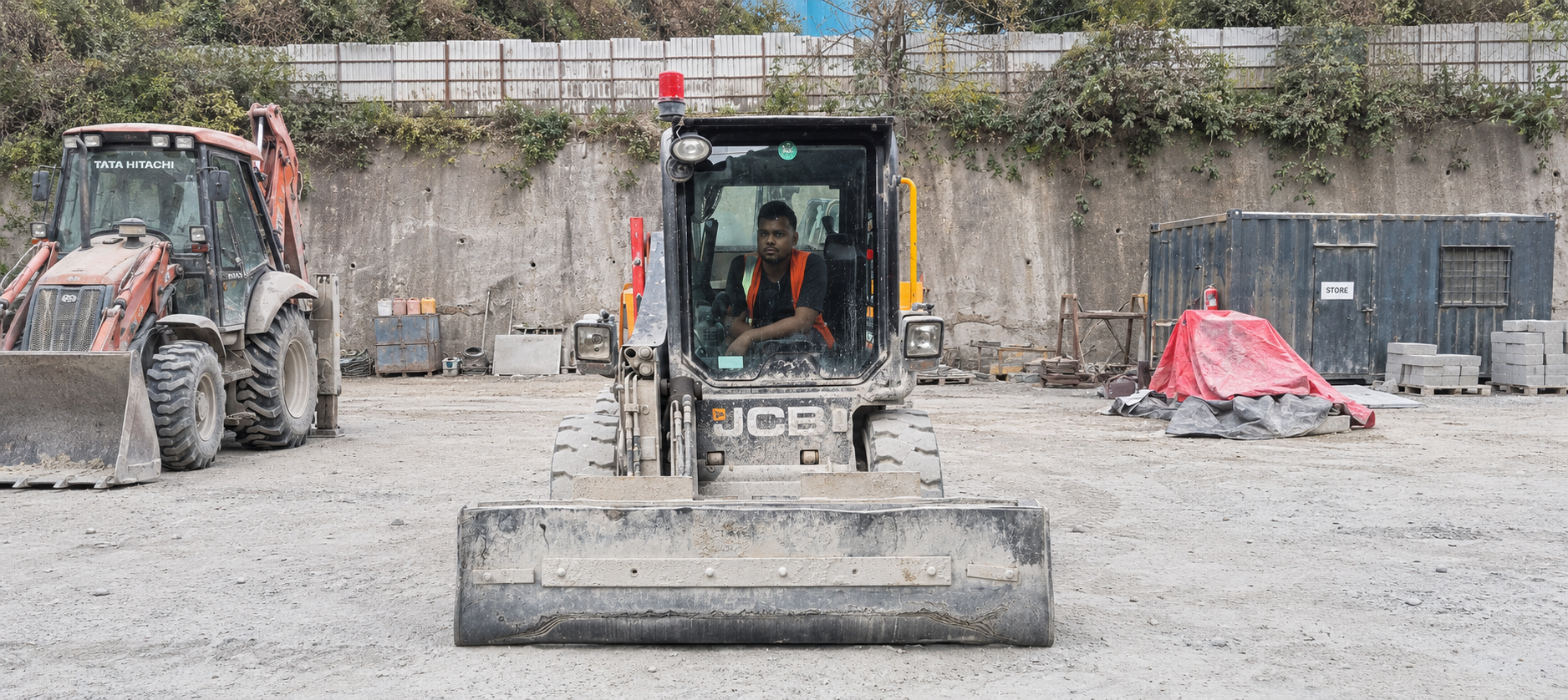
Daily Pre-Start Inspection
Complete before use and at the 10-hour/daily interval.
Every 10 hours
1
Engine oil
Park level, stop the engine, allow oil to drain back, then check the dipstick MIN-MAX range and inspect for leaks.
Act if: the level is outside the marked range or a leak is present.
2
Coolant & cooling pack
Check cold coolant level and condition, inspect for leaks and clean the cooling pack; clean more often in dusty work.
Act if: coolant is low, leaking, blocked or damaged. Never open a hot cooling system.
3
Fuel & water separator
Check fuel level and leaks; clean or drain the main fuel filter / sedimenter as required.
Act if: a fuel leak or water-in-fuel warning is present.
4
Air-cleaner system
Check intake security, blocked-filter indicator and element condition; clean the precleaner if fitted.
Act if: the restriction indicator shows blockage or the intake is damaged.
5
Hydraulic oil & hoses
Check the sight-tube level between its marks and inspect hoses and pipework for leaks or damage.
Act if: oil is cloudy, the level is outside the marks or a hose is damaged.
6
Hydraulics & park brake
Check hydraulic operation and park-brake operation from the operator seat.
Act if: movement is weak, judders, abnormal noise occurs or the park brake is faulty.
7
Pivot pins & attachments
Clean and inspect the body; lubricate pivot pins and attachment points as required.
Act if: damage, leakage or an attachment defect is found.
8
Tyres
Check tyre pressures in the unladen condition against the fitted tyre specification and inspect for visible damage.
Act if: a tyre is damaged or pressure is incorrect.
9
Protective structure
Inspect the cab/canopy protective structure, mounting nuts and compression plates for damage or missing parts.
Act if: the structure or mountings are damaged or defective.
10
Seat & seat belt
Check seat security and adjustment, belt webbing, stitching, mountings, buckle and locking operation.
Act if: the belt is damaged or will not lock; do not drive until corrected.
11
Electrical equipment
Check lights, warning indications and general electrical operation; check washer-fluid level where fitted.
Act if: required equipment or a warning indication shows a fault.
12
HVAC, labels & extinguisher
Where fitted, inspect HVAC filter and belt; check label condition and fire extinguisher serviceability.
Act if: a filter/belt is defective, a label is unreadable or the extinguisher is unserviceable.
13
Engine running condition
After the pre-start inspection, listen and watch for unusual noise, vibration, smoke, overheating or smell.
Act if: a fault develops; stop work and investigate before resuming.
Safe maintenance position: park on firm level ground, apply the park brake, lower the lift arm and place the attachment flat on the ground, stop the engine and remove the key. Use the correct lift-arm maintenance strut for raised access and release hydraulic pressure before opening the system.
Key Service Tasks by Hours
Use the hour limit or calendar limit, whichever occurs first. Follow the complete machine-specific operator schedule for all service items.
Replace. For arduous duty, oil and filter replacement is every 250 h.
REPLACE
Fuel filters & FEAD drive belt
Replace main and secondary fuel filters and the drive belt.
REPLACE
Air & hydraulics
Outer air-filter element & dust valve
Replace both; service more often in dusty work.
REPLACE
Hydraulic charge & return filters
Replace; shorten interval for heavy attachment duty.
REPLACE
HVAC filter & compressor belt, if fitted
Replace at the scheduled interval.
REPLACE
Includes recurring checks from earlier intervals.
Hydraulic & drive
Hydraulic tank breather
Replace.
REPLACE
Drive chain-case oil
Replace both sides.
CHANGE
Inspection
Charge pressure, sprocket & hub bolts
Check.
CHECK
Starter motor & alternator
Inspect condition.
INSPECT
Scheduled 18-month service.
Recurring service
Engine oil, filters, air filtration & hydraulic filters
Repeat scheduled replacements and checks.
SERVICE
Hydraulic tank breather & charge pressure
Replace breather; check charge pressure.
SERVICE
Scheduled 24-month major service.
Fluids & filtration
Hydraulic oil
Replace; shorten interval for heavy attachment duty.
CHANGE
Inorganic coolant
Replace if this coolant type is installed.
CHANGE
Major checks
Inner air-filter element
Replace.
REPLACE
Crankcase ventilation filter
Clean.
CLEAN
Drive chain-case oil
Replace both sides.
CHANGE
Coolant note: organic coolant is replaced at 4,000 hours. Do not mix coolant types.
Warning Alerts & Immediate Actions
Use the machine display message and warning colour when responding.
Red - StopAmber - Act
RED
Low engine oil pressure
Action: stop immediately and remedy the fault; do not continue until oil pressure is normal.
RED
High coolant temperature
Action: stop immediately, allow the system to cool and inspect before restarting.
RED
High hydraulic oil temperature
Action: stop the machine and correct the fault before operation.
RED
Low hydraulic oil pressure
Action: stop immediately and remedy the fault.
AMBER
Water in fuel
Action: empty the water separator immediately.
RED
Battery not charging
Action: arrange charging-system diagnosis if the warning remains after starting.
RED
Blocked air filter
Action: inspect and service the air-cleaner system.
AMBER / RED
Malfunction indicator
Action: stop the machine and remedy the displayed fault.
AMBER
Low fuel level
Action: stop and refuel before fuel supply is interrupted.
AMBER
Manual DPF regeneration requested
Action: park safely, apply the park brake and complete the stationary regeneration procedure.
RED
DPF service regeneration required
Action: stop as soon as safe and arrange qualified service.
AMBER
High exhaust temperature
Action: keep clear of combustible materials during regeneration.
STOP
Unsafe machine condition
Action: do not operate with damaged hydraulic hoses, cloudy hydraulic oil, abnormal hydraulic movement, a defective park brake or a seat belt that will not lock.
Fluids, Lubricants & Fill Controls
Use the specified fluid type and machine level markings.
Engine & hydraulics
Engine oil
JCB Engine Oil EP 5W40, ACEA E6-E9 Low SAPS. Keep within dipstick MIN-MAX.
LEVEL
Hydraulic oil
HVI hydraulic oil, ISO VG46. Fill with cylinders closed; keep between sight-tube marks.
LEVEL
Chain cases & grease
Chain cases
JCB Engine Oil Max; check each side on level ground with arm lowered.
19 L EACH
Grease points
JCB Special HP Grease, blue. Lubricate at scheduled points.
AS NEEDED
Coolant
Inorganic coolant
JCB Antifreeze HP/Coolant, ASTM D6210. Do not mix with organic coolant.
COLD MARK
Organic coolant
JCB OAT coolant. Use only the installed coolant type and do not mix types.
COLD MARK
Fuel & HVAC
Diesel
Clean diesel fuel meeting EN 590 or ASTM D975 Grade S15.
TANK GAUGE
HVAC refrigerant, if fitted
R134a; specialist service only.
1 KG
Important: do not mix coolant types. Lubricate after pressure washing or steam cleaning, and service optional attachments according to their own instructions.
Frequently Asked Questions
Everything you need to know about the JCB 135 Skid Steer Loader
The JCB 135 has a 612 kg SAE rated operating capacity.