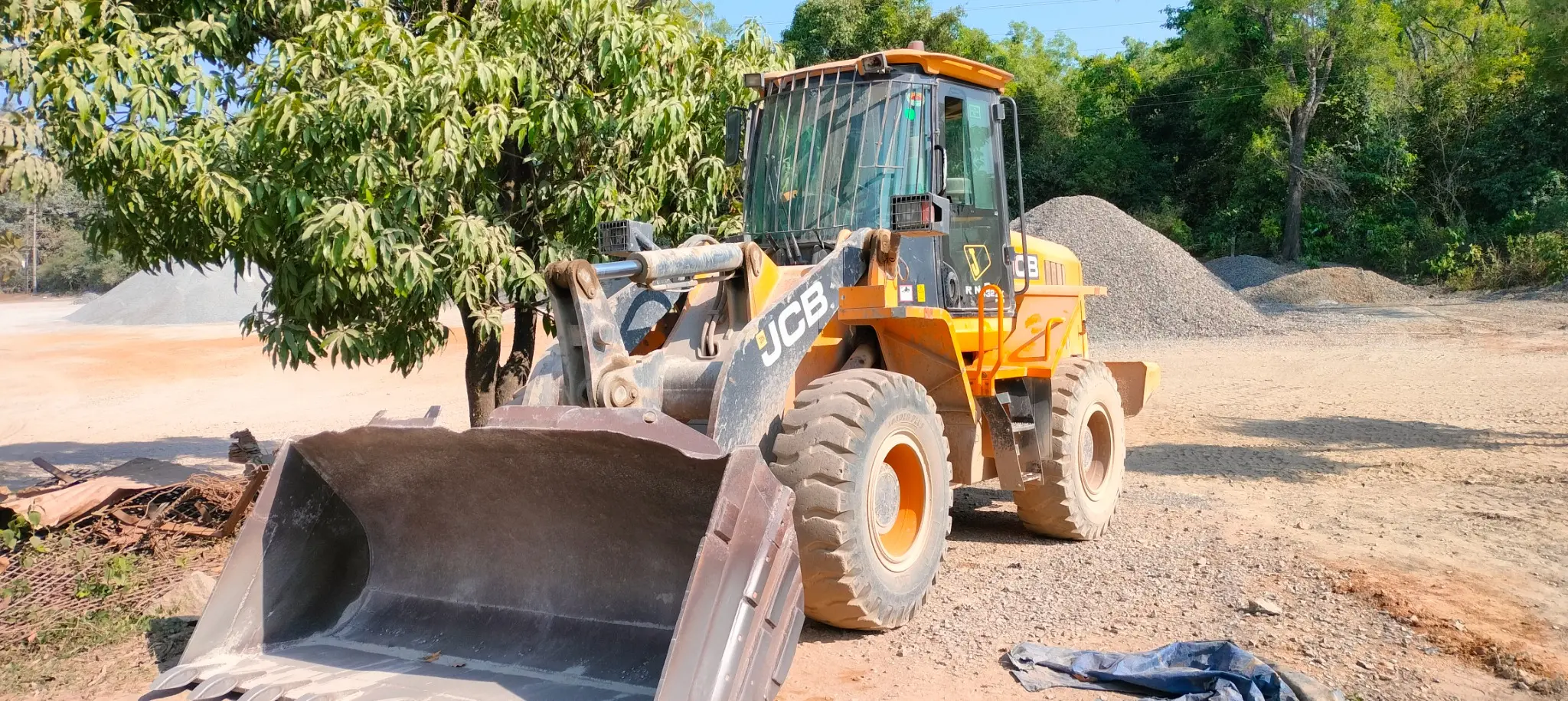
A high-productivity wheel loader with a 150 hp Cummins engine, 3.4 m³ standard shovel, Z-type loader geometry, proven ZF powershift transmission, Graziano axles and LiveLink-ready fleet visibility for demanding loading applications.
Engine Power150 hp
Std Shovel3.4 m³
Operating Weight12,430 kg
Rated Full-Turn Tipping7,300 kg
Pump Flow176 L/min
Fuel Tank220 L
Key Highlights
Engine Model
Cummins 6BTA-A 5.9C-150C
Gross Power
112 kW / 150 hp
Max Torque
650 Nm @ 1500 rpm
Std Shovel Capacity
3.4 m³
Operating Weight
12,430 kg
Rated Full-Turn Tipping
7,300 kg
Fuel Tank
220 L
Pump Flow
176 L/min
Hydraulic Pressure
245 bar
Top Speed
31.0 kph
Transmission
ZF 4WG-130
Tyres
20.5 / 25 BKT 16 PR
Breakout Force
99 kN with 3.4 m³ shovel
Material Density
980 kg/m³ with 3.4 m³ shovel
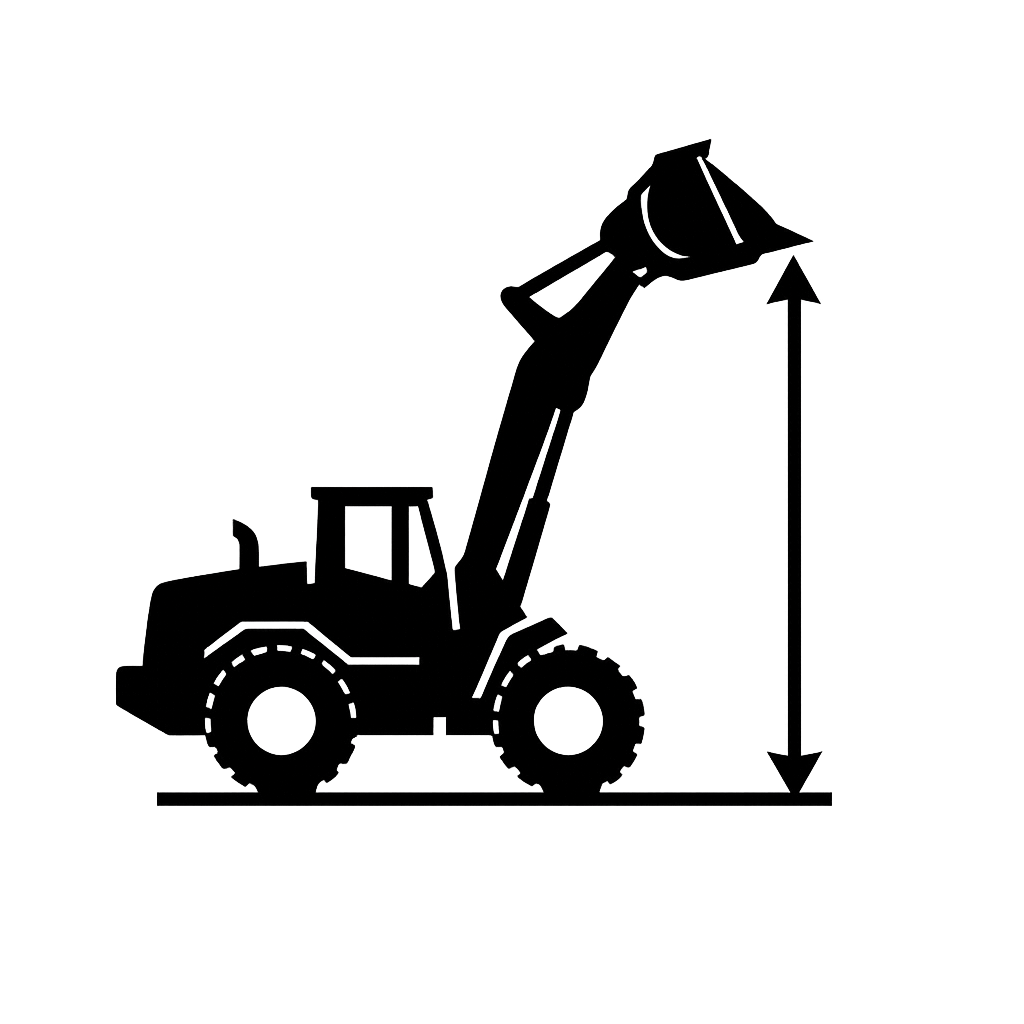
Dump Height
2,732 mm with 3.4 m³ shovel
Specifications
Product specification of JCB 432ZX PLUS wheel loader.
Allow about 10-15 minutes and complete all checks before every shift.
Every shift
1
Engine oil level
Park level, stop the engine for five minutes, then wipe, reinsert and read the dipstick.
Act if: below MIN, top up. If oil is milky or foamy, stop and investigate coolant mixing.
2
Engine coolant
With the engine cold, check the reservoir and radiator level.
Act if: below MIN, top up. Brown or oily coolant requires inspection and flushing.
3
Hydraulic oil level
Lower the arm, place the bucket flat, close all rams and check the tank sight gauge.
Act if: below range, top up. Milky oil indicates water contamination.
4
Fuel and water separator
Check the fuel gauge and inspect the separator bowl for water or sediment.
Act if: below one-quarter tank, refuel. Drain the separator when water is visible.
5
Air-filter restriction
Check the restriction indicator on the air-cleaner housing and empty the dust valve.
Act if: the indicator is red or blocked, clean or replace the outer element before starting.
6
Walk-around inspection
Check for leaks, loose parts, structural damage and abnormal tyre condition.
Act if: a fresh leak, crack or loose fastener is found, do not operate.
7
Articulation and lift-arm grease
Check centre-joint and lift-arm grease points for fresh grease.
Act if: joints are dry or squeaking, grease before use.
8
Tyres and wheel nuts
Check pressure, cuts, bulges and visible wheel-nut security.
Act if: a tyre is under-inflated or damaged, or wheel nuts appear loose.
9
Lights, beacon and horn
Test road and work lights, hazards, beacon, reverse alarm and horn.
Act if: any safety light or alarm fails, repair it before active-site work.
10
Seat belt and cab structure
Inspect belt webbing and buckle, plus the ROPS/FOPS structure and mounts.
Act if: the belt is frayed or the cab structure is damaged, do not operate.
11
Mirrors and windows
Clean mirrors and glass; inspect for cracks and restricted visibility.
Act if: visibility is poor, clean or repair before moving the machine.
12
Battery isolator and terminals
Test isolator operation and inspect terminals for corrosion or looseness.
Act if: isolation is unreliable or terminals are corroded, arrange service.
Preventive Maintenance Schedule
Use the hourmeter and complete each service as soon as it becomes due.
Complete the full pre-start checklist before starting the engine.
Fluids and filtration
Oil, coolant and fuel
Check engine oil, coolant, hydraulic oil and fuel levels; drain water from the separator.
CHECK
Air cleaner
Check the restriction indicator and empty the dust valve.
CHECK
Greasing and safety
Pins and centre joint
Grease centre articulation, bucket linkage and lift-arm pins; grease every shift in wet or abrasive work.
GREASE
Cab and site safety
Clean glass and mirrors; test lights, beacon, horn and reverse alarm.
TEST
Also complete all daily checks and lubrication tasks.
Driveline
Transmission, axles and hubs
Check transmission, front axle, rear axle and hub oil levels.
CHECK
Propshafts
Lubricate universal joints and slip splines; inspect for movement or wear.
GREASE
Engine and hydraulics
Fan-drive belt
Inspect belt tension, cracking and glazing.
INSPECT
Hoses, rams and cylinders
Inspect for leaks, cracks, bulges and damaged fittings.
INSPECT
Electrical and pivots
Battery
Clean terminals and check charge or electrolyte condition as applicable.
CHECK
Steering and lift pivots
Grease steering-cylinder pins and lift-cylinder pivot points.
GREASE
Also complete all daily and 50-hour tasks.
Filters
250-hour filter kit
Install filter kit 336/F0056 and confirm each listed filter is renewed correctly.
REPLACE
Air pre-cleaner
Clean the pre-cleaner, dust valve and outer element; do not exceed three outer-element cleans.
CLEAN
Fuel and brakes
Fuel tank
Drain sediment from the 220 L tank and inspect the fuel system for leakage.
DRAIN
Service and parking brakes
Inspect stopping and holding performance; adjust or repair abnormal operation.
INSPECT
Structure and lubrication
Pins, bushes and cylinders
Grease and inspect articulation, lift-arm, loader-cylinder and steering pins.
GREASE
Cab hardware
Lubricate door hinges, catches and engine-cover latches.
GREASE
Also complete all lower-interval tasks.
Engine service
Engine oil and filter
Drain and refill 15 L of suitable engine oil; replace the oil filter.
CHANGE
500-hour filter kit
Install filter kit 336/F0058.
REPLACE
Fuel, air and transmission
Fuel and air filters
Replace the fuel pre-filter, fuel filter and outer air-filter element.
REPLACE
Transmission filter
Replace the transmission filter and inspect oil condition.
REPLACE
Condition checks
Belt, hoses and brakes
Inspect the fan belt, coolant and hydraulic hoses, service brakes and park brake.
INSPECT
Charging and structure
Test battery and 45 A alternator; inspect cab mounts and structural fasteners.
TEST
Fuses and relays
Inspect fuses and relays; replace any damaged, loose or heat-marked items as needed.
INSPECT
Also complete all lower-interval tasks.
Transmission and axles
Transmission oil
Drain and refill 30 L; replace the transmission filter.
CHANGE
Axle and hub oils
Change front and rear axle oil, 26 L each, plus hub oil.
CHANGE
Engine and cooling
Valve clearance and coolant
Check and adjust valve clearances; test coolant condition and top up as needed.
SERVICE
1,000-hour filter kit
Install filter kit 336/F0060, including required fuel and hydraulic filters.
REPLACE
Air and hydraulics
Air-filter safety element
Replace the inner safety element; never clean or reuse it.
REPLACE
Breather and strainer
Clean the hydraulic breather and suction strainer.
CLEAN
Complete this major service together with all lower-interval tasks.
Hydraulic and cooling systems
Hydraulic oil
Drain and refill the 210 L system / 170 L tank; clean or replace the breather and strainer.
CHANGE
Engine coolant
Drain, flush and refill the 40 L cooling system.
CHANGE
Filters and engine
2,000-hour filter kit
Install filter kit 336/F0061 and renew scheduled fuel, air, oil and hydraulic filtration.
REPLACE
Turbocharger and valves
Inspect turbo shaft play and oil leaks; recheck valve clearances.
INSPECT
Structure and driveline
Structural fasteners
Check and torque cab mounts, loader structure and critical bolts.
TORQUE
Transmission, axles and hubs
Repeat the scheduled oil and filter changes and inspect propshaft joints.
SERVICE
Fluid capacities
Engine / coolant / fuel
Engine oil 15 L; coolant 40 L; fuel tank 220 L.
CAPACITY
Hydraulic / transmission
Hydraulic tank 170 L / system 210 L; transmission 30 L.
CAPACITY
Front / rear axle
26 L each.
CAPACITY
Lubrication intervals
Every shift
Centre articulation and bucket linkage; lift-arm pins in abrasive conditions.
GREASE
Every 50 hours
Lift-cylinder pivots, steering-cylinder pins and lift-arm pins under normal conditions.
GREASE
50-250 hours
Propshaft universal joints and slip splines; cab hinges and locks at 250 hours.
GREASE
Before maintenance
Park on level ground, lower the shovel, apply the parking brake, isolate the machine, relieve hydraulic pressure and keep personnel clear of the loader arm and articulation area.
Warning Alerts and Immediate Actions
Red means stop immediately. Amber means correct the condition before continuing work.
Red - StopAmber - Act
RED
Engine oil pressure
Action: stop the engine immediately. Check the oil level and do not restart until the cause is found.
Risk: complete engine seizure and irreversible damage.
RED
Engine coolant temperature
Action: stop work, idle for 1-2 minutes, shut down safely, then check coolant and radiator after cooling.
Risk: warped head, failed gasket or seized engine.
RED
Battery / charge warning
Action: inspect the fan-drive belt, alternator wiring and terminals immediately.
Risk: battery discharge and a no-restart condition.
AMBER
Hydraulic oil temperature
Action: stop loader-arm work and idle for 10-15 minutes without hydraulic movement.
Risk: pump, seal or control-valve damage.
AMBER
Air-filter restriction
Action: stop work and clean or replace the outer air-filter element before restarting.
Risk: power loss, black smoke and turbo or injector damage.
AMBER
Water in fuel / fuel filter
Action: drain the separator bowl completely and replace the filter if restriction continues.
Risk: water reaching the injectors and causing major fuel-system damage.
AMBER
Transmission oil temperature
Action: stop machine travel, check oil level and allow the transmission to cool.
Risk: clutch-pack damage or gearbox failure.
AMBER
Parking-brake warning
Action: stop and confirm the parking-brake lever or switch is fully released before moving.
Risk: brake wear and drivetrain strain.
Frequently Asked Questions
Everything you need to know about the JCB 432ZX PLUS Wheel Loader
The JCB 432ZX PLUS standard shovel capacity is 3.4 m³. Available direct-mounted shovel capacities are 2.1, 2.3, 2.7 and 3.4 m³.
It uses a Cummins 6BTA-A 5.9C-150C six-cylinder turbocharged engine producing 112 kW / 150 hp at 2200 rpm and 650 Nm at 1500 rpm.
The rated operating weight is 12,430 kg, with a headline full-turn tipping load of 7,300 kg. The detailed 3.4 m³ shovel configuration has a 6,600 kg full-turn tipping load.
The JCB 432ZX PLUS service fill capacities include 210 L hydraulic system, 170 L hydraulic tank, 220 L fuel tank, 15 L engine oil, 30 L transmission oil, 26 L front axle, 26 L rear axle and 40 L engine coolant.