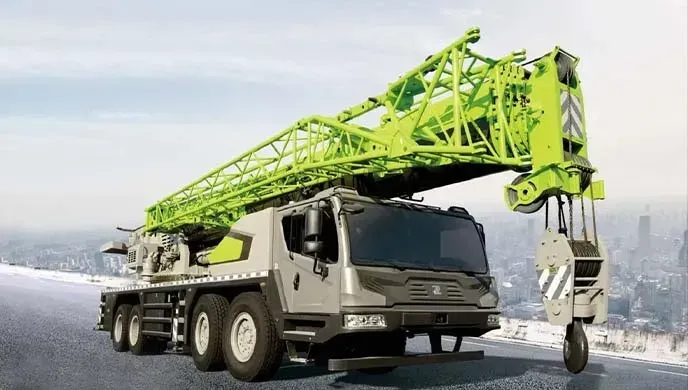
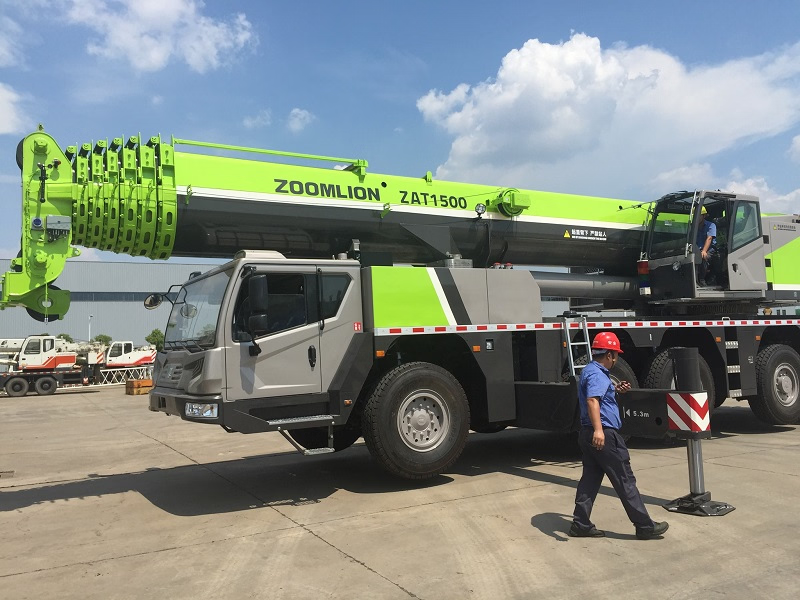
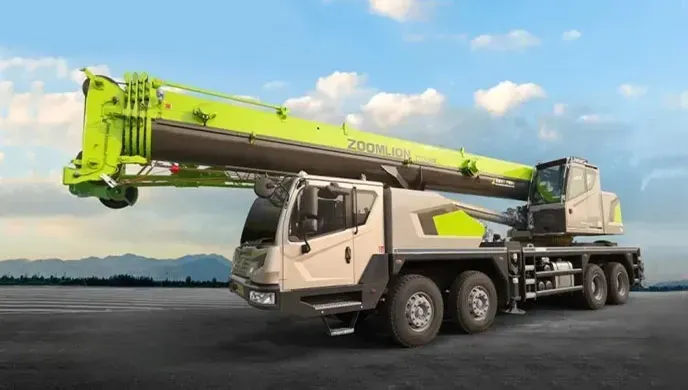
An 80-tonne, 4-axle truck crane with a 12.1–47 m 5-section U-shaped telescopic boom reaching 63.8 m with jib. Powered by a Weichai CEV TREM5 diesel engine with electronic hydraulic proportional control, automatic load moment limiter, and a 2,646 kN·m max load moment for demanding heavy-lift operations on construction and industrial sites.
Engine Power257 kW
Capacity80 Tonnes
Max Boom Ht47.7 m
Max Height (Jib)63.8 m
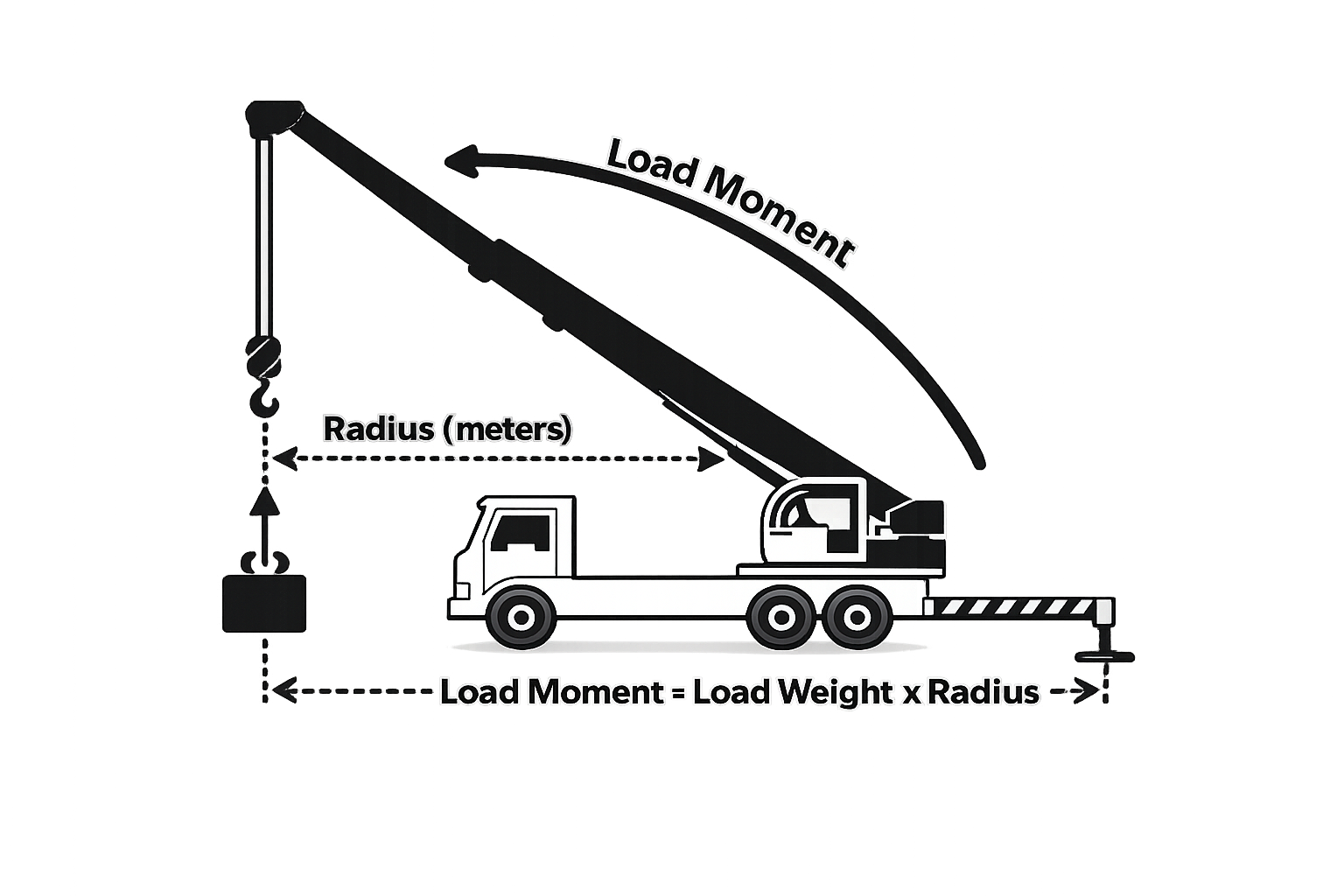
Load Moment2,646 kN·m
Fuel Tank400 L
Key Highlights
Lifting Capacity
80,000 kg (80 T)
Max Load Moment
2,646 kN·m
Max Boom Length
47.0 m
Max Lift Height (Jib)
63.8 m
Engine Model
Weichai WP9H350E62
Engine Power
257 kW
Operating Weight
46,000 kg
Axle Configuration
4-Axle Truck Crane
Emission Norm
BS V / CEV TREM5
Max Driving Speed
48 km/h
Slewing Speed
0–1.7 r/min
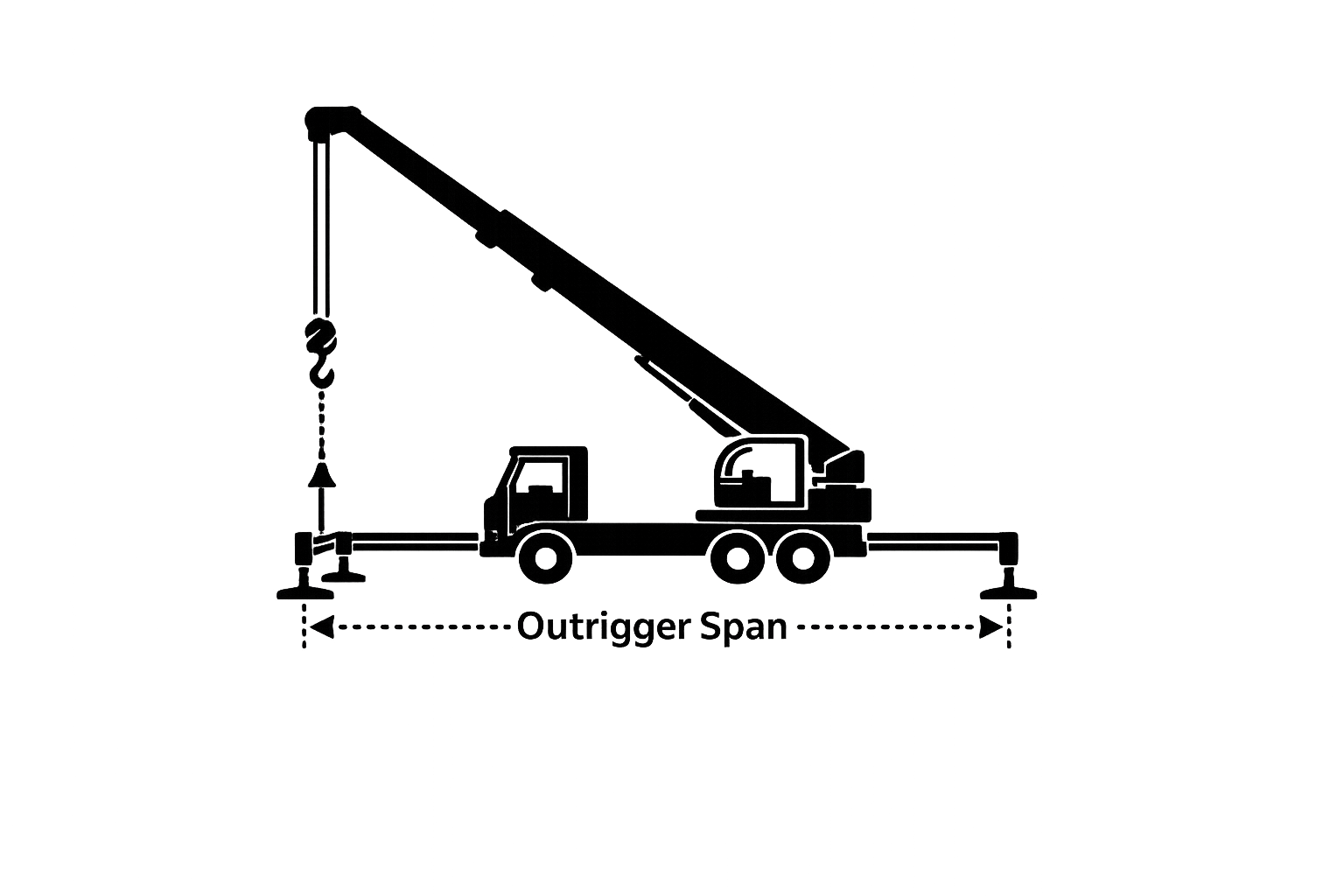
Outrigger Span
7.8 × 6.05 m
Jib Length
9.5 m / 16 m
Max Torque
1,700 N·m
Fuel Tank
400 L
Specifications
Detailed technical specifications for Zoomlion ZTC800R542 Truck Crane
Transversal Outrigger Span7.8 m (fully extended) / 5.18 m (intermediately)
Zoomlion ZTC800R542 Maintenance Checklist
Daily pre-start checks · Service schedule by operating hours · Warning alert actions — Zoomlion ZTC800R542 80T truck crane, Weichai WP9H350E62 257 kW diesel, CAN BUS SYMC control with ±3% LMI. Covers crane carrier (travel) and superstructure (lifting) maintenance.
Daily Pre-Start Checklist
Complete before every operating shift. Estimated time: 15–20 minutes. Sign daily log sheet after completion.
Every Shift
1
Engine Oil
Dipstick check before start — engine cold. Never check while running (WP9H350E62). Top up with CI-4 SAE 15W-40 WEICHAI-approved oil if below MIN. Inspect block, drain plug, and oil lines for seeps.
Act if: below MIN — do NOT start engine. Milky appearance — stop immediately, suspect head gasket.
2
Engine Coolant
Check sight glass on expansion tank — must be between MIN and MAX. Top up with WEICHAI-approved premixed antifreeze. If hot: allow 10 min to cool, release pressure at cap first before opening.
Act if: below MIN — top up. Milky appearance — do NOT operate, report immediately.
3
Fuel Level
Check fuel level — refuel if below ¼ tank (25%). Use 0# diesel in summer; refer GB 252 for winter grade. Inspect fuel tank cap seal. Drain water separator bowl if indicator shows positive.
Act if: below ¼ — refuel before the shift. Never run dry.
4
Hydraulic Oil
Check reservoir level through sight glass — top up if below MIN. Inspect all hoses, connections, and fittings for leaks, chafing, or damage. Do NOT adjust relief valves in the field.
Act if: below MIN — top up. Milky, foamy, or dark oil — report to maintenance; do not operate.
5
Wire Ropes — Main & Auxiliary
Inspect main rope (Ø20mm / 220m) and aux rope (Ø20mm / 140m) for broken wire strands, kinks, bird-caging, deformation, or corrosion per ISO 4309.
Act if: >3 broken wires in any one rope lay, or any kinking/deformation — remove from service immediately. Never operate with a damaged rope.
6
Outriggers
Inspect all 4 H-type 2-stage outrigger pads, beam extensions, pins, and hydraulic cylinder seals for damage, leaks, or deformation. Confirm two-way hydraulic locks are fully engaged on all 4 outriggers before crane operation. Also inspect 5th outrigger pad and overpressure device.
Act if: damaged component or any lock not confirmed — do NOT operate the crane.
7
Boom
Inspect all 5 telescoping boom sections (12.1–47 m range), section pins, locking pins, and retaining bolts for cracks, deformation, or loose fasteners. Check luffing cylinder pivot pins and boom foot pins. Inspect boom head sheave assembly.
Act if: any crack discovered — stop work immediately. Do NOT continue operation.
8
Brakes & Air System
Test service brake, parking brake, emergency brake, and auxiliary (exhaust) brake before first travel. Check air pressure gauge — dual-circuit air servo must show full operating pressure. Confirm air dryer functioning; drain air reservoir bowls in cold/damp conditions.
Act if: brake fade or low air pressure — do NOT travel.
9
Instruments & Safety Systems
Power on and verify: SYMC LMI display (load, radius, boom angle, capacity), anemometer at boom head, CAN-bus fault lights, all cab warning lights. Confirm hoisting limit switch by slowly raising hook to trip — lower immediately. Verify load chart matches current configuration.
Act if: inoperative LMI or anemometer — do NOT operate.
10
Tyres
Check all 12 running tyre pressures (12.00R24) per Zoomlion specification — record in daily log. Inspect all tyres for cuts, bulges, sidewall cracks, uneven wear, or embedded objects. Also inspect spare tyre condition.
Act if: bulge, cord exposure, or pressure below minimum — do NOT travel or operate.
11
Daily Lubrication
Grease all daily points with Zoomlion-approved grease: boom foot pivot pins, outrigger beam pivot pins, hook block sheave bearings, and hook trunnion pin. Verify fresh grease exits purge points.
Act if: blocked purge — grease not reaching bearing; do NOT over-grease sealed bearings. Record in log.
12
Hook Blocks
Inspect main hook (60T rated, 550 kg, 6 sheaves) and aux hook (6T rated, 150 kg, 1 line). Check safety latch function on both — latch must spring-close fully. Inspect for cracks, deformation, throat wear, or twist >10° from vertical.
Act if: cracked or deformed hook — replace immediately. Weld repair of any hook is strictly prohibited.
13
Pre-Start Area Clear
Walk completely around the machine before starting. Confirm no personnel under the boom, adjacent to outrigger feet, or in the slewing path. No tools or rigging on crane body. Sound horn before engine start and again before first boom movement.
Act if: anyone in the work zone — do NOT start until area is fully clear. Confirm spotter is in position for restricted-visibility lifts.
Note: the ZTC800R542 is both a road vehicle and a lifting machine — complete the carrier checks (tyres, brakes, fuel, engine) and the crane checks (wire rope, hooks, outriggers, LMI) before the first lift. Grease all pivot points daily per the lubrication chart.
Service Schedule by Hourmeter
Use the hourmeter reading — do not delay when a service is due. Read cumulatively. CHANGE / REPLACE / INSPECT / GREASE / CHECK.
Daily — every shift. Carried forward into every higher service interval.
Engine & Fuel
Engine oil & coolant levels
Dipstick + expansion tank sight glass; drain water separator bowl
CHECK
Fuel level
Refuel if below ¼ tank; check cap seal condition
CHECK
Hydraulics & Wire Rope
Hydraulic oil level
Sight glass on reservoir; inspect hoses and fittings for leaks
CHECK
Wire ropes (main & aux)
Visual ISO 4309 check — kinks, broken strands, bird-caging
INSPECT
Carrier & Brakes
Tyres (12.00R24 × 12)
Pressure per Zoomlion spec; inspect for cuts, bulges, cord exposure
CHECK
All 4 brakes & air pressure
Function test before first travel; confirm full air system pressure
CHECK
Crane & Safety
LMI, anemometer & limit switches
Power-on test before any lift; trip-test hoisting limit switch
CHECK
Lubrication — all pin points
Boom foot, outrigger, hook sheave, and hook trunnion pin
GREASE
50h — first mandatory break-in service (Type A). Must not be deferred.
Engine
Engine oil
Drain completely; refill CI-4 SAE 15W-40 WEICHAI Power oil
CHANGE
Oil filter
Pre-fill new filter with clean CI-4 oil; tighten ¾–1 turn after gasket contact
REPLACE
Valve clearance
Check & adjust intake/exhaust per WP9H spec with calibrated feeler gauge
CHECK
Coolant, clamps & intake
Level check; tighten all cooling hose clamps and turbo inlet flanges
CHECK
Crane Structure
Slewing ring
Full grease of gear teeth and bearing race; torque-check mounting bolts
GREASE
Hydraulic system connections
Inspect all hose connections for break-in seating leaks; top up reservoir if needed
Both ropes (Ø20mm/220m main, Ø20mm/140m aux) if ISO 4309 criteria met or Zoomlion scheduled interval
REPLACE
LMI annual calibration ★
Full calibration with certificate; load cell ±3%, all boom angles, auto cutoff. Issue calibration certificate.
INSPECT
Safety system full test ★
Over-hoist limit switch, LMI auto cutoff, outrigger lock sensors, boom angle limits, anemometer, slewing brake torque, air brake accumulator
INSPECT
★ Items marked with ★ require a Zoomlion-authorised technician or WEICHAI-authorised engineer. Do not attempt LMI calibration, injector work or structural NDT in-house.
Warning Alerts & Immediate Actions
Monitor the SYMC LMI display and CAN-bus fault lights continuously. RED = stop the crane motion or engine immediately; AMBER = corrective action required before continuing work. Do NOT bypass any alarm or safety interlock.
Red — Stop immediatelyAmber — Act before continuing
RED
LMI Overload Alarm
Rated lifting moment exceeded — SYMC LMI controller alarm active.
Immediate action: stop hoist immediately. Do NOT try to override. Reduce load or extend outriggers to increase rated capacity.
Risk if ignored: crane tip-over, boom collapse, catastrophic structural failure.
RED
Hoisting Limit Switch Activated
Hook block reached maximum height at boom head — hoisting limit switch triggered.
Immediate action: stop hoist-up immediately. Lower hook to clear limit switch before continuing.
Risk if ignored: rope over-wrap on drum, boom head structural impact, sudden load drop.
Risk if ignored: catastrophic engine bearing, connecting rod, and crankshaft damage.
RED
Outrigger Not Locked
Hydraulic lock sensor not engaged on one or more of the 4 H-type outriggers.
Immediate action: lower boom to rest. Re-extend all outriggers. Confirm all 4 hydraulic locks fully engaged before any lift.
Risk if ignored: sudden crane instability or tip-over during slewing or lifting.
RED
Boom Angle Limit Exceeded >80°
Boom above maximum safe operating angle — OEM spec: −2° to +80°.
Immediate action: stop luffing immediately. Lower boom to within safe operating angle before continuing.
Risk if ignored: boom structural backlash, mast impact, or collapse at over-angle.
AMBER
Wind Speed Alert >12 m/s
Anemometer at boom head exceeds safe working wind speed (GB 6067.1-2010: 12 m/s = Beaufort Force 6).
Immediate action: cease all crane operations. Lower boom to safe transport angle. Do NOT resume until wind drops below 12 m/s.
Risk if ignored: uncontrolled load swing, structural wind overload, tip-over.
AMBER
Low Fuel Level <25%
Fuel level below ¼ tank — risk of engine shutdown during an active lift.
Immediate action: complete current lift safely. Refuel before starting next lift cycle.
Risk if ignored: engine shutdown during lift = sudden loss of hydraulic function mid-operation.
AMBER
Hydraulic Oil Temp High >80°C
Hydraulic oil above safe operating limit — risk of seal degradation and fluid breakdown.
Immediate action: stop crane work. Allow hydraulic system to cool for minimum 15 minutes before resuming.
Risk if ignored: hydraulic seal failure, sudden cylinder or motor loss of function.
AMBER
Wire Rope Damage Observed
Operator has observed broken wire strands, kinks, or bird-caging on main or aux rope.
Immediate action: stop all rope-dependent crane functions. Inspect per ISO 4309. Replace immediately if rejection criteria are met.
Risk if ignored: sudden rope failure under load = uncontrolled load drop.
AMBER
Slewing Speed Excessive
Slewing speed above safe limit for current load radius — load pendulum effect developing.
Immediate action: reduce slewing speed immediately using proportional joystick control. Bring to a smooth stop.
Risk if ignored: uncontrolled load swing, impact to personnel or structure.
Critical: if the RED LMI Overload Alarm or Low Engine Oil Pressure warning activates, stop the relevant motion or the engine immediately—do not wait. Any crane with a red overload or oil-pressure event must be inspected by a Zoomlion-authorised technician before returning to lifting duty.
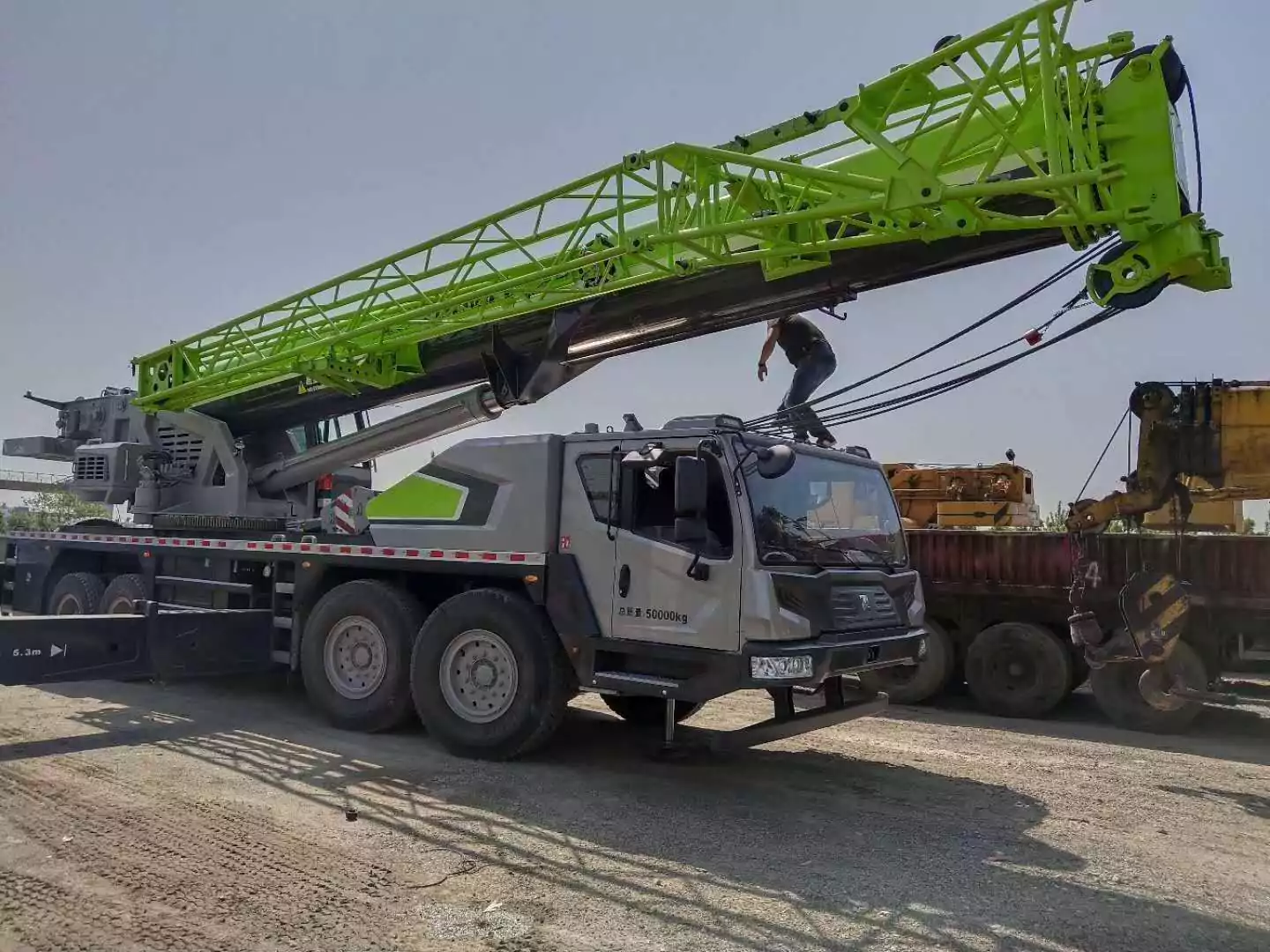
150T Zoomlion all-terrain crane — telescopic boom 72 m, load moment 4,704 kN·m, max lift height 87 m with jib.
Engine
—
Capacity
150T
Boom
72 m
Load Moment
4,704 kN·m
Max Lift Ht
87 m
Oper. Weight
60,000 kg
Frequently Asked Questions
Everything you need to know about the Zoomlion ZTC800R542 Truck Crane
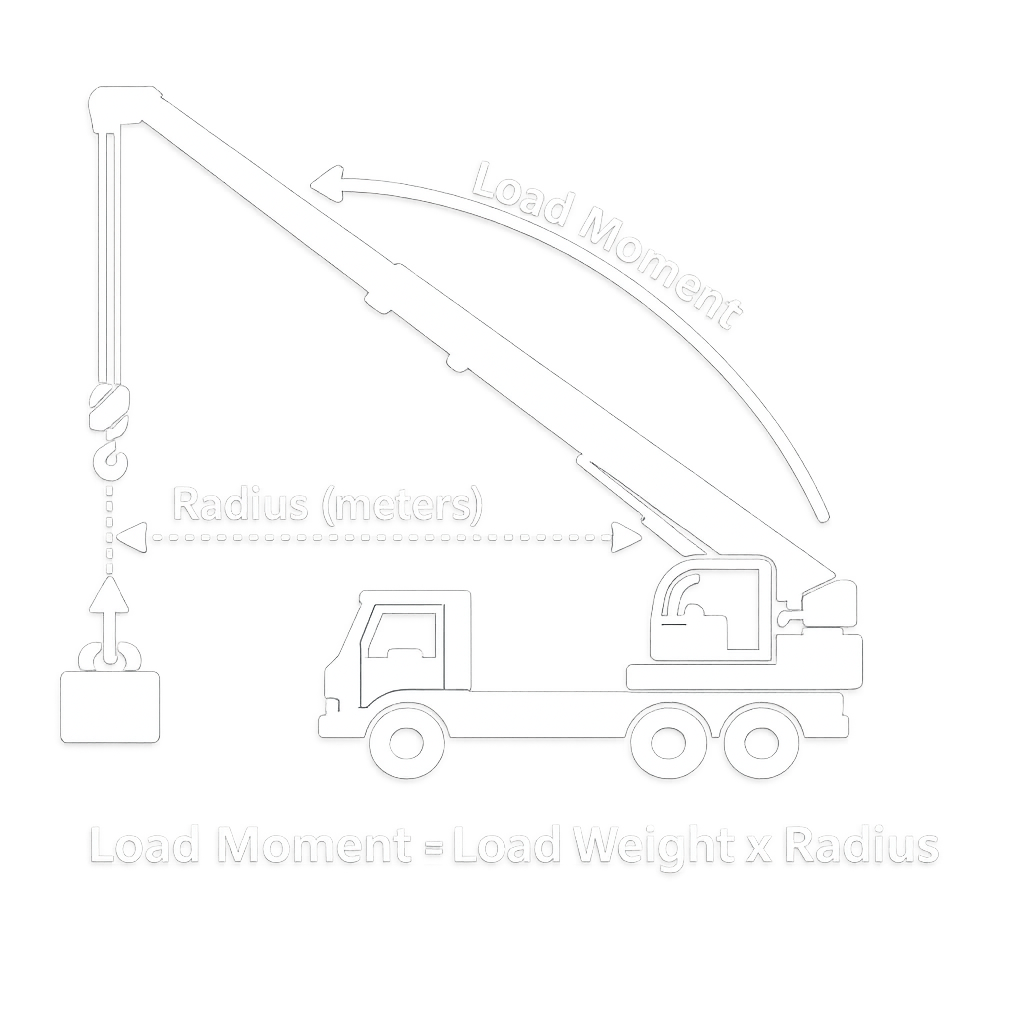
The Zoomlion ZTC800R542 has a maximum rated lifting capacity of 80 Tonnes (80,000 kg). The maximum load moment on the basic boom is 2,646 kN·m, and 1,288 kN·m at full boom extension.
The ZTC800R542 reaches a maximum lifting height of 13.4 m with the basic boom, 47.7 m with the main boom fully extended, and 63.8 m when using the optional jib attachment.
The ZTC800R542 features a 5-section U-shaped telescopic boom (box base + 4 telescopic sections, high-tensile steel) with a boom length range of 12.1–47 m. A 2-section lattice jib (9.5 m or 16 m, offset angles 0°, 15°, 30°) extends the maximum lifting height to 63.8 m.
The ZTC800R542 is powered by a Weichai WP9H350E62 diesel engine rated at 257 kW with a maximum torque of 1,700 N·m, meeting BS V / CEV TREM5 emission standards. It uses a FAST mechanical gearbox with 10 forward and 2 reverse gears, a 24-Volt DC double-wired electrical system, and an electronic hydraulic proportional control system for precise crane operations.
The ZTC800R542 is equipped with a load moment limiter (LMI), hoisting limit switch, hook latch, 5th outrigger overpressure protection, two-way hydraulic lock, balance valve, and overflow valve. The electronic hydraulic proportional control system with CAN BUS technology provides real-time monitoring of all lifting parameters.








 Oper. Weight