



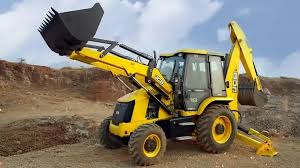
Tata Hitachi Shinrai Prime Maintenance Checklist
Daily checks · Service intervals · Warning actions
Daily Pre-Start Checklist
Complete all 16 checks before every shift. Correct failed safety, fluid or attachment checks before operating.
Engine oil level
Park level, stop the engine and allow oil to drain back. Wipe, reinsert and read the dipstick.
Act if: level is at or below the lower mark, or oil is milky, gritty or smells of fuel. Refill capacity: 13.2 L.
Engine coolant level
With the engine cold, read the reservoir level. Never open a hot radiator cap.
Act if: below the lower mark, rusty or oily, or dropping repeatedly. System capacity: 13 L.
Radiator core and coolers
Inspect the radiator and oil-cooler faces from the fan side.
Act if: dust, mud, straw or debris blocks airflow. Clean the faces before starting.
Hydraulic oil level
Lower the loader bucket, secure the backhoe in transport position, raise stabilisers and stop the engine before reading the level.
Act if: below range or oil appears milky, foamy or dark. Refill capacity: 86 L.
Fuel level
Read the fuel gauge on the digital display before the shift.
Act if: fuel is low. Refuel before work and do not run the common-rail system dry. Tank capacity: 130 L.
Water separator
Inspect the separator bowl and drain it into a suitable container until clean fuel flows.
Act if: any water or sediment is visible. Drain before cranking the engine.
Air cleaner and intake
Check the restriction indicator, dust cup, intake hose and every clamp up to the turbocharger.
Act if: the indicator has tripped or a hose is split, loose or missing a clamp. Do not start with an intake leak.
Engine bay, belt and leaks
Inspect the fan belt for cracks, glazing, fraying and slack. Look below the engine for wetness.
Act if: the belt is damaged or slack, or fuel, oil or coolant is actively dripping.
Hydraulic hoses and rams
Follow visible hoses around the loader, backhoe, stabilisers and slider. Inspect ram rods and glands.
Act if: there is an active leak, bulge, exposed braid or deeply scored rod. Never search for a leak by hand.
Grease all pivot points
Grease loader, backhoe, stabiliser, slider, king-pin and steering-ram points until fresh grease appears.
Act if: fresh grease does not emerge after several pumps; the nipple or passage may be blocked.
Tyres and wheel nuts
Inspect all tyres for cuts, bulges, exposed cord and uneven sag. Confirm every wheel nut is present and tight.
Act if: a sidewall is bulged, a cut reaches the cord, or any wheel nut is loose or missing.
Brakes and parking brake
At low speed on level ground, test service-brake pedals together and independently. Confirm the parking brake holds.
Act if: a pedal feels spongy, reaches the floor, pulls the machine sideways, or the parking brake will not hold.
Battery and cut-off switch
Check the 12 V, 130 Ah battery terminals, case and battery cut-off switch.
Act if: terminals are loose or corroded, the case is swollen or leaking, or the cut-off switch is faulty.
Cabin and safety equipment
Clean glass and mirrors. Test lights, horn and reverse alarm. Inspect the seat belt and cab structure.
Act if: the horn or alarm fails, the belt is damaged, the buckle will not latch or the cab structure is damaged.
Instrument cluster and fault codes
Turn the key ON, observe the display self-check, then start and confirm warning lamps clear.
Act if: a red warning remains on or a fault code appears. Stop and record the code before inspection.
Attachments, pins and locks
Check bucket pins, retaining clips, cutting edges and tooth points. Confirm any quick coupler is fully locked.
Act if: a pin, clip or coupler lock is missing, or the bucket or tooth point is cracked or loose.
Service Schedule by Hourmeter
Select an interval to see the inspection and replacement work due at that hourmeter reading.
Engine oil and coolant levels
Check before starting
Radiator and cooler faces
Remove dust and debris
Fan belt and engine bay
Inspect belt condition and leaks
Water separator bowl
Drain water and sediment
Air cleaner restriction indicator
Check intake hose and clamps
Hydraulic oil level
Check with equipment positioned safely
Hoses, rams and fittings
Inspect for leaks and damage
Service and parking brakes
Operational check
All pivot points
Loader, backhoe, stabiliser, slider and steering
Tyres, wheel nuts, pins and couplers
Condition and security check
Battery, charging and instrument cluster
Confirm normal operation
Engine oil filter
Part TB30272/204
Fuel/water separator element
Part TB30272/232
Secondary fuel filter
Part TB30272/455
Hydraulic filter
Part TE20210
Engine oil filter
Part TB30272/204
Fuel/water separator element
Part TB30272/232
Secondary fuel filter
Part TB30272/455
Air-filter outer element
Part TB30272/465
Hydraulic filter
Part TE20210
Transmission oil filter
Part TE31708
Transmission suction strainer
Part TE31698
Warning and Fault Actions
RED = stop immediately. AMBER = stop at a safe point and correct the condition before continuing.
Engine oil pressure
Immediate action: stop the engine immediately. Check oil level and inspect for leaks. Do not restart until the cause is found.
Risk if ignored: bearing and crankshaft damage followed by engine seizure.
Coolant temperature high
Immediate action: remove load, idle briefly, shut down safely and allow the engine to cool fully. Never open the radiator cap hot.
Risk if ignored: warped head, failed head gasket, turbocharger or engine damage.
Engine fault code
Immediate action: stop and record the code exactly as displayed. Have it diagnosed before returning the machine to work.
Risk if ignored: injector, pump, turbocharger or ECU-related damage.
Charge or battery warning
Immediate action: stop at a safe point and inspect the fan belt, terminals and charging connections.
Risk if ignored: loss of electrical power, no restart and false ECU faults from low voltage.
Air-cleaner restriction
Immediate action: stop and service the outer element. Inspect the complete intake line and turbo clamps.
Risk if ignored: power loss, black smoke, high fuel use, bore and turbocharger wear.
Hydraulic oil temperature high
Immediate action: stop digging and lifting, idle to cool the oil, check the level and clean the cooler face.
Risk if ignored: accelerated oil ageing, seal failure and pump or cylinder wear.
Water in fuel
Immediate action: stop and drain the separator bowl until clean fuel runs.
Risk if ignored: corrosion or seizure of the common-rail pump and injectors.
Low fuel
Immediate action: refuel promptly and do not run the 130 L tank dry.
Risk if ignored: air and sediment entering the common-rail fuel system.
Brake warning or poor pedal feel
Immediate action: stop on level ground, apply the parking brake and have the brake circuit inspected.
Risk if ignored: loss of braking, roll-away or struck-by incident.

 Weight