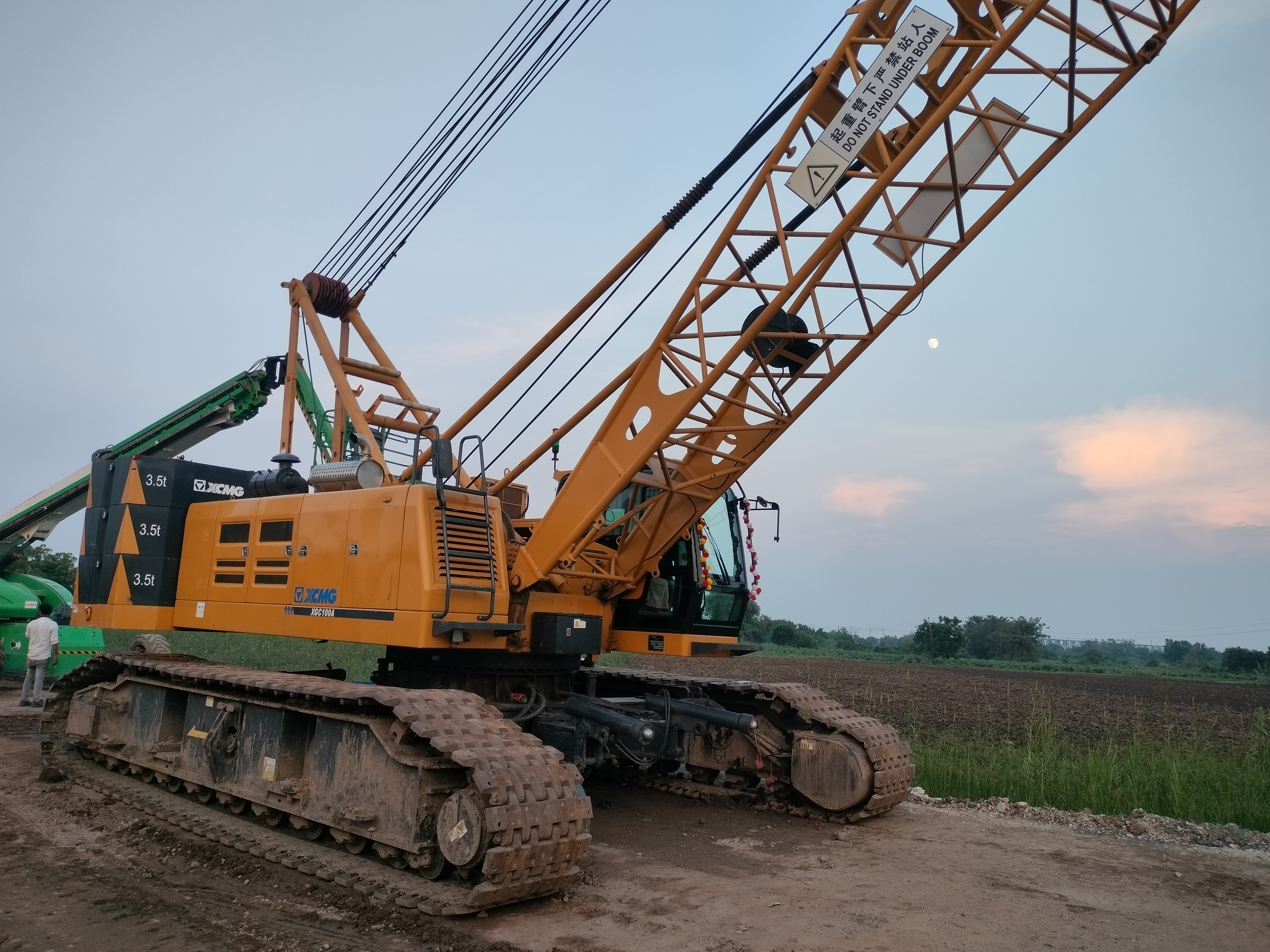
A 100-tonne lattice crawler crane with 425 t·m maximum load moment. Powered by a Weichai WP7G270E301 199 kW Euro IIIA diesel engine, 61 m lattice boom (13–61 m), 7–19 m fixed jib (max combo 52+19m), gantry self-erection, and modular design compatible across XGC series below 100T.
Capacity100T
Max Boom61m
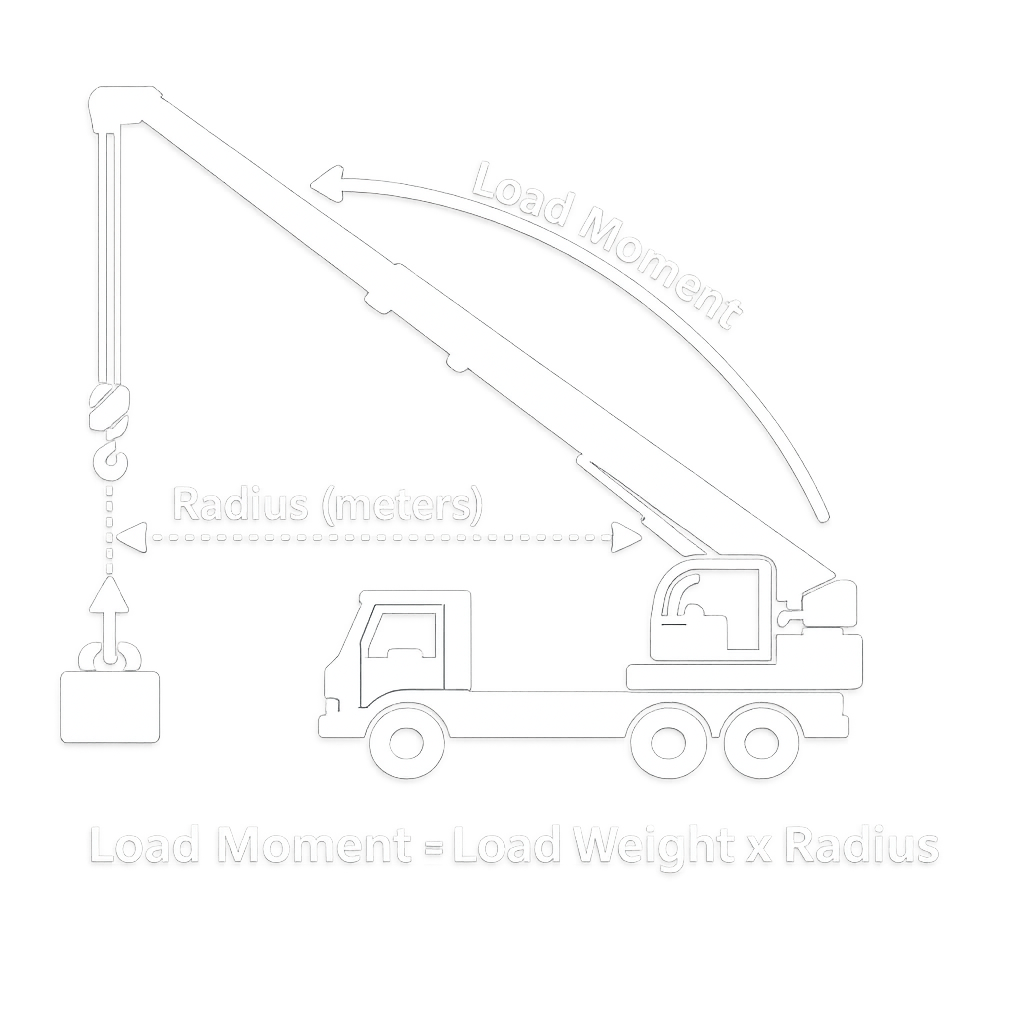
Lift Moment425 t·m
Fixed Jib7–19m
Engine199 kW
Fuel Tank400 L
-->
Key Highlights
Lift Capacity
100 T @ 4 m
Load Moment
425 t·m
Main Boom
13 – 61 m
Fixed Jib
7 – 19 m
Max Boom + Jib
52 m + 19 m
Engine
Weichai WP7G270E301 / 199 kW
Fuel Tank
400 L
Slewing Speed
1.8 rpm
Travel Speed
1.0 km/h
Gradeability
30%
Operating Mass
81.2 t
Counterweight
34 t rear CW
Ground Pressure
0.079 MPa
Hoist Rope
Ø22 mm / 240 m
LMI Safety
Hirschmann LMI
Specifications
Detailed technical specifications for XCMG XGC100A 100T Lattice Crawler Crane
Luffing BrakeNegative brake + ratchet pawl lock on luffing drum
Operating ModesWorking mode and assembly mode
GantrySelf-erecting design, no auxiliary crane required for gantry erection
Operator Cab Width1.25 m
Cab FeaturesA/C, radio, power socket, full-light design, 10.4-inch touch screen with integrated key panel
DIMENSIONS & TRANSPORT
Max Single Unit Transport Weight24.1 t
Max Transport Dimension — Turntable13.04 m × 3.4 m × 3.04 m (L×W×H)
Total Vehicle Mass81.2 t with 13 m basic boom + 100 t hook block
Standard Rear Counterweight34 t
Crawler Shoes136 nos. total
XCMG XGC100A Maintenance Checklist
Daily pre-operational checks · Service schedule by operating hours · Warning alert actions — XCMG XGC100A 100-tonne lattice-boom crawler crane, Weichai WP7G270E301 diesel (199 kW, EURO IIIA), 13–61 m boom with LMI and anti-two-block protection.
Daily Pre-Operational Checklist
Complete every check before engine start and before any lift. On a 100-tonne crawler crane, a single active defect can cause catastrophic loss — if in doubt, do not operate.
Every Shift
1
Engine Oil Level
Dipstick check with the engine cold — level between MIN and MAX.
Act if: below MIN — top up the correct grade; milky or metallic oil — stop the engine immediately.
2
Engine Coolant Level
Check the expansion tank (MIN–MAX); never open the cap when hot; check the radiator for external blockage.
Act if: below MIN — top up coolant mix once cool; blocked radiator — clean before starting.
3
Fuel Level
Check the tank gauge and drain water from the pre-filter / water separator (400 L tank).
Act if: below ¼ tank — refuel before the shift. Never run dry.
4
Hydraulic Oil Level
Check the tank sight glass — level between the MIN and MAX marks.
Act if: foam or discolouration — report contamination; below MIN — top up before operating.
5
LMI System
Power up and confirm the LMI display is active with the correct boom angle and length; test the 90% alarm.
Act if: no display, wrong configuration, or the alarm will not respond — do not lift; report for inspection.
6
Anti-Two-Block
Lower the hook fully and confirm the two-block limit-switch lamp illuminates on test.
Act if: the lamp does not illuminate — no lift until the limit switch is working.
7
Wire Ropes
Inspect the main, auxiliary and luffing ropes for broken wires, kinks, crushing or flat spots.
Act if: any broken wires, kinks or flat spots — quarantine the crane; rope inspection by a qualified inspector.
8
Hook Blocks
Confirm the safety latch closes fully on both hook blocks and the swivel rotates freely.
Act if: the latch will not close or the swivel is seized — do not rig or lift.
9
Boom Pins
Check every boom-section pin retaining clip is secure — no pin partially withdrawn.
Act if: any clip missing or pin withdrawn — do not operate; secure before any lift.
10
Crawler Tracks
Inspect shoe pins and track links for broken pins; check track tension — not too tight or too loose.
Act if: broken pins/links or incorrect tension — correct before travelling or lifting.
11
Leak Walk-Round
Walk a full circle — check the engine, hydraulic hoses, winch gearboxes and track-drive motors for leaks.
Act if: any oil or fuel leak — do not operate; find the source and repair first.
12
Cab & Controls
Confirm all levers return to neutral; test the horn and lights and that the emergency stop is accessible and functional.
Act if: a control sticks or the emergency stop fails — do not operate until fixed.
Note: complete every check before engine start and before the first lift. One defect on a 100-tonne crawler crane can cause catastrophic loss — any active defect means do not operate. Grease all pivot pins per the service schedule.
Service Schedule by Operating Hours
Read cumulatively — each interval also includes all lower-interval tasks. CHANGE / REPLACE / INSPECT / GREASE / CHECK / CERTIFY.
Daily — every shift. Carried forward into every higher interval.
Engine, Fuel & Cooling
Oil, coolant & fuel levels
Check dipstick, expansion tank & gauge; drain the water separator
CHECK
Air filter indicator & radiator
Check restriction indicator; radiator clear of external blockage
CHECK
Hydraulics & Wire Rope
Hydraulic oil level
Sight glass between MIN and MAX
CHECK
Ropes, hoses & leaks
Walk-around for leaks; visual main / aux / luffing ropes
INSPECT
Crawler & Structure
Crawler tracks & pins
Shoe pins, track links & track tension
CHECK
Boom pins & hook latches
Retaining clips secure; safety latches close fully
CHECK
Crane Safety Devices
LMI & anti-two-block
Functional test before lifting; confirm 90% alarm & ATB lamp
CHECK
Cab controls & e-stop
Levers return to neutral; horn, lights & emergency stop
CHECK
50 h mandatory break-in & 250 h periodic service (plus all daily tasks).
Engine 1
Engine oil — 50 h break-in
Mandatory first change; SAE 15W-40 or per Weichai WP7G spec
CHANGE
Oil filter
Replace at 50 h and at every oil change
REPLACE
Air filter & fan belt
Clean primary if indicator triggered; check belt tension/condition
INSPECT
Hydraulics & Wire Rope
Hydraulic hoses
Chafing / early leaks across boom, slewing & undercarriage circuits
INSPECT
Rope dressing
Apply lubricant to main, aux & luffing rope systems
1 Confirm engine, hydraulic and gearbox oil grades and fill volumes with an XCMG-authorised service centre before any fluid change. 2 Confirm overhaul, wire-rope retirement and structural/NDT intervals with an XCMG-authorised service centre. 3 Statutory intervals are indicative—confirm applicable requirements with the relevant authority (e.g. DGFASLI / State Factory Inspector / insurance surveyor).
Warning Alerts & Immediate Actions
Monitor the operation display and LMI. RED = stop crane operations or the engine immediately; AMBER = take corrective action before continuing any lift. Log every alert in the maintenance register.
Red — Stop immediatelyAmber — Act before continuing
RED
LMI Overload Alarm
Load at 100% rated capacity for the current radius and boom configuration.
Immediate action: STOP hoist-up. Lower the load. Reduce the load or change to a smaller radius.
Risk if ignored: boom collapse or machine tip-over — risk to life.
RED
Anti-Two-Block Triggered
Hook block at the upper limit at the boom head — rope fully wound.
Immediate action: STOP hoist. Lower the hook immediately. Reset and recheck the limit switch.
Risk if ignored: rope overwind — sudden load drop — risk to life.
RED
Engine Low Oil Pressure
Oil critically low or oil-pump failure.
Immediate action: STOP the engine immediately. Check oil level and pump pressure.
Risk if ignored: seized engine — major write-off.
RED
Engine Over-Temperature
Coolant critically low or cooling-system failure.
Immediate action: STOP the engine. Let it cool naturally. Check coolant level and radiator.
Risk if ignored: head-gasket failure — major engine damage.
RED
Hydraulic Pressure Loss
Circuit pressure drop — potential hose rupture or pump failure.
Immediate action: hold loads on the brakes. Shut down. Inspect all hose runs before restart.
Risk if ignored: uncontrolled load or boom drop — risk to life.
RED
Slewing Ring Noise / Shock
Metallic clunking or grinding during slew — possible ring damage.
Immediate action: STOP slewing. Park the boom. Do not lift. Arrange an immediate XCMG inspection.
Risk if ignored: slewing-ring failure — boom drop — risk to life.
AMBER
LMI 90% Warning
Load at 90% of rated capacity — approaching the structural limit.
Immediate action: assess the load weight before proceeding. Do not inch further without re-assessment.
Risk if ignored: creep into overload if not controlled.
AMBER
Engine High Temperature
Coolant marginal — partial blockage or fouled radiator.
Immediate action: reduce the load cycle. Idle the engine. Check coolant and radiator cleanliness.
Risk if ignored: escalates to over-temperature — engine damage.
AMBER
Air Filter Restriction
Air-cleaner primary element choked — intake restriction warning.
Immediate action: stop. Clean or replace the primary air filter before the next shift.
Risk if ignored: engine power loss and turbocharger damage.
AMBER
Wire Rope Abnormality
Kinks, bird-caging, broken wires or flat spots found on inspection.
Immediate action: stop all lifts. Quarantine the crane. Arrange rope inspection by a qualified inspector.
Risk if ignored: rope failure under load — risk to life.
AMBER
Slewing Brake Warning
Unusual drift or a brake-engagement delay during slewing.
Immediate action: stop slewing. Inspect the brake and gearbox before the next lift.
Risk if ignored: loss of slewing control — load swing — risk to life.
AMBER
Hydraulic Oil Temperature
Hydraulic-oil temperature reading above the normal operating band.
Immediate action: reduce the cycle duty. Check hydraulic oil level and cooler condition.
Risk if ignored: accelerated seal and pump wear.
Critical: if any RED alert activates — LMI overload, anti-two-block, low oil pressure, over-temperature, hydraulic pressure loss or slewing-ring noise — stop the relevant motion or the engine immediately. Do not reset and continue. Any crane with a red event must be inspected by an XCMG-authorised technician before returning to lifting duty.
Frequently Asked Questions
Everything you need to know about the XCMG XGC100A Lattice Crawler Crane
The XCMG XGC100A has a maximum rated lifting capacity of 100 tonnes at 4 m radius, with a 425 t·m maximum boom load moment. In jib mode it lifts up to 12 t on the fixed jib and 8 t on the boom single top. It is suited to heavy construction, wind-energy and industrial plant-erection lifting.
The XGC100A has a main lattice boom range of 13 m to 61 m and a fixed jib of 7 m to 19 m. In the maximum boom-plus-jib configuration it combines a 52 m boom with a 19 m jib for extended vertical reach and height.
The XCMG XGC100A is powered by a Weichai WP7G270E301 diesel engine rated at 199 kW at 2,000 rpm, providing the power this 100-tonne crawler crane needs for heavy lifts and travel on challenging site terrain.
The XCMG XGC100A can handle up to 30% gradeability on its crawler track system, allowing it to manoeuvre on slopes and uneven ground at construction sites where wheeled cranes cannot operate safely.
The crawler track system of the XGC100A distributes its 81.2 t operating mass over a large footprint (ground pressure ~0.079 MPa), enabling operation on soft ground without the need for outrigger mats. Its 30% gradeability and self-propelled mobility mean it can travel across site terrain without requiring a separate carrier vehicle.