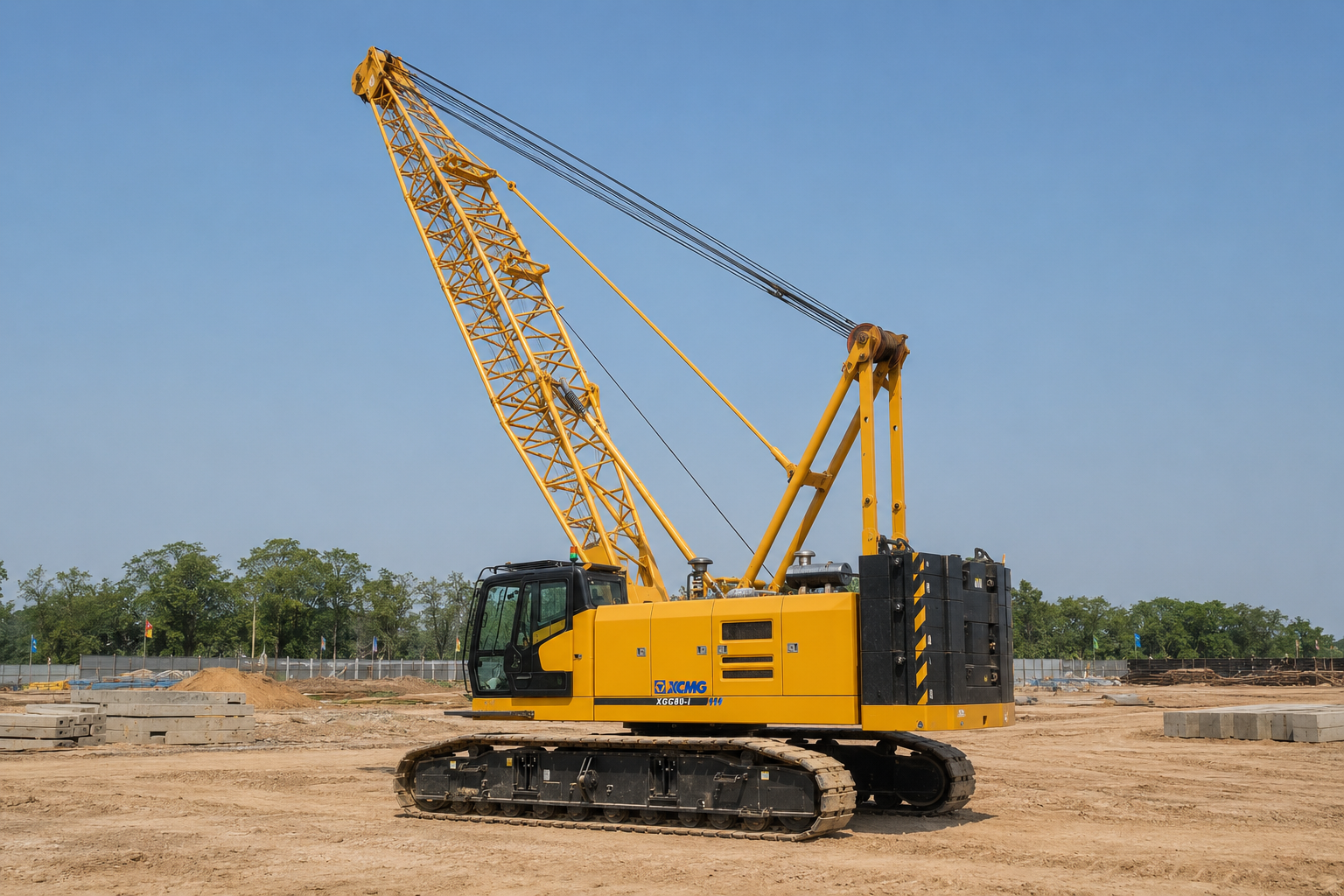
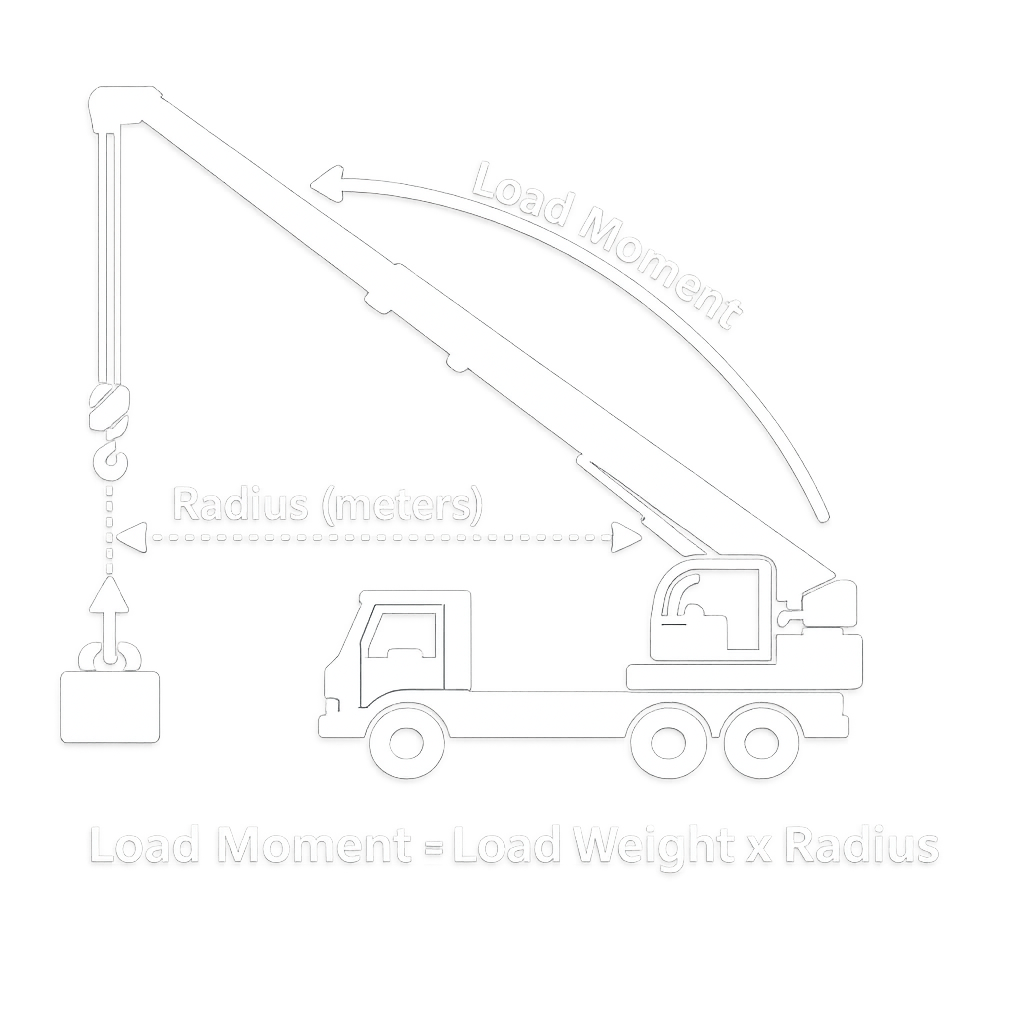
The XCMG XGC80-I is an 80-tonne crawler crane with 288 t·m maximum boom load moment. It offers a 13–58 m lattice boom, 7–19 m fixed jib, 12 t fixed-jib capacity, 6.5 t boom single-top capacity, WP7 199 kW China III / Euro IIIA engine, 61.5 t total vehicle mass and crawler mobility for construction and industrial lifting work.
Detailed technical specifications for XCMG XGC80-I 80T Crawler Crane
Daily pre-start checks, hourmeter-based service schedule and warning-alert actions for the XCMG XGC80-I 80-tonne crawler crane. Machine specifications are taken from the OEM brochure; maintenance data is based on the supplied XGC80-I maintenance reference and should be verified with the official XCMG XGC80-I service manual before maintenance.
Complete before every shift. These checks take about 15–20 minutes and help prevent damage, downtime and safety incidents.
Pull dipstick with engine off on level ground. Oil should be between MIN and MAX.
Act if: oil below MIN, milky, or contains metal particles.
Check expansion tank with engine cool; level should be between MIN and MAX.
Act if: low level, discoloured/oily coolant, or hose/radiator leak.
Check fuel gauge. Drain separator bowl until clean fuel flows and inspect lines.
Act if: fuel below 1/4, excessive water, or fuel-line leaks/damage.
Check sight glass on hydraulic tank with cylinders retracted; level should be in green zone.
Act if: level below minimum, oil foamy/cloudy/dark, or visible leaks.
Inspect visible rope length for broken wires, kinks, bird-caging, corrosion and flattening.
Act if: >3 broken wires in one lay, any kink/crushing, or diameter reduction >5%.
Inspect hook body for cracks, bending and throat opening; test latch spring action.
Act if: throat opening increased, latch broken/missing, or hook cracks visible.
Walk around and inspect chords, lacing, welds, connection pins and cotter pins.
Act if: bent chord, cracked weld, missing/bent cotter pin, or loose connection pin.
Check track tension, shoes, bolts, sprockets and rollers.
Act if: sag >50 mm, loose/missing shoe bolts, or cracked sprocket teeth.
Inspect bolt torque markers and listen for unusual noise during slow slew.
Act if: torque markers misaligned or grinding/clicking during slewing.
Power on Hirschmann LMI, verify display data and run self-test if available.
Act if: self-test fails, error codes show, or boom angle/load readings are incorrect.
Test emergency stop, boom angle limiter, anti-two-block, anemometer and tricolor light.
Act if: any device fails or emergency stop does not halt all movements.
Check warning lights, work lights, travel alarm, horn, backup alarm and warning beacon.
Act if: warning lights stay on or horn/backup alarm/work lights fail.
Test all control levers; check seat belt, mirrors, wipers and A/C.
Act if: lever is stiff/unresponsive, seat belt damaged, or mirrors broken/missing.
Grease daily lube points per OEM chart: boom foot pin, hoist drum bearings and sheave pins.
Act if: grease point blocked/damaged, no grease emerging, or dry squeaking at pins.
Inspect ground for soft spots, slopes, obstructions and underground utilities.
Act if: ground sinks under tracks, slope exceeds 1%, or utilities are not verified.
Use hourmeter reading for service timing. Do not delay service if due. Higher intervals include lower-interval checks.
Engine oil, coolant, fuel and hydraulic oil
Inspect levels; drain fuel-water separator.
Wire ropes, hoses, structure and tracks
Inspect ropes, hydraulic hoses, boom/jib pins, crawler tracks and ground condition.
Air filter and drive belt
Inspect air filter element and drive belt condition.
Fuel-water separator
Inspect separator condition.
Reducer oil levels
Inspect slewing reducer and travel reducer gear-oil levels.
Slewing ring and sheave bearings
Grease slewing ring teeth and sheave bearings; inspect counterweight mounting.
Engine oil and oil filter
Change 18 L SAE 15W-40 CI-4 engine oil and replace engine oil filter.
Fuel filter element
Replace fuel filter element.
Hydraulic oil sample
Check hydraulic oil sample/condition.
Fuel tank sediment
Drain sediment from 400 L fuel tank.
Slewing ring raceway
Grease raceway as per OEM lubrication chart.
Slewing reducer gear oil
Top up slewing reducer gear oil as required.
Main and auxiliary ropes
Lubricate wire ropes; inspect visible condition before/after service.
Engine oil / filters / fuel filters
Change engine oil; replace oil and fuel filters; replace fuel-water separator.
Air filter and drive belt
Inspect/clean air filter; inspect drive belt and valve clearance; inspect turbocharger.
Hydraulic return filter
Replace return filter; inspect suction filter and hoses; check relief valve pressures.
Hydraulic pump
Inspect pump noise and system response.
Tracks and rollers
Adjust track tension; inspect drive sprocket teeth and crawler rollers for wear/leaks.
Boom / frame / bolts
Visually inspect boom chord welds, turntable/frame welds; inspect connection pins and torque critical bolts.
Coolant and valve clearance
Change coolant; adjust valve clearance; replace drive belt if worn; inspect/service turbocharger.
Hydraulic oil and filters
Change full-system hydraulic oil; replace return and suction filters; replace aged hoses if required.
Pressures and pump flow
Check/adjust relief valve pressures and inspect hydraulic pump flow.
Gear oils
Change slewing reducer and both travel reducer gear oils; fully grease slewing ring.
NDT and rope condition
NDT boom welds if required; replace worn pins; replace wire ropes if >10% loss.
Engine service
Change engine oil, oil filter, fuel filter, fuel-water separator, air filter and coolant; adjust valve clearance.
Turbocharger
Overhaul turbocharger as per service condition and OEM procedure.
Hoses, pump and valves
Replace all hydraulic hoses; check/adjust relief valve pressures; overhaul hydraulic pump.
Tracks, rollers and sprockets
Adjust track tension; replace worn sprocket teeth and crawler rollers if required.
Critical structure and wire ropes
NDT critical welds; re-torque high-strength structural bolts; replace main/aux wire ropes and worn sheave bearings.
RED = stop immediately. AMBER = take action before continuing work. Log every alert.
Actual load exceeds 100% rated capacity; red/yellow tricolor lights activated.
Immediate action: stop all movements, lower load to ground, do not slew or luff, verify load weight.
Risk if ignored: structural failure, boom collapse, tip-over and fatal injury.
Coolant temperature exceeds safe limit.
Immediate action: stop engine, allow 15-minute cool-down, check coolant, fan belt and radiator.
Risk if ignored: engine seizure, turbo failure and fire risk.
Sudden pressure loss; controls jerky or unresponsive.
Immediate action: stop movements, lower load if safe, shut down and inspect for burst hose.
Risk if ignored: uncontrolled load drop or boom collapse.
Over-wind protection triggered; rope at drum limit on boom head.
Immediate action: stop hoisting, lower hook, inspect rope for broken wires or kinks.
Risk if ignored: rope failure and uncontrolled load drop.
E-stop pressed; all crane functions halted.
Immediate action: identify emergency and do not release until hazard is cleared.
Risk if ignored: unsafe operation, injury or equipment damage.
Boom approaching max 80° or min -3° angle.
Immediate action: reduce luffing speed, verify angle on LMI display, stop if limit reached.
Risk if ignored: boom over-travel and structural damage.
Anemometer detects wind approaching operational limit.
Immediate action: monitor wind and cease operations if wind exceeds 13.8 m/s.
Risk if ignored: loss of load control and instability.
Wire rope approaching minimum wraps on drum.
Immediate action: stop lowering and verify at least 3 wraps remain on drum.
Risk if ignored: rope detachment and load drop.
Oil pressure below threshold.
Immediate action: stop engine within 30 seconds, check oil level and leaks.
Risk if ignored: bearing damage and engine seizure.
Brake not fully engaging; unintended rotation detected.
Immediate action: stop slewing, engage slewing lock and inspect brake/hydraulic circuit.
Risk if ignored: uncontrolled slewing with load.
Crane traveling off-course or unusual undercarriage noise.
Immediate action: stop travel; inspect track tension, sprocket and rollers.
Risk if ignored: track derailment and stability loss.
Oil temperature >80°C; reduced efficiency and response.
Immediate action: reduce duty cycle, let oil cool, check cooler fan and filter.
Risk if ignored: seal degradation, component wear and system failure.
Everything you need to know about the XCMG XGC80-I Crawler Crane